 Back to blog
Arkadi Monastery: History, What to See and Visitor Guide
On this page
- Quick Summary
- What Is Arkadi Monastery?
- Why Is Arkadi Monastery Famous?
- The History of Moni Arkadiou
- The Foundation of Arkadi Monastery
- A Centre of Education and Manuscript Production
- Arkadi Under Ottoman Rule
- The Siege of Arkadi in 1866
- Things to Do at Arkadi Monastery
- How Long Do You Need at Arkadi Monastery?
- Arkadi Monastery Opening Hours and Tickets
- Food and Tavernas Near Arkadi
- Weather and Best Time to Visit
- Getting to Arkadi Monastery
- By Car
- By Taxi
- By Public Bus
- With an Organised Experience
- Where to Stay
- Nearby Attractions
- Ancient Eleutherna
- Margarites
- Museum of Ancient Eleutherna
- Melidoni Cave
- Rethymno Old Town
- Amnatos
Quick Summary
Arkadi Monastery is located around 23 kilometres southeast of Rethymno.
It is an active Orthodox monastery and an important symbol of Cretan resistance.
The present main church dates from 1587.
The monastery is best known for the siege and self-sacrifice of November 1866.
Visitors can see the church, powder magazine, historic refectory, museum and art gallery.
Allow approximately 60 to 90 minutes for a complete visit.
The monastery can be reached by car, taxi, organised tour or seasonal public bus.
Spring and early autumn offer the most comfortable conditions for exploring Arkadi and the surrounding countryside.
What Is Arkadi Monastery?
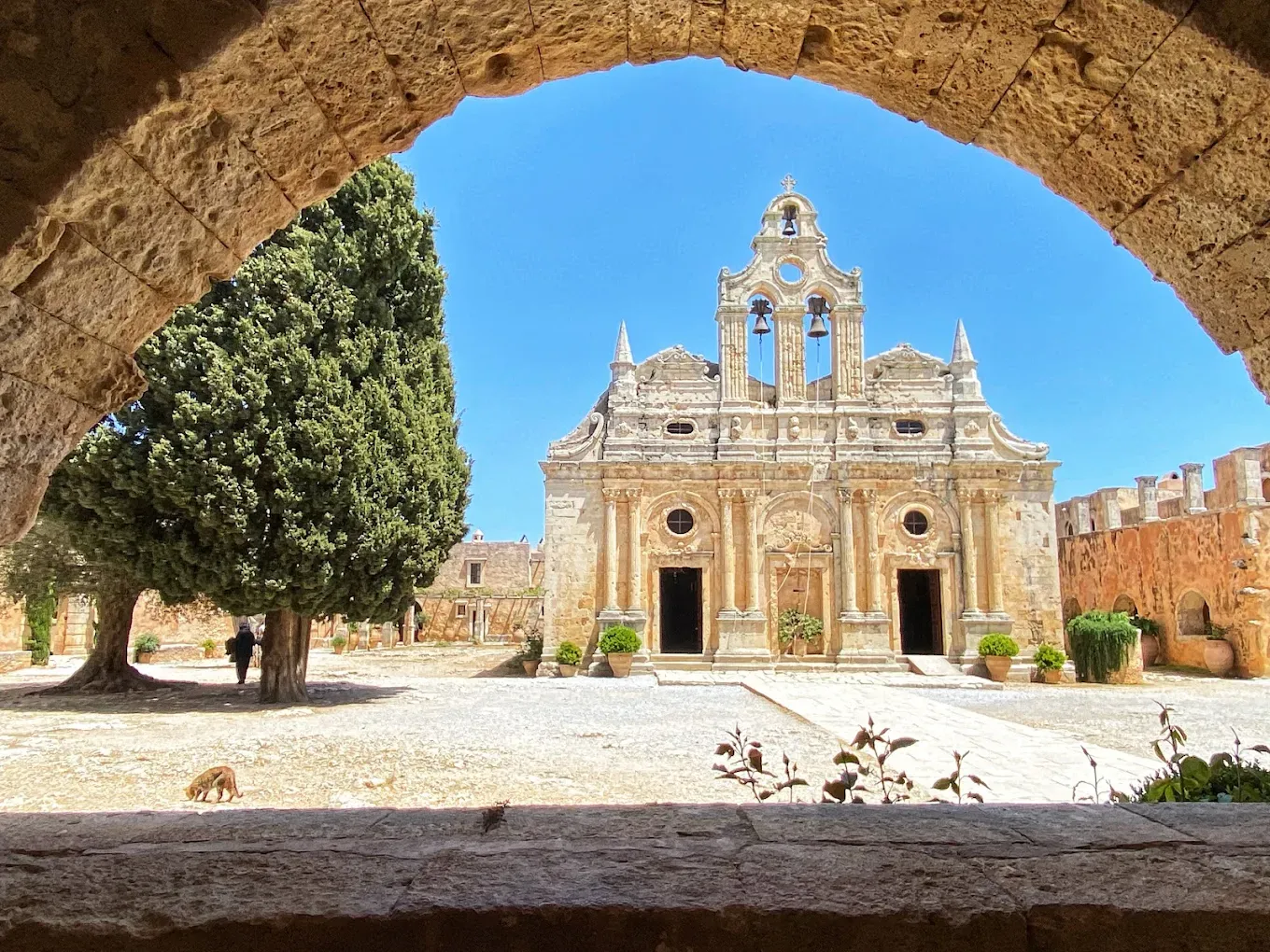
Arkadi Monastery, known in Greek as Moni Arkadiou, is an active Orthodox monastery in the Rethymno region of Crete. It stands on a rural plateau surrounded by vineyards, olive groves and low hills, around a 30-minute drive from Rethymno Old Town.
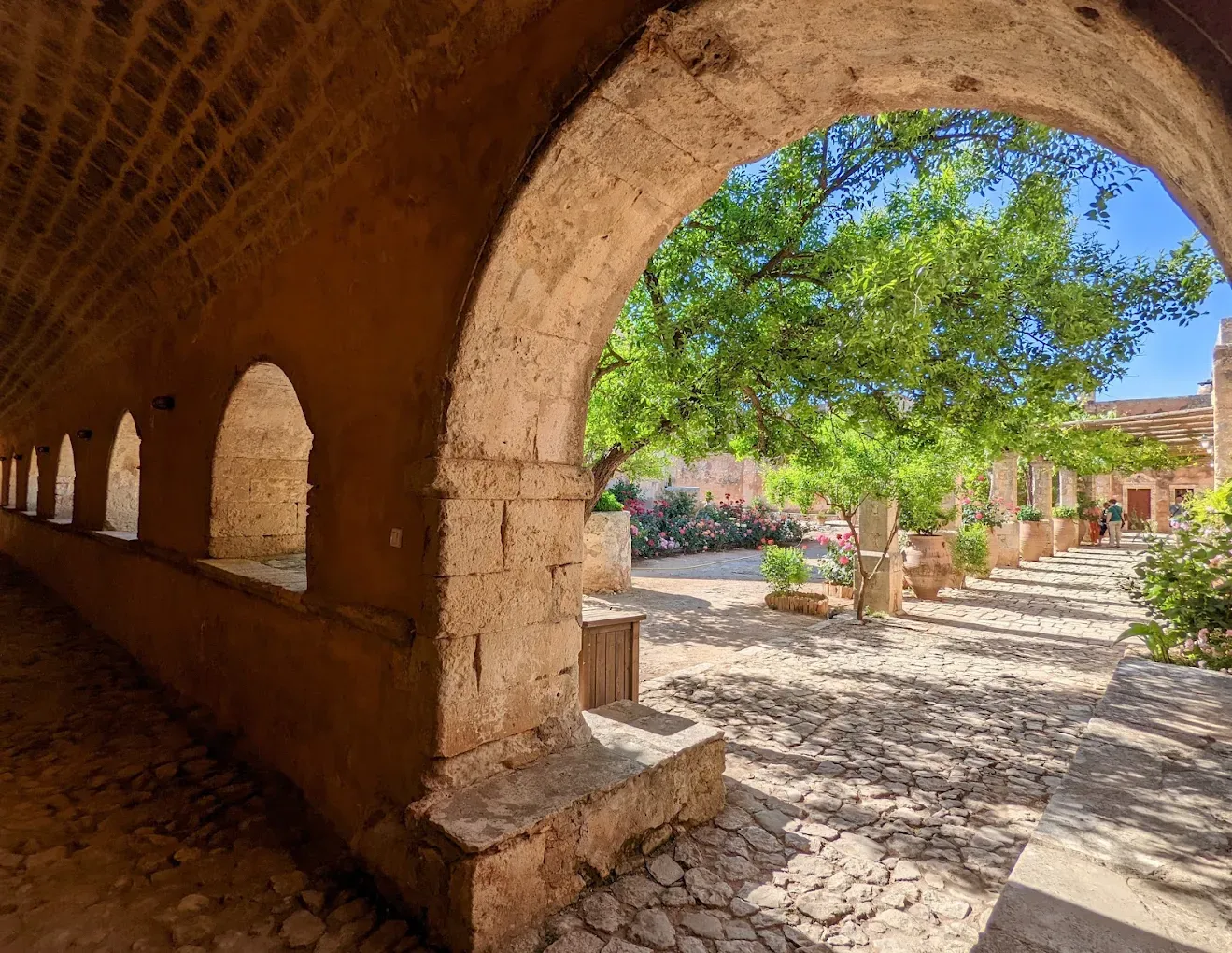
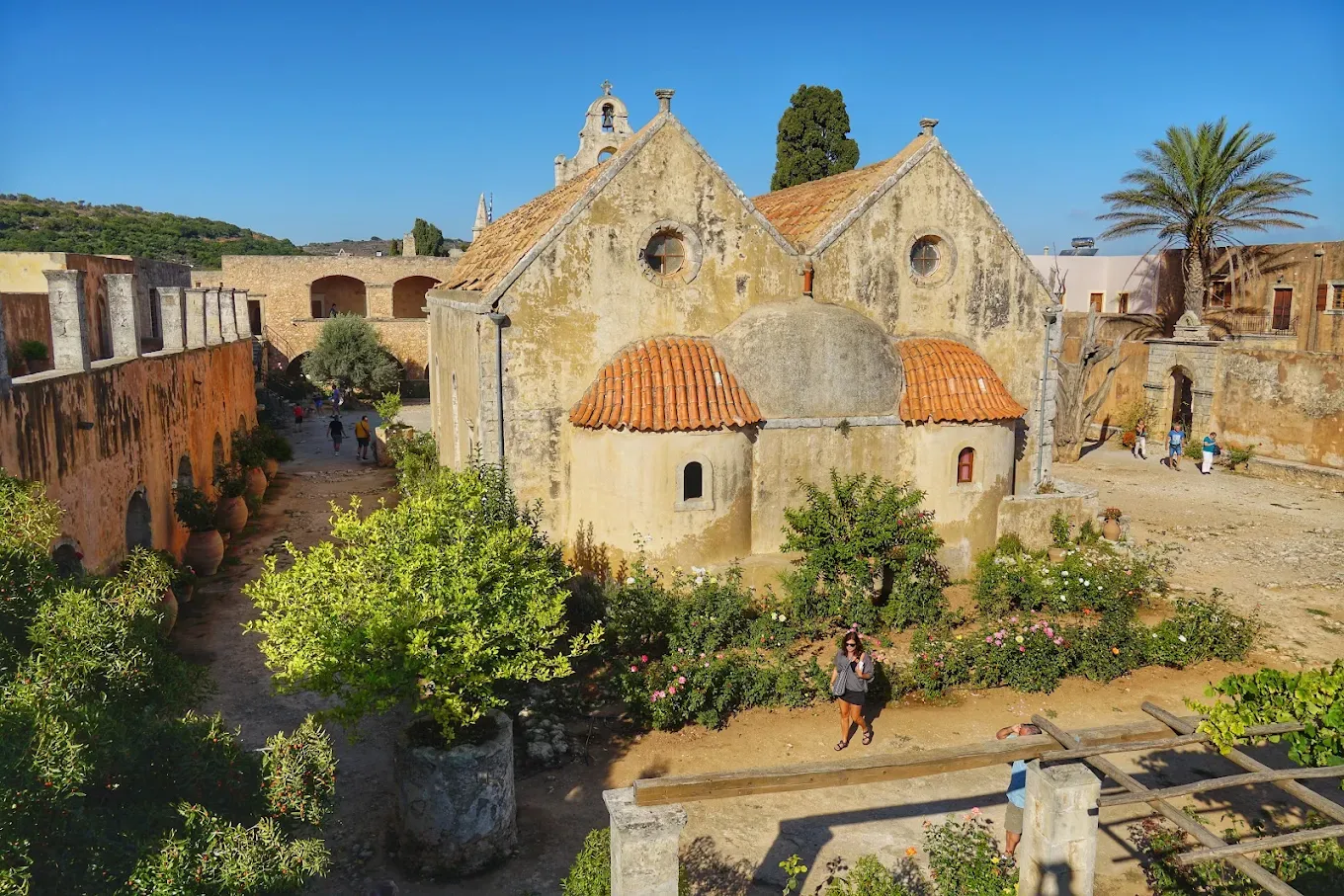
The complex resembles a small fortress. High stone walls enclose a central courtyard, monastic cells, storerooms, the historic dining room and the main church. This enclosed design gave the monastery a defensive character long before it became associated with the Cretan uprising of 1866.
Arkadi remains a functioning place of worship rather than an abandoned historical monument. Visitors share the site with monks, pilgrims and local families attending religious services. Appropriate clothing and respectful behaviour are therefore expected.
The official monastery records its presence in Cretan life across approximately eight centuries. During that time, it served as a religious centre, a place of education, a manuscript workshop and, eventually, a symbol of resistance against Ottoman rule.
Why Is Arkadi Monastery Famous?
Arkadi Monastery is primarily known for the events of November 1866, during the Cretan Revolt against Ottoman rule.
Hundreds of civilians, monks and fighters had taken refuge inside the fortified complex. According to the monastery’s historical account, 964 people from nearby villages and the revolutionary forces were enclosed within Arkadi when Ottoman troops surrounded it.
Following a two-day siege, the defenders faced the collapse of the monastery’s defences. Rather than surrender, people gathered inside the powder magazine and ignited the stored gunpowder.
The explosion killed many of those sheltering inside, as well as Ottoman soldiers who had entered the complex. The event became known as the Arkadi self-sacrifice, or the Arkadi Holocaust in Greek historical writing.
Although the uprising continued after the monastery fell, the events attracted international attention. Arkadi became associated with the wider Cretan struggle for freedom and the island’s eventual union with Greece.
Its importance, however, is not limited to the battle. Arkadi had already spent centuries as a centre of religion, culture and skilled craftsmanship. The museum and surviving monastic buildings help place the events of 1866 within this longer history.
The History of Moni Arkadiou
The Foundation of Arkadi Monastery
The precise foundation date of Arkadi Monastery is uncertain. According to the monastery’s own historical tradition, it was established around the 11th century by a monk named Arkadios, from whom the monastery may have taken its name.
The original complex was smaller than the buildings visible today. It reportedly consisted of a modest church surrounded by a limited number of monastic cells.
The current main church was completed in 1587, according to an inscription at the base of the bell tower. By approximately 1600, much of the fortified monastery had taken the form that visitors recognise today.
A Centre of Education and Manuscript Production
Arkadi became particularly important during the period of Venetian rule in Crete. In the 17th century, it operated as a well-known manuscript-copying centre.
Monks copied religious and literary texts by hand, preserving knowledge while also generating income for the community. Several manuscripts connected with the monastery survive, and examples are displayed in its museum.
During the 18th century, Arkadi also became known for ecclesiastical embroidery. Monks produced detailed church fabrics and vestments using gold and silver thread. These works were sold to churches and monasteries, helping support the community financially.
Arkadi Under Ottoman Rule
Rethymno fell to the Ottoman Empire in the 17th century. Arkadi continued to operate, but its relationship with the authorities was not always stable.
The monastery supported local Christian communities and became involved in resistance activity. Its rural location, supplies and fortified walls allowed it to shelter people during periods of unrest.
Monks from Arkadi also participated in the revolutionary movements of the 19th century. The monastery was attacked and looted during earlier uprisings before becoming a central location in the Cretan Revolt of 1866.
The Siege of Arkadi in 1866
The Cretan Revolt began in 1866 amid demands for greater rights and an end to Ottoman control. Arkadi Monastery became an important centre for the revolutionary committee in the Rethymno area.
As Ottoman forces approached, civilians from the surrounding villages sought shelter inside the monastery. Many were women, children and older residents, while only part of the group was armed.
The walls gave Arkadi the appearance of a fortress, but the complex had not been designed to withstand a large, organised army equipped with artillery.
Ottoman troops reached the monastery in early November. Fighting continued for two days, with defenders attempting to hold the gates and walls.
On November 9, 1866, after the attackers entered the compound, the powder magazine was ignited. The explosion caused extensive loss of life and transformed the monastery into a lasting symbol of resistance.
News of the siege spread outside Crete and contributed to international interest in the island’s struggle. Each year, commemorative events take place around November 8, honouring those who died at Arkadi.
Things to Do at Arkadi Monastery
See the main church
The church stands in the centre of the courtyard and is the architectural focus of the complex. Its carved stone façade reflects Renaissance influences associated with Venetian Crete.
The church has two aisles. One is dedicated to the Transfiguration of Christ, while the other honours Saints Constantine and Helen.
Enter the powder magazine
The powder magazine is the most emotionally difficult part of the visit. This is where the final explosion occurred during the siege of 1866.
An artistic representation inside the room helps visitors understand the scale and meaning of the event. Keep voices low and allow others time to enter the relatively small space.
Visit the historic refectory
The refectory was the monastery’s dining hall. Its long interior and surviving furnishings provide an impression of communal monastic life.
The room is also connected with the final fighting of the siege. Marks preserved on parts of the wood and stone are linked with the violence that took place inside the complex.
Explore the museum
The museum contains religious objects, manuscripts, weapons, vestments, icons and items associated with 1866.
It gives useful context to the site, particularly for visitors unfamiliar with Cretan history. Allow enough time to read the information rather than treating the museum as a quick stop.
See the art gallery
The monastery’s art gallery displays work connected with its religious and historical identity. It occupies restored rooms above the museum collection.
Walk around the monastic cells and storerooms
The buildings around the courtyard include former cells, storerooms and working areas. Together, they show that Arkadi was a self-contained community supported by agriculture, crafts and organised religious life.
Visit the memorial outside the walls
A memorial structure near the monastery contains the remains of people who died during the siege. It is another space that should be approached quietly and respectfully.
The main church, refectory, cellars, powder magazine, museum and art gallery are all included among the areas officially open to visitors.
How Long Do You Need at Arkadi Monastery?
Allow approximately 60 to 90 minutes for a complete visit.
One hour is generally enough to walk through the courtyard, church, museum, refectory and powder magazine. Visitors with a strong interest in history, religious art or photography may prefer closer to two hours.
Arkadi is compact, but rushing through it makes the story difficult to understand. The buildings gain meaning when viewed in sequence, beginning with the church and daily monastic spaces before entering the rooms associated with 1866.
Arrive earlier in the day during summer. Organised groups often appear between late morning and early afternoon, and the central courtyard receives direct sun.
Arkadi Monastery Opening Hours and Tickets
Arkadi Monastery is open daily, but visiting hours change throughout the year.
The monastery currently publishes the following schedule:
March: 09:00 to 18:00
April and May: 09:00 to 19:00
June, July and August: 09:00 to 20:00
September: 09:00 to 19:00
October: 09:00 to 18:00
November: 09:00 to 17:00
From April to October, the museum and monastery entrance operate daily. On Sundays, the museum opens after the Divine Liturgy has finished. Winter visitors should check the current schedule before travelling.
A small admission fee applies, and tickets can also be reserved through the monastery’s official online ticket platform. Prices and access arrangements may change, so confirm them before your visit.
As Arkadi is an active religious site, visitors should cover shoulders and avoid very short clothing. Photography may be restricted during services or inside specific rooms.
Food and Tavernas Near Arkadi
There are limited options for a full meal within the immediate monastery complex. Plan to eat in one of the nearby villages or return towards Rethymno.
The villages around Arkadi and Ancient Eleutherna have traditional tavernas serving grilled meat, seasonal vegetables, local cheeses and slow-cooked dishes.
Look for Cretan staples such as dakos, stuffed vegetables, lamb, apaki smoked pork, kalitsounia and dishes prepared with local olive oil.
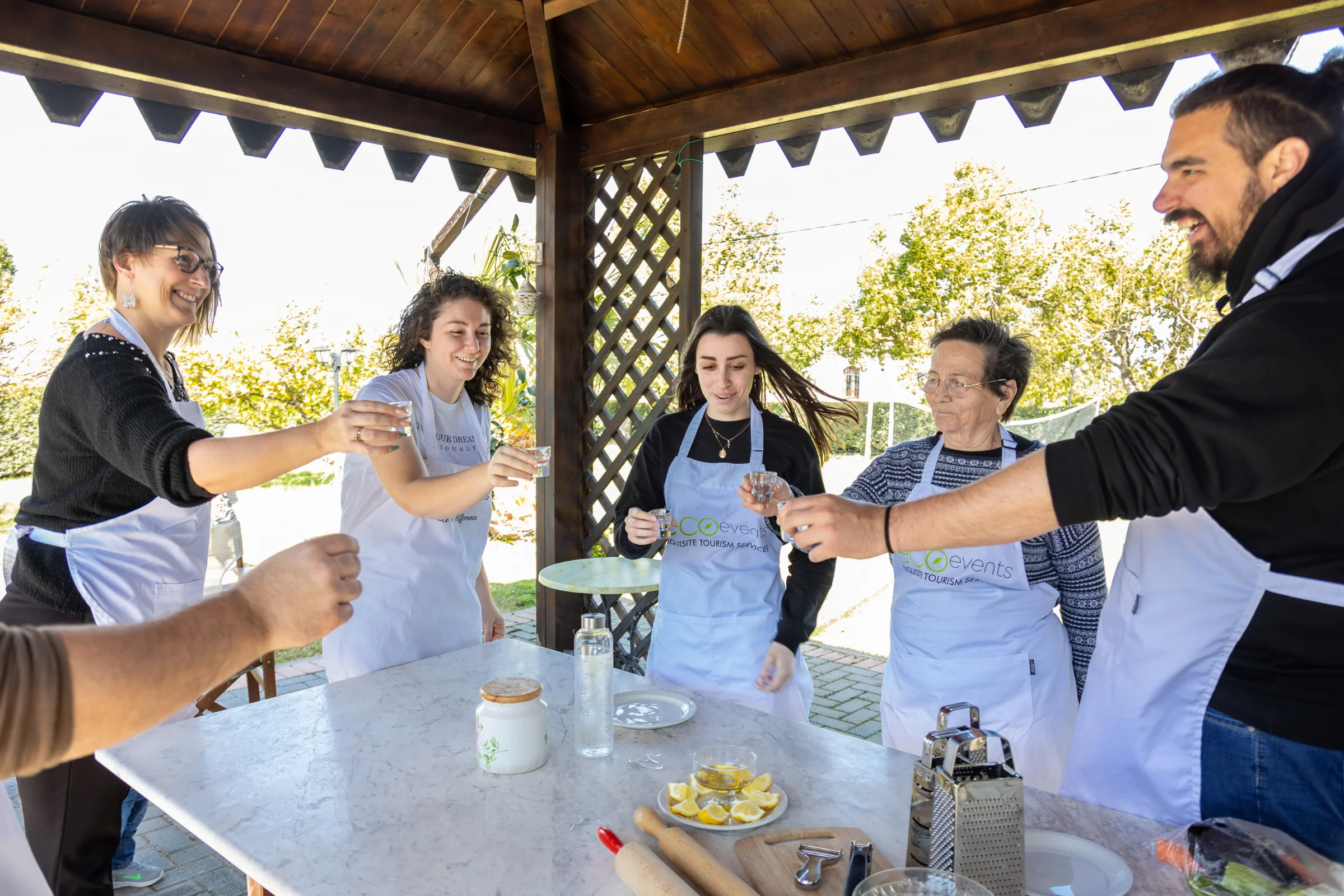
The wider region is also known for wine, honey, herbs, carob and dairy products. Combining Arkadi with a village meal or tasting experience gives the day a stronger connection to inland Rethymno rather than treating the monastery as an isolated stop.
Weather and Best Time to Visit
Arkadi Monastery can be visited throughout the year, but spring and early autumn provide the best conditions for combining the site with the surrounding countryside.
April to June brings mild to warm weather, green landscapes and longer daylight hours. This is a good period for adding Ancient Eleutherna or Margarites to the same trip.
July and August are hot and busy. The courtyard has limited shade, so arrive in the morning or later in the afternoon.
September and October usually remain warm, while visitor numbers begin to fall. These months work well for sightseeing, village visits and food experiences.
November to March is quieter and can feel more reflective. Rain and cooler temperatures are more likely, while public transport and visitor services may be limited.
Getting to Arkadi Monastery
Arkadi Monastery is approximately 23 kilometres southeast of Rethymno. The drive usually takes around 30 to 40 minutes, depending on traffic and your starting point.
By Car
Driving is the simplest option. The route leaves the coast and passes through villages and cultivated countryside before reaching the monastery.
Road signs direct drivers towards Arkadi. The final approach is paved, though parts of the route include bends and narrower sections.
By Taxi
A taxi from Rethymno is convenient for travellers who do not want to rent a car. Arrange a return pickup in advance, as taxis may not always be waiting outside the monastery.
By Public Bus
Seasonal buses may connect Rethymno with Arkadi, but services are less frequent than routes along the northern coast. Check the current KTEL timetable before planning the day.
With an Organised Experience
An organised tour removes the need to arrange transport and often combines Arkadi with places such as Ancient Eleutherna, Margarites or Rethymno Old Town.
Check how much time is allocated to the monastery. Some itineraries cover several attractions and may allow only a brief visit.
Where to Stay
Rethymno Old Town is the most practical base for visiting Arkadi. It offers restaurants, historical attractions and access to tours and rental cars.
Platanes and Adelianos Kampos work well for travellers who want beach accommodation while remaining within easy driving distance of the monastery.
Panormos is a smaller coastal base east of Rethymno, with a harbour, beaches and tavernas.
Travellers planning several days in the countryside may also consider a guesthouse near Margarites, Ancient Eleutherna or the foothills of Psiloritis.
Nearby Attractions
Ancient Eleutherna
Ancient Eleutherna is one of the most important archaeological sites in the Rethymno region. Its remains cover several historical periods, while the nearby museum displays discoveries from the site.
Margarites
Margarites is known for its pottery workshops. Visitors can watch local craftspeople shape and decorate ceramics using techniques connected with the village’s long craft tradition.
Museum of Ancient Eleutherna
The museum presents objects discovered during excavations, including items from the Geometric and Archaic periods. It adds useful context before or after visiting the archaeological site.
Melidoni Cave
Melidoni Cave combines natural formations with an important historical story. It is located farther east and can be included in a longer drive through inland Rethymno.
Rethymno Old Town
Rethymno Old Town contains Venetian houses, Ottoman architecture, the Rimondi Fountain, the Fortezza and the old harbour. It is a natural place to begin or end an Arkadi day trip.
Amnatos
Amnatos is a traditional village close to Arkadi, with old stone houses and links to the region’s revolutionary history.
Frequently asked questions
Why is Arkadi Monastery famous?
Arkadi Monastery is famous for the siege of 1866, when Cretan fighters and civilians resisted Ottoman forces. The final explosion in the powder magazine made Arkadi a symbol of sacrifice and resistance.
Where is Arkadi Monastery?
Arkadi Monastery is located around 23 kilometres southeast of Rethymno, on a rural plateau in central Crete.
How old is Arkadi Monastery?
The exact foundation date is uncertain, but the monastery’s tradition places its foundation around the 11th century. The current main church was completed in 1587.
How long do you need at Arkadi Monastery?
Most visitors need between 60 and 90 minutes. Allow longer when you want to explore the museum and read the historical information carefully.
Is there an entrance fee for Arkadi Monastery?
Yes, a small entrance fee applies. Tickets can be purchased at the site or through the monastery’s official online ticket platform. Confirm the current price before visiting.
What are the Arkadi Monastery opening hours?
Opening hours vary by month. The monastery generally opens at 09:00, with closing time ranging from 17:00 to 20:00 depending on the season.
Can you visit Arkadi Monastery from Rethymno?
Yes. Arkadi is approximately a 30 to 40-minute drive from Rethymno and can be reached by car, taxi, organised tour or seasonal public bus.
Is Arkadi Monastery still active?
Yes. Moni Arkadiou remains an active Orthodox monastery and pilgrimage destination. Visitors should dress respectfully and avoid disrupting services.
Things to do nearby
Book a guided experience in this area
Related Articles
Continue exploring Crete
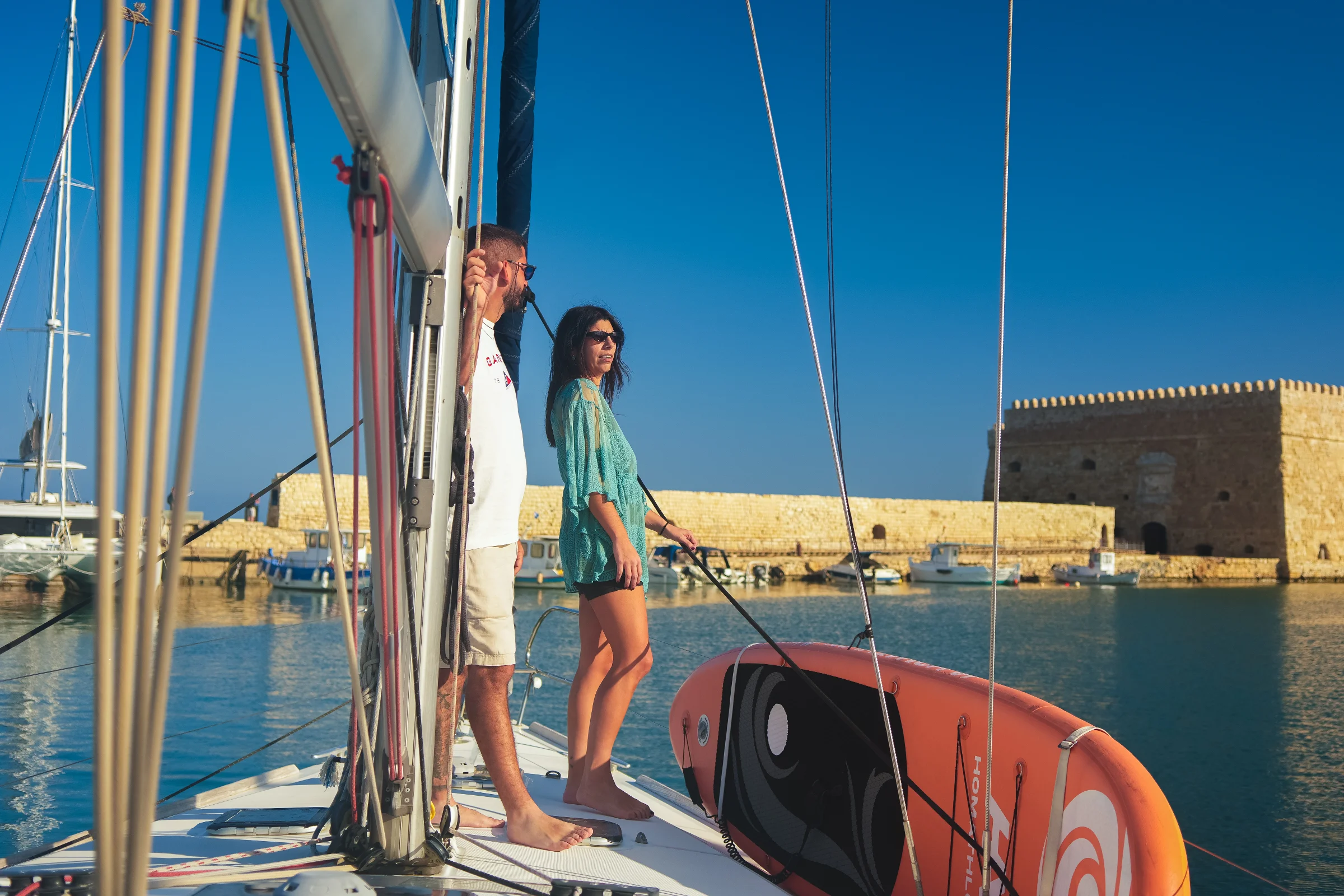
One Day in Heraklion: The Complete Itinerary for Crete's Capital
Most visitors get exactly one day in Heraklion, and most of them spend it queuing at Knossos in the worst of the afternoon heat. It does not have to go that way. This is the order we would put the day in — the palace first thing, the Old Town on foot while the shade still favours you, the museum indoors when the sun is at its worst, and the Venetian harbour at the end. Every time and price below comes from our own booking calendar, so you can plan the day around what is genuinely running rather
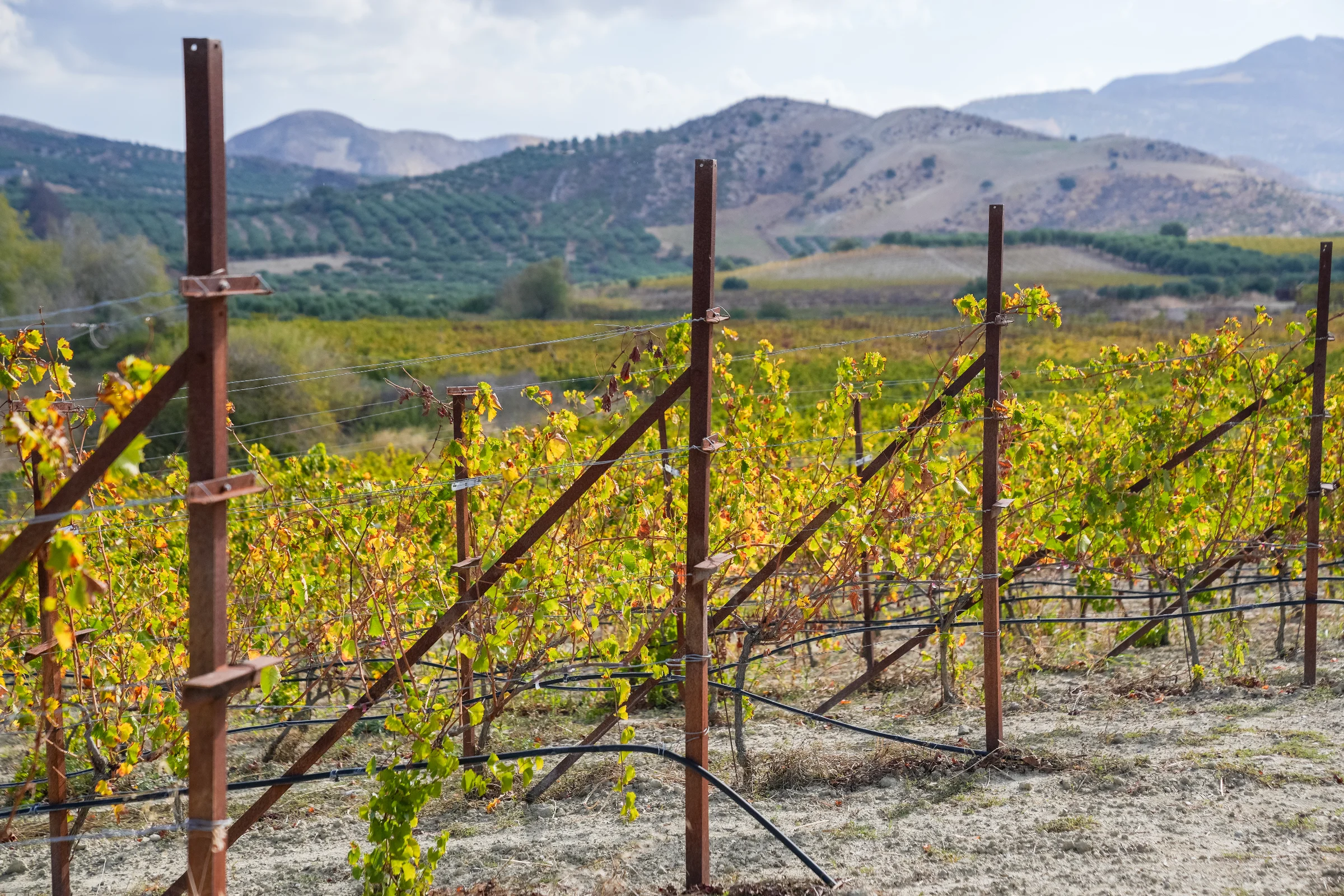
Cretan Red Wine: The Grapes, the Blends and What the Label Hides
Crete's red wines are easier to enjoy than to read. The island's leading red grape is almost never named on the front of a bottle, the two appellations built on it print no recipe at all, and the most confident Englishlanguage writing about Cretan wine repeats three claims that Greek planting and appellation records flatly contradict. This is the grapebygrape, labelbylabel version: what the four native reds taste like, why they are blended rather than bottled alone, what a PDO and a PGI
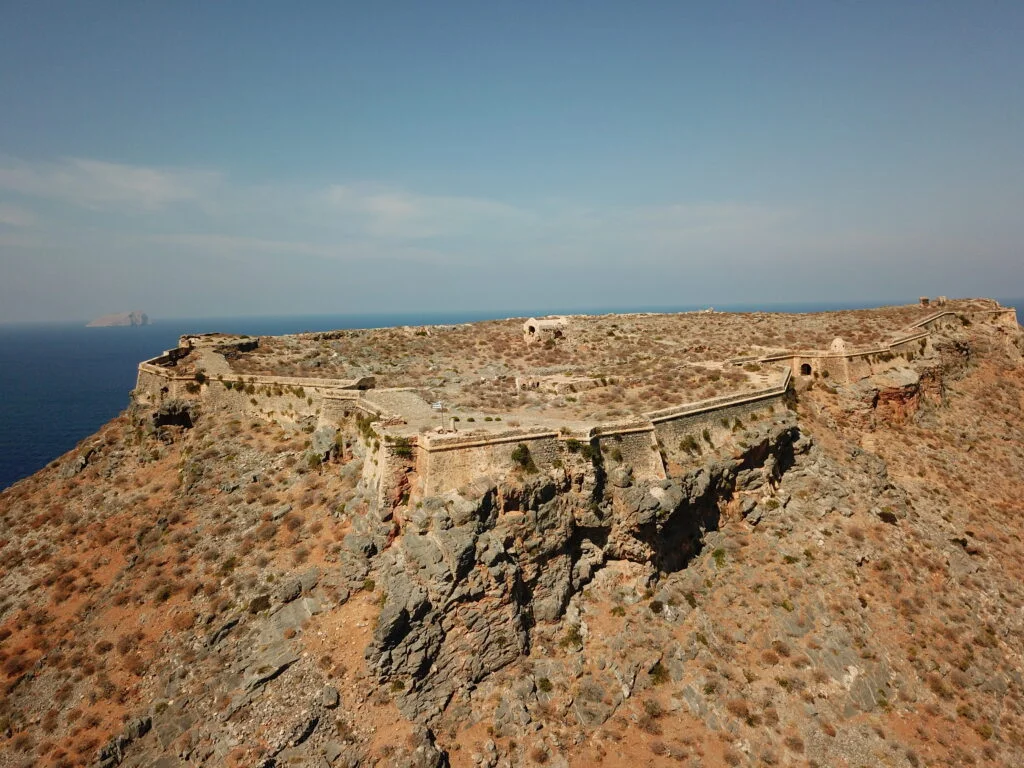
Venetian Fortresses of Crete: History and Visitor Guide
The Venetian fortresses of Crete still guard harbours, hilltops and remote islands across the coast. Some have become city landmarks, while others require a boat journey or a steep walk to reach their walls. This guide covers their history, the best fortresses to visit and how to include them in a trip around Crete.
Let Crete come to you
Sign up to get authentic stories, travel tips, and new experiences
By entering my email, I agree to receive marketing notifications from travel & do.