 Back to blog
Spinalonga Island: History, Tickets and Boat Trips
On this page
- Quick Summary
- What Is Spinalonga Island?
- Why Is Spinalonga Famous?
- The History of Spinalonga Island
- Ancient Spinalonga and the Venetian Fortress
- Spinalonga During the Ottoman Period
- Spinalonga as a Leper Colony
- Things to Do on Spinalonga
- Planning a Spinalonga Boat Trip
- Boats from Plaka
- Boats from Elounda
- Boat Trips from Agios Nikolaos
- Shared Catamaran Trips
- Spinalonga Tickets and Opening Hours
- How Long Do You Need on Spinalonga?
- Food, Bars and Tavernas
- Weather and Best Time to Visit
- Getting to Spinalonga
- Nearby Attractions
- Elounda
- Plaka
- Kolokytha Bay
- Agios Nikolaos
- Ancient Olous
- Kritsa and Ancient Lato
Quick Summary
Spinalonga Island is located in the Gulf of Elounda, in eastern Crete.
It is known for its Venetian fortress and its years as a leper colony.
Boats depart from Plaka, Elounda and Agios Nikolaos.
The official full entrance ticket currently costs €20.
Most visitors need around 60 to 90 minutes to explore the island.
May, June, September and early October are the most comfortable months to visit.
What Is Spinalonga Island?
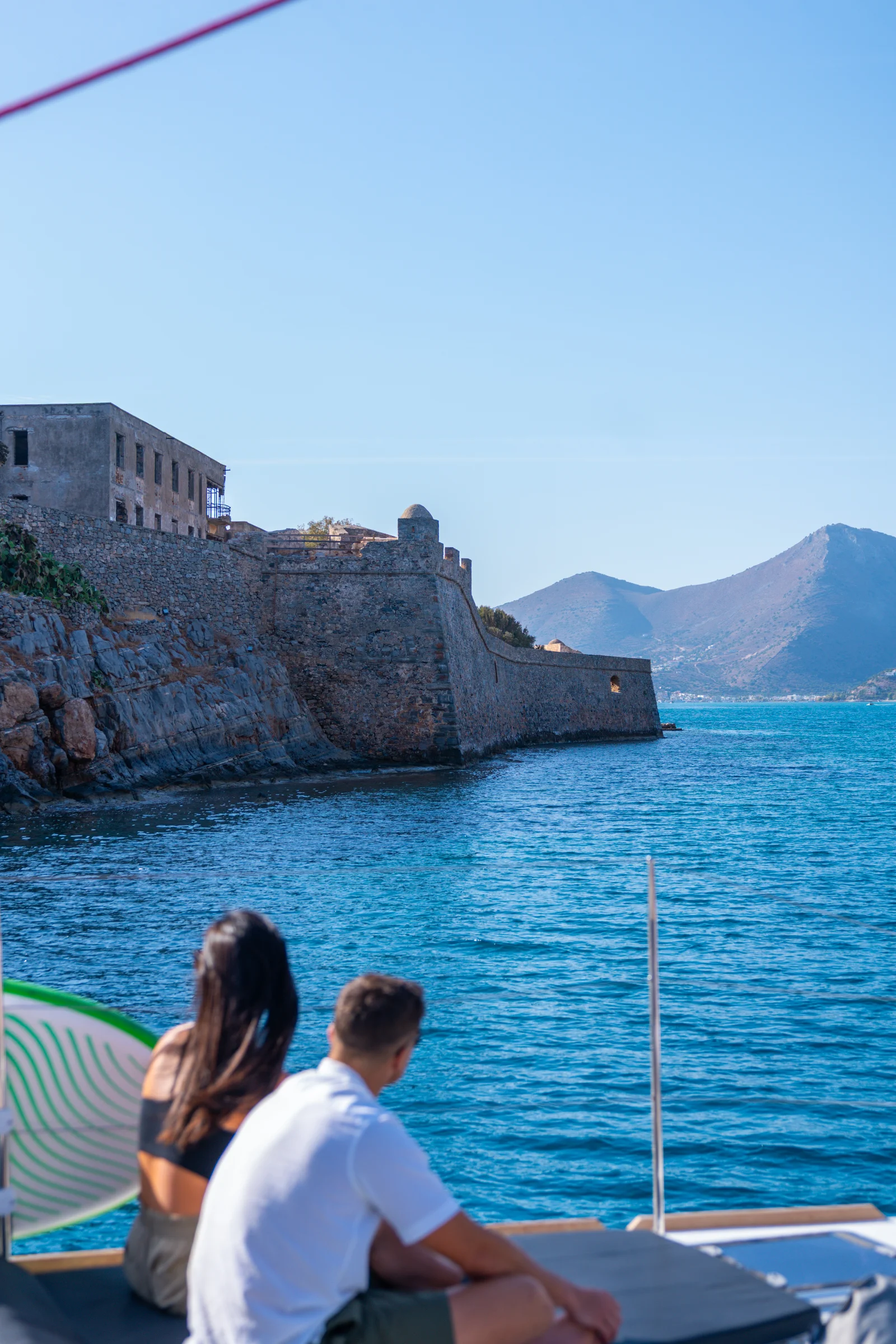
Spinalonga is a small rocky island at the entrance to the natural harbour of Elounda, in the Lasithi region of Crete. It lies directly opposite the coastal village of Plaka and can only be reached by boat.
Despite its limited size, Spinalonga contains remains from several periods of Cretan history. Venetian fortifications surround Ottoman houses, churches, shops and buildings later used by the island’s leper colony.
Today, Spinalonga is an organised archaeological site and one of the most visited historical attractions in Crete. Visitors come to walk through the former settlement, see the defensive walls and learn about the people who lived there under very different circumstances.
The island is sometimes also referred to as Kalydon, although Spinalonga is the name most commonly used by visitors and local boat operators.
Why Is Spinalonga Famous?
Spinalonga is mainly known for two reasons.
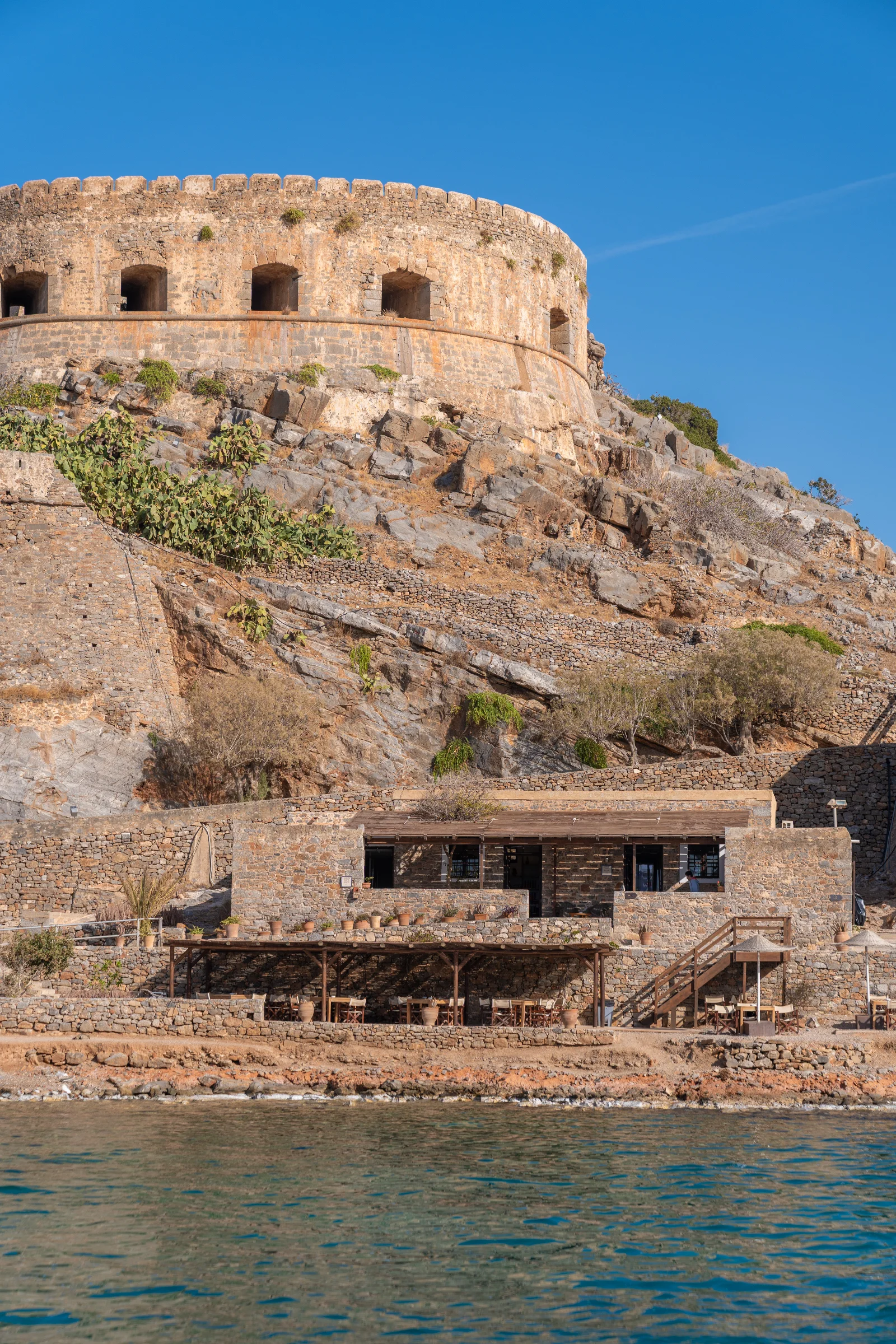
The first is its Venetian fortress, constructed during the late 16th century to protect the harbour of Elounda and the surrounding coastline. The second is the island’s use as a leper colony during the first half of the 20th century.
However, the history of Spinalonga is not limited to its years of isolation. The island was also an important Ottoman settlement and commercial centre. At different times, it functioned as a fortress, a residential community, a place of trade and a medical settlement.
This combination gives Spinalonga a different character from other archaeological sites in Crete. It is not simply a collection of ruins. The surviving streets and buildings show how several communities adapted the same limited space over hundreds of years.
The History of Spinalonga Island
Ancient Spinalonga and the Venetian Fortress
The strategic position of Spinalonga was recognised in antiquity. The island helped protect Olous, an ancient city located in the wider Elounda area.
During the Venetian occupation of Crete, the harbour of Elounda became increasingly important. Venice wanted to protect both maritime activity and the salt pans that contributed to the local economy.
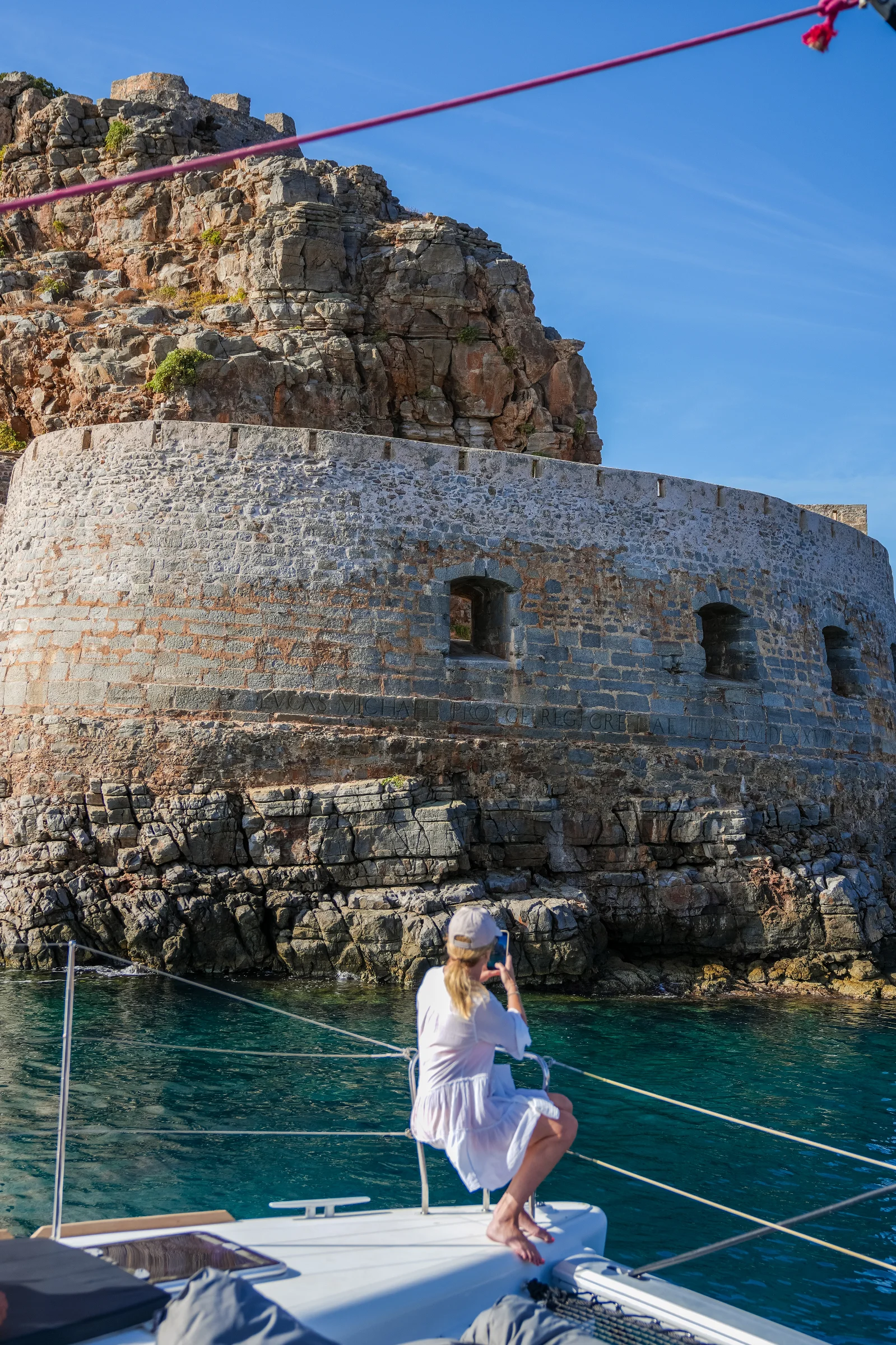
Between 1579 and 1586, the Venetians constructed a major fortress on Spinalonga. Its walls and bastions followed the island’s natural shape, creating a strong defensive position at the entrance to the bay.
When most of Crete fell to the Ottoman Empire during the 17th century, Spinalonga remained under Venetian control. Its fortifications allowed it to resist Ottoman occupation for several more decades.
The island was finally surrendered to the Ottomans in 1715.
Spinalonga During the Ottoman Period
Following the Ottoman takeover, Muslim families settled inside the former Venetian fortress. Houses, workshops and shops were constructed over or beside the existing military buildings.
The settlement expanded during the 19th century. By 1881, more than 1,100 people lived on Spinalonga, and the island had become an important Muslim commercial centre in Mirabello Bay.
Many of the two-storey houses visible today belong to this period. Their remains show that Spinalonga once had an active residential and commercial community rather than functioning only as a military outpost.
Political tension and the Cretan uprisings led many residents to leave the island towards the end of the 19th century.
Spinalonga as a Leper Colony
In 1903, the Cretan State decided to convert Spinalonga into a public leper colony. The first residents began arriving during the following period, and people diagnosed with leprosy were later transferred there from different parts of Greece.
Life on the island was particularly difficult during the colony’s early years. Medical support, sanitation and basic infrastructure were limited. Residents were separated from their families and from society on the mainland.
Over time, however, they organised their own community. Small shops opened, churches remained active and residents worked to improve their living conditions. People formed friendships, married and created daily routines within the restrictions imposed on them.
One of the best-known residents was Epaminondas Remoundakis, who helped organise the Brotherhood of the Sick of Spinalonga. The group campaigned for better healthcare, sanitation and treatment of the people living on the island.
As medical treatments developed, long-term isolation was no longer considered necessary. The leper colony closed in 1957, and the remaining patients were transferred to a hospital near Athens.
Spinalonga remained uninhabited and was officially designated as an archaeological site in 1976.
Things to Do on Spinalonga
Walk through the Main Gate
The main Venetian entrance leads through a covered passage into the former settlement. This was also the route followed by many of the people sent to live on Spinalonga during the leper colony period.
Explore the Main Street
The main street contains restored shops and houses from the Ottoman settlement and the leper colony. Information panels explain how the buildings were used and how daily life developed on the island.
See the Venetian Fortifications
The walls and defensive structures provide some of the clearest evidence of Spinalonga’s military importance. Several sections also offer open views towards Plaka, Elounda and the Gulf of Mirabello.
Visit the Churches
Churches dedicated to Saint Panteleimon, Saint Nicholas and Saint George survive on the island. Religious services and celebrations remained an important part of community life during the leper colony period.
Follow the Perimeter Route
The path around the island connects the main historical buildings and provides different views of the fortress. Some parts are uneven, exposed to the sun and unsuitable for visitors with limited mobility.
Planning a Spinalonga Boat Trip
A Spinalonga boat trip is the only way to reach the archaeological site. Visitors can choose between a short transfer from Plaka, a boat from Elounda or a longer sea excursion from Agios Nikolaos.
Boats from Plaka
Plaka is the closest mainland departure point. The crossing usually takes only a few minutes, making it the most practical choice for visitors who mainly want to explore the archaeological site.
This option also allows you to organise the day independently. You can visit the island in the morning and have lunch at one of the waterfront tavernas in Plaka afterwards.
Boats from Elounda
Elounda offers frequent seasonal departures and a slightly longer crossing. The journey provides wider views of the bay and the remains of the old salt pans.
This is a convenient option for visitors staying in Elounda or one of the nearby resorts.
Boat Trips from Agios Nikolaos
A Spinalonga boat trip from Agios Nikolaos usually forms part of a longer experience around Mirabello Bay. The route may pass Agioi Pantes, Elounda and other sections of the coast before reaching the Spinalonga area.
Some excursions also include swimming, snorkeling, food or a stop at a quiet bay. This makes them better suited to travellers who want to combine the historical visit with a day at sea.
Shared Catamaran Trips
A shared catamaran cruise is a more social alternative to a private boat. Catamarans generally provide open deck areas, space to relax and greater stability while sailing.
Depending on the itinerary, the cruise may include meals, drinks, snorkeling equipment and swimming near Kolokytha or another bay in the area.
Spinalonga Tickets and Opening Hours
The entrance ticket for the Spinalonga archaeological site is separate from the price of the boat trip.
The official ticket prices are currently:
Full ticket: €20
Reduced ticket: €10 for eligible visitors
From April 1 to October 31, the official summer opening hours are currently 08:00 to 20:00, with the last admission shortly before closing.
During winter, the site operates on reduced hours and is closed on Tuesdays. Boat availability is also more limited during this period, so visitors should confirm both the archaeological site schedule and transport before travelling.
Opening hours and ticket prices may change. Check the latest official information before your visit, particularly if you are travelling outside the main tourist season.
How Long Do You Need on Spinalonga?
Most visitors need around 60 to 90 minutes to explore the main route.
One hour is usually enough to walk through the central settlement and see the most important buildings. Allow closer to 90 minutes if you want to read the information panels, explore the fortifications and take photographs without rushing.
Some organised cruises provide a fixed amount of time on the island. Check the itinerary before booking, especially if the historical visit is the main reason for your trip.
Wear comfortable shoes because the site includes cobbled streets, steps and uneven paths. Shade is limited, so bring water, sunscreen and a hat during the summer.
Food, Bars and Tavernas
Refreshment options on Spinalonga are limited. It is better to plan your main meal on the mainland or choose a boat trip that includes food and drinks.
Plaka is the closest place for lunch after visiting the island. Its waterfront tavernas serve seafood, grilled fish, salads and traditional Cretan dishes, with direct views of Spinalonga.
Elounda has a larger selection of restaurants, cafés and harbourfront dining options.
Agios Nikolaos offers the widest range of places to eat, particularly around Lake Voulismeni, the marina, the harbour and Kitroplatia Beach.
Weather and Best Time to Visit
Spinalonga is exposed to the sun and has relatively little shade. The season and departure time can significantly affect the experience.
May and June are good months for warm weather, clear sea conditions and fewer visitors than the main summer period.
July and August are the hottest and busiest months. Choose an early boat and avoid walking around the upper fortifications during the hottest part of the day.
September and early October are also good choices. The sea remains warm enough for swimming, while temperatures are generally more comfortable for exploring the archaeological site.
Boat schedules may be changed or cancelled when wind and sea conditions make the crossing unsafe.
Getting to Spinalonga
Spinalonga can only be reached by boat from the eastern coast of Crete.
From Agios Nikolaos, you can travel directly by boat or drive to Elounda or Plaka before taking a shorter crossing.
From Heraklion, the journey to Agios Nikolaos usually takes around one hour by car. Continue north towards Elounda and Plaka if you prefer the shorter boat transfer.
Public buses connect Heraklion with Agios Nikolaos and Agios Nikolaos with Elounda. However, bus schedules may not always match the boat departure times, especially outside summer.
🔗 Browse all experiences in Agios Nikolaos for more cruises and activities.
Where to Stay
Plaka is suitable for visitors looking for a quiet coastal village close to Spinalonga. Accommodation is more limited, but the shortest boat crossing is located here.
Elounda has a wide range of resorts, hotels and luxury properties. It provides easy access to Spinalonga, Plaka and the beaches around the peninsula.
Agios Nikolaos is the best base for travellers who want more restaurants, shops and activities. It also provides convenient road connections to other parts of Lasithi.
Nearby Attractions
Elounda
Elounda is a coastal town with a harbour, restaurants and views across the bay. It is also the starting point for several Spinalonga boat services.
Plaka
Plaka is located directly opposite the island. Its waterfront provides one of the clearest views of the Venetian fortress.
Kolokytha Bay
Kolokytha is known for its clear water and is frequently included as a swimming stop on boat and catamaran excursions.
Agios Nikolaos
Agios Nikolaos is the capital of the Lasithi region. Its main landmarks include Lake Voulismeni, the marina and the waterfront around Kitroplatia.
Ancient Olous
Ancient Olous was an important city in the Elounda area. Some remains are located near the causeway, while other sections of the settlement are now underwater.
Kritsa and Ancient Lato
The village of Kritsa, the Byzantine Church of Panagia Kera and the archaeological site of Ancient Lato can all be combined with a wider road trip around Lasithi.
Frequently asked questions
What is Spinalonga famous for?
Spinalonga is famous for its Venetian fortress and its use as a leper colony between 1904 and 1957. The island also preserves houses, churches, shops and defensive structures connected to its Venetian, Ottoman and modern history.
What is the history of Spinalonga Island?
Spinalonga was fortified by the Venetians during the late 16th century to protect the Gulf of Elounda. It later developed into an Ottoman settlement and, in 1904, became a leper colony for people from Crete and other parts of Greece. The colony closed in 1957, and Spinalonga is now one of the most visited historical sites in Crete.
Where is Spinalonga Island?
Spinalonga Island is located in the Gulf of Elounda, in the Lasithi region of eastern Crete. It lies directly opposite the village of Plaka and can also be reached by boat from Elounda and Agios Nikolaos.
How do you get to Spinalonga Island?
Spinalonga can only be reached by boat. Regular boat services operate from Plaka and Elounda during the visitor season, while longer organised cruises and boat trips also depart from Agios Nikolaos.
How much are Spinalonga tickets?
The standard Spinalonga entrance ticket is currently €20, while a reduced ticket of €10 is available to eligible visitors. The archaeological entrance fee is normally paid separately from the cost of the boat trip.
Does a Spinalonga boat trip include the entrance ticket?
Not always. Many Spinalonga boat trips include transportation to the island but do not include admission to the archaeological site. Check the experience details before booking to see whether the entrance ticket is included. Allow between 60 and 90 minutes to
What are the Spinalonga opening hours?
Spinalonga is currently open daily from 08:30 to 18:00, from April 1 until October 31. The archaeological site is normally closed to individual visitors during winter, and access always depends on weather and boat conditions.
How long do you need for a Spinalonga boat trip?
Allow between 60 and 90 minutes to explore Spinalonga Island itself. The complete boat trip may take several hours, depending on the departure point and whether the itinerary includes swimming, snorkeling, food or additional stops around Elounda and Mirabello Bay.
Related Articles
Continue exploring Crete
One Day in Heraklion: The Complete Itinerary for Crete's Capital
Most visitors get exactly one day in Heraklion, and most of them spend it queuing at Knossos in the worst of the afternoon heat. It does not have to go that way. This is the order we would put the day in — the palace first thing, the Old Town on foot while the shade still favours you, the museum indoors when the sun is at its worst, and the Venetian harbour at the end. Every time and price below comes from our own booking calendar, so you can plan the day around what is genuinely running rather
Cretan Red Wine: The Grapes, the Blends and What the Label Hides
Crete's red wines are easier to enjoy than to read. The island's leading red grape is almost never named on the front of a bottle, the two appellations built on it print no recipe at all, and the most confident Englishlanguage writing about Cretan wine repeats three claims that Greek planting and appellation records flatly contradict. This is the grapebygrape, labelbylabel version: what the four native reds taste like, why they are blended rather than bottled alone, what a PDO and a PGI
Venetian Fortresses of Crete: History and Visitor Guide
The Venetian fortresses of Crete still guard harbours, hilltops and remote islands across the coast. Some have become city landmarks, while others require a boat journey or a steep walk to reach their walls. This guide covers their history, the best fortresses to visit and how to include them in a trip around Crete.
Let Crete come to you
Sign up to get authentic stories, travel tips, and new experiences
By entering my email, I agree to receive marketing notifications from travel & do.