 Back to blog
Matala Beach: Things to Do, See & Experience
On this page
Quick Summary
Matala is located 68 km southwest of Heraklion, where the Messara plain meets the Asterousia Mountains.
The beach is world-famous for its ancient cliff caves, originally Roman-era tombs, later inhabited by a hippie community in the 1960s and 70s.
Celebrities including Joni Mitchell, Bob Dylan, Janis Joplin and Joan Baez once lived here. Mitchell's 1971 song "Carey" immortalised the community.
The Matala Beach Caves are now a protected archaeological area, open to visit but no longer inhabited.
Activities include swimming, snorkelling, beach volleyball, water sports, boat excursions and exploring archaeological ruins.
The surrounding area is protected under the international Natura 2000 environmental programme.
Best weather runs from May through October, with peak season in July and August.
Several hotels, resorts and guesthouses lie within easy reach of the sand, including beachfront options.
What is Matala Beach?
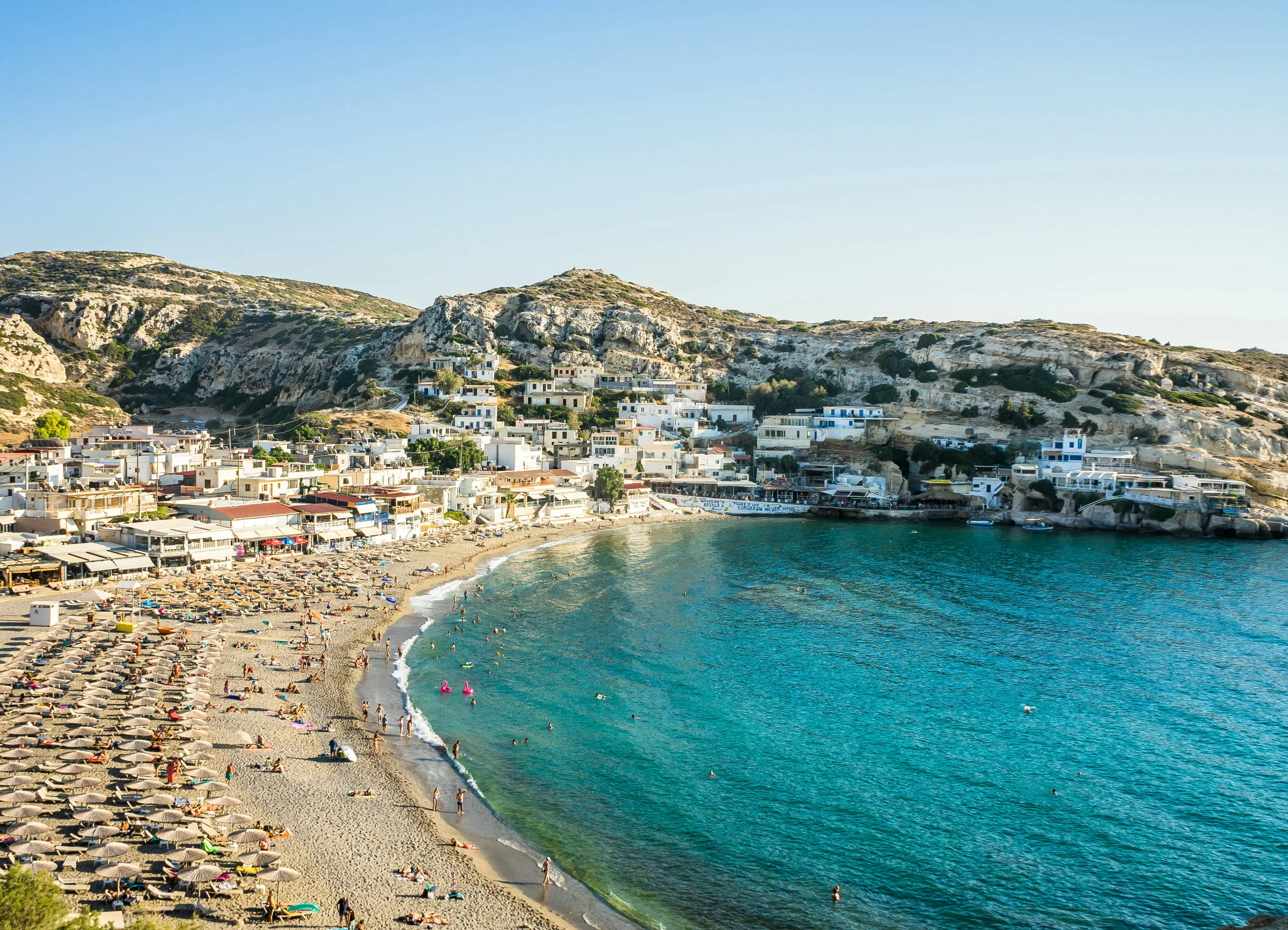
Matala Beach is one of the most iconic and historically rich beaches in all of Crete. Sitting at the southern edge of the Messara plain, the beach forms a perfectly enclosed bay framed by dramatic sandstone cliffs riddled with ancient caves. It is consistently ranked among the most famous beaches in the Heraklion prefecture, not just for its turquoise waters, but for the extraordinary layers of history carved into its very landscape.
The village has roots stretching back to the Neolithic Age. During the Minoan period it served as a seaport for the legendary city of Phaistos, and in Roman and early Christian times it fell under the jurisdiction of Gortys. Today it is a lively resort village, drawing visitors from across the world who come to swim, explore the caves, soak up the countercultural legacy and savour fresh seafood at waterside tavernas.
The enclosed geography of the bay means the sea is calm and protected, making it ideal for swimming at almost any skill level. What sets Matala apart from other Cretan beaches is the sheer density of things to see, do and discover, both above and below the waterline.
The Famous Hippie Caves
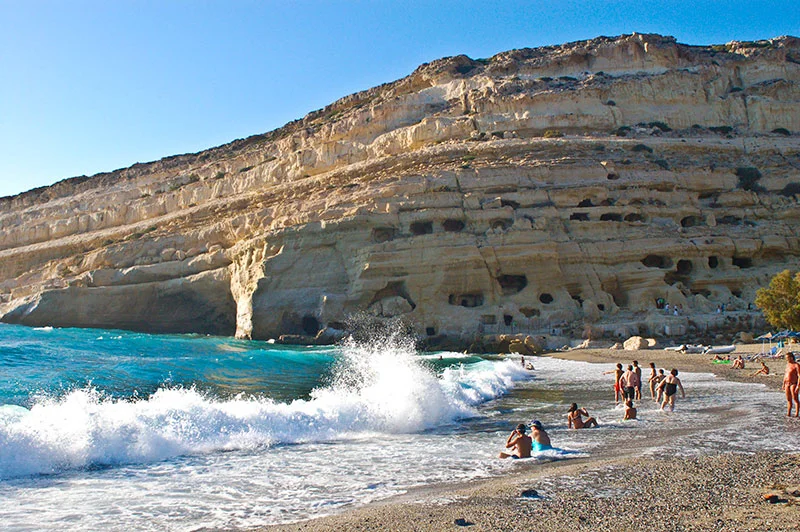
No visit to Matala Beach is complete without exploring its most defining feature: the honeycomb of caves carved into the soft white limestone cliffs at the northwestern end of the bay. These are not natural formations but man made cavities, cut into the rock thousands of years ago during the Roman and early Christian periods as burial tombs.
The caves are remarkably elaborate. Many contain carved rooms, staircases, beds, windows and niches, indicating that they were reused as dwellings long after their original funerary purpose. The entire complex is now a protected archaeological area, fenced off from permanent occupation but open to visitors during the day.
"In these caves of Matala beach in Crete, the hippies found their paradise in the '60s and '70s."
Visitors can walk through the network of chambers and enjoy spectacular views of the bay from the cliff face. Along the coast beyond the main cave cluster there are also entirely natural caves accessible by boat, and several submerged caves visible to snorkellers and divers.
Hippies, Celebrities & the Spirit of the '60s
The chapter of history that made Matala famous worldwide began in the early 1960s, when the first backpackers and free spirits discovered the abandoned cliff caves. What had once been a quiet fishing settlement for the inhabitants of nearby Pitsidia suddenly became a magnet for the international counterculture movement.
During the 1960s and 1970s, the caves were home to a community of "flower children" from across Europe and North America drawn by a total sense of freedom. At that time there was virtually nothing else here, no hotels, no bars, no tourist infrastructure. The motto of the community was simple: Peace Man.
The beach became so popular that it attracted celebrities including Joni Mitchell, Bob Dylan, Janis Joplin, Joan Baez and Cat Stevens. Joni Mitchell immortalised the experience in her 1971 song "Carey", one of the most famous musical tributes to any beach in the world. Eventually Greek authorities asked the community to leave, and the hippies dispersed to Preveli, Plakias, Lendas, Vai and eventually Ios island.
Their legacy lives on in the annual Matala Beach Festival, a music and arts event held every summer that honours the spirit of that era.
Things to Do in Matala
Visit the Hippie Caves Walk through ancient cliff-carved chambers where Roman tombs became hippie homes. Breathtaking bay views included. Small entry fee.
Swimming & Sunbathing Calm, crystal-clear water ideal for all ages. Sunbeds, umbrellas, showers, lifeguards and first aid all on site. Free access.
Boat Excursions & Sea Caves Boat trips along the coastline reveal natural sea caves, hidden coves and formations invisible from shore. Paid tour.
Snorkelling & Water Sports Submerged caves and clear shallows make for superb snorkelling. Equipment rental available on the beach.
Beach Volleyball Organised courts on the sand. Free to play.
Explore the Ruins Ancient temple ruins and a marble urn to the southeast and the medieval Koules fortress on Kastri hill above the village. Open access.
Taverna Dining Waterfront tavernas serving fresh Cretan fish, mezedes and local wine, best enjoyed as the sun sets over the cliffs.
Hiking to Kommos Beach A coastal trail leads north to the Minoan settlement of Kommos and its unspoiled turtle-nesting beach. Free trail.
Swimming & Water Sports
The beach is very well organised throughout the summer season: sunbeds and umbrellas across the sand, shower and toilet facilities, qualified lifeguards, first aid provision and a campsite. Beach bars and snack kiosks at the far end mean you can comfortably spend an entire day without leaving the waterfront.
For those who want more than a swim, a full menu of water sports is available, from paddleboards and kayaks to jet skis and pedal boats. Snorkelling near the caves is particularly rewarding. Excursion boats also run trips to natural sea caves only reachable by water.
History & Archaeology
Matala is one of those rare places where mythology, ancient history and modern legend overlap in a single bay. According to Greek mythology, the cape to the south is Cape Nysos, the very point where the ships of Menelaus were wrecked on the way home from Troy, as recounted in the Odyssey.
Underwater, ruins of an ancient submerged city lie offshore. To the southeast of the village stand remains of an ancient temple and an excavated marble urn. On Kastri hill, the ruins of fortress Koules and a signal beacon are open to explore. The entire area is incorporated into the European Natura 2000 environmental protection programme, and archaeological finds and shipwrecks continue to be discovered in the surrounding waters.
Food, Bars & Tavernas
Matala's waterfront offers a satisfying range of dining. Many tavernas and beach bars line the far end of the sand and the village square, serving grilled fresh fish, traditional Cretan dishes including dakos, stuffed vine leaves, lamb with stamnagathi and local cheeses, alongside cold Cretan beer and regional wines.
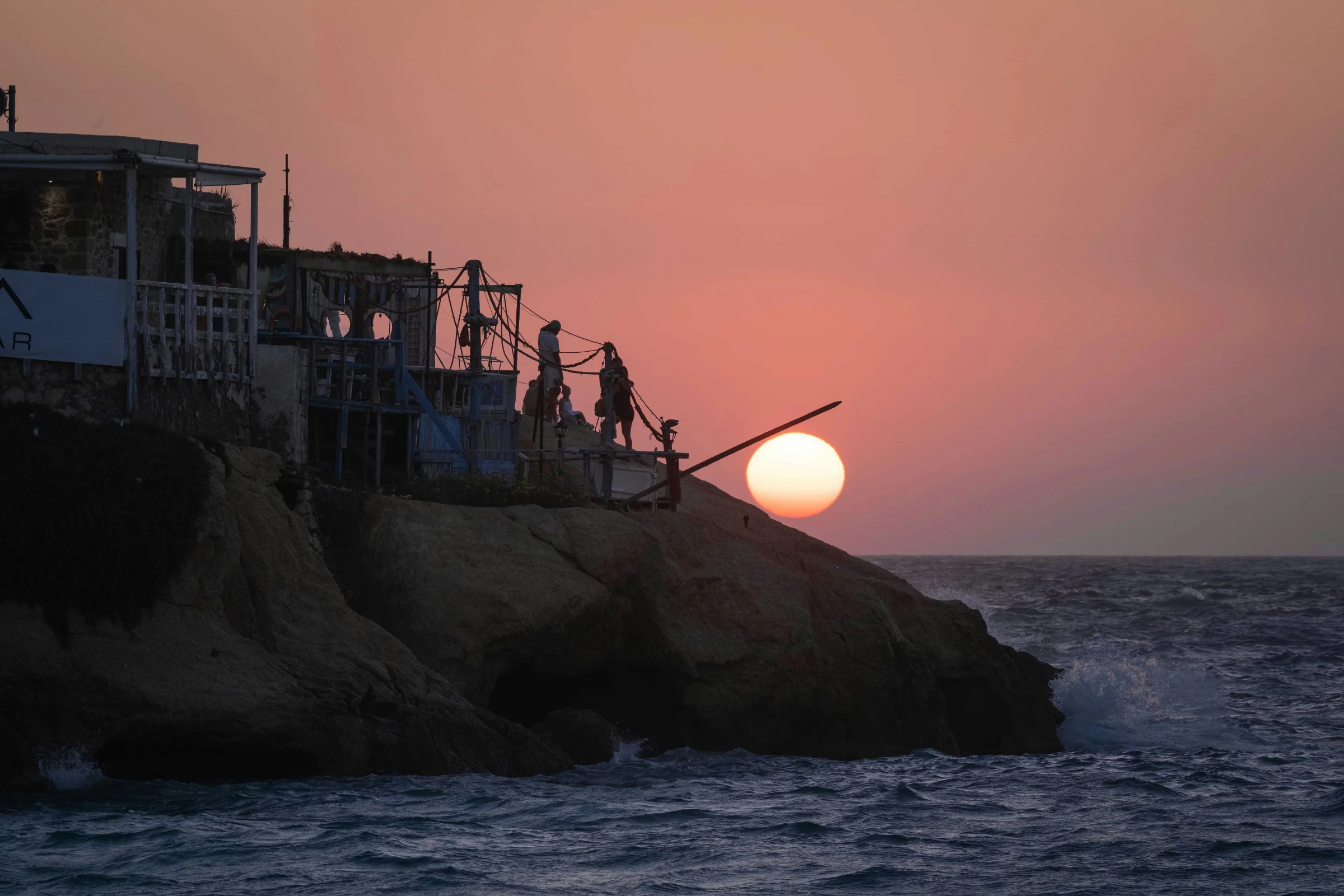
The evenings are relaxed and unhurried. Most tavernas have outdoor seating overlooking the bay, and as the sun drops behind the Asterousia cliffs the light turns the sea gold and the cave facade deep amber. Small supermarkets and bakeries in the village stock fresh local produce from the Messara plain.
Weather & Best Time to Visit
Matala has a classic Mediterranean climate, with long, hot, dry summers and mild, wet winters. The sea is swimmable from late April through to October. Peak season is July and August, though May, June and September offer near-identical sunshine with far fewer crowds. Summer temperatures regularly exceed 30°C, but the Asterousia Mountains shelter the bay from the strong northern meltemi winds, keeping conditions pleasant even on breezy days.
Getting There
Matala is 68 km southwest of Heraklion. By car, take the national road toward Mires and follow the signs south through the Messara plain. By public bus (KTEL), regular daily services run from Heraklion Bus Station with a journey time of approximately 1.5 to 2 hours. Taxis and organised day tours are widely available throughout the summer season.
Where to Stay
Accommodation ranges from beachfront resorts to simple village guesthouses and a well-equipped campsite directly on the beach. Several hotels sit within easy walking distance of the sand, and the neighbouring village of Pitsidia offers a quieter base with excellent local tavernas. Book well ahead for July and August, as May, June, September and October offer better availability and lower prices.
Things to do nearby
Book a guided experience in this area
Related Articles
Continue exploring Crete
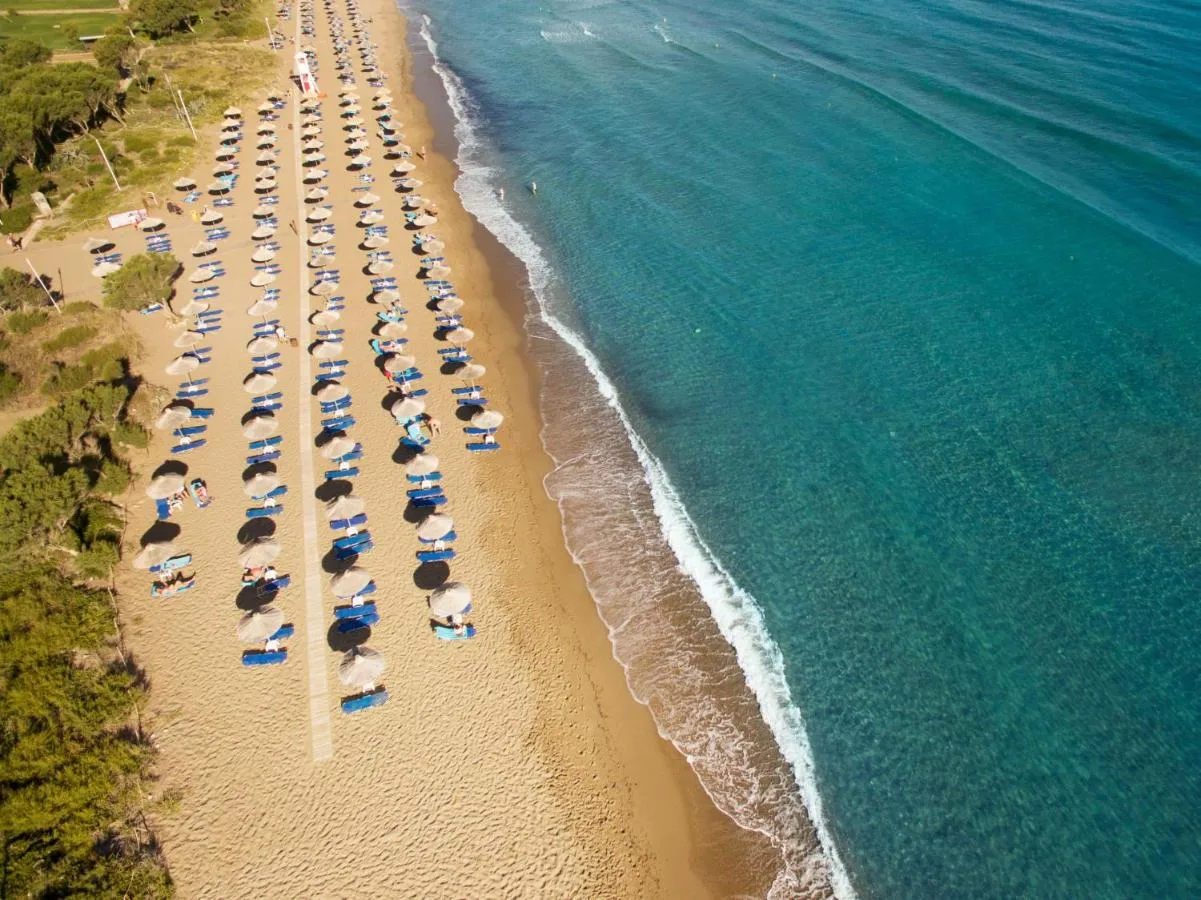
Ammoudara Beach Heraklion: Complete Visitor Guide
Ammoudara Beach combines a long sandy coastline with easy access to Heraklion city. Organised sections, water sports and beachfront restaurants make it a practical base for families, couples and active travellers. This guide covers swimming conditions, the best parts of the beach, transport and experiences around Ammoudara Heraklion.
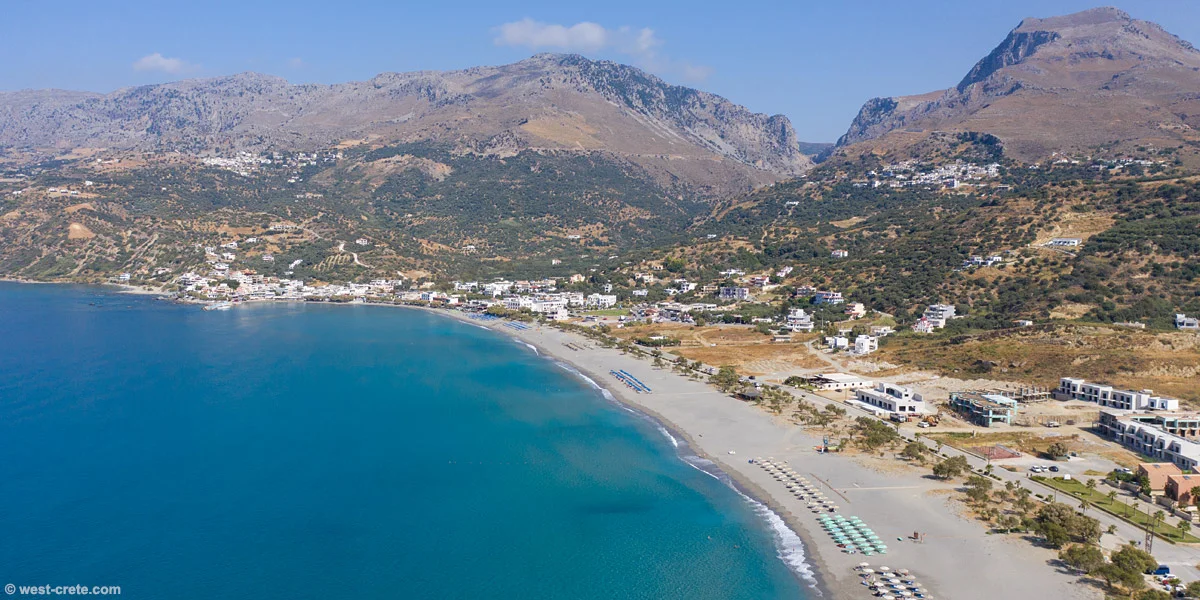
Plakias Beach: The Complete Guide to South Crete's Longest Bay
Plakias is one of the longest beaches in Crete, a 1.3 km stretch of grey-golden sand facing the Libyan Sea in the south of Rethymno. It holds a Blue Flag, offers a full range of water sports and organised facilities, and sits in a bay calm enough for families but open enough to attract windsurfers and divers. What makes it more interesting than most Cretan beach towns is that it also works as a genuine base. From here you can reach Preveli, the Kotsifou Gorge, and a string of quieter coves withi
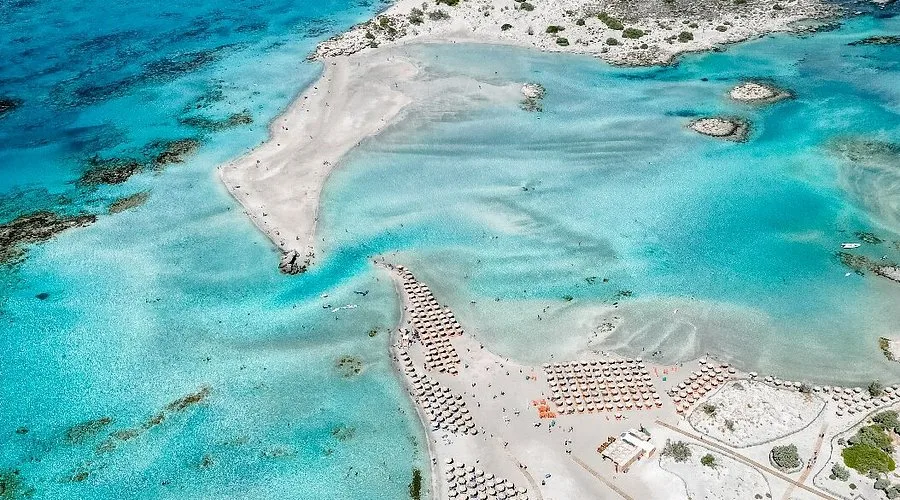
Elafonisi Beach Crete: Is the Pink-Sand Lagoon Worth the Drive?
Elafonisi Beach is one of Crete's most talked-about day trips, known for its pink-sand look, shallow water, and long drive on the island's southwest coast. It is the kind of beach people ask about before they book, because the journey, timing, and access all affect the experience. This guide answers the common questions and helps you decide whether Elafonisi is worth the effort.
Let Crete come to you
Sign up to get authentic stories, travel tips, and new experiences
By entering my email, I agree to receive marketing notifications from travel & do.