 Back to blog
Crete Jeep Safari: The Complete 4x4 Off-Road Guide
On this page
- Quick Summary
- What a Crete Jeep Safari Actually Includes
- Where a Crete Jeep Safari Takes You: Routes and Regions
- Lasithi Plateau and the Cave of Zeus
- Psiloritis and the Highland Pastures
- The White Mountains, Omalos and Kallergi
- Rethymno Gorges to Preveli
- Eastern Crete: Sitia and Mirabello
- How the Main Safari Regions Compare
- Food and Tavernas on the Trail
- Weather and the Best Time for a Jeep Safari
- Getting There and Pick-Up Logistics
- Shared vs Private, Half-Day vs Full-Day: How to Choose
- Common Mistakes to Avoid
- Where to Stay for Easy Safari Access
- Final Thoughts
Quick Summary
A jeep safari in Crete is a guided 4x4 tour that leaves the coastal roads and heads inland to rugged mountains, gorges and traditional villages. Most run as a full day of roughly eight hours, with shorter half-day options in some regions. Shared tours commonly land around 75 to 105 euros per person, while private trips cost more and buy you a flexible route. The strongest regions are Lasithi, Psiloritis, the White Mountains and the gorges behind Rethymno. Vehicles range from open Jeeps to air-conditioned Land Cruisers, and a taverna lunch with local products is often part of the day. Families, couples and first-time visitors all fit these tours, provided you are ready for dust, heat and some bumpy tracks.
What a Crete Jeep Safari Actually Includes
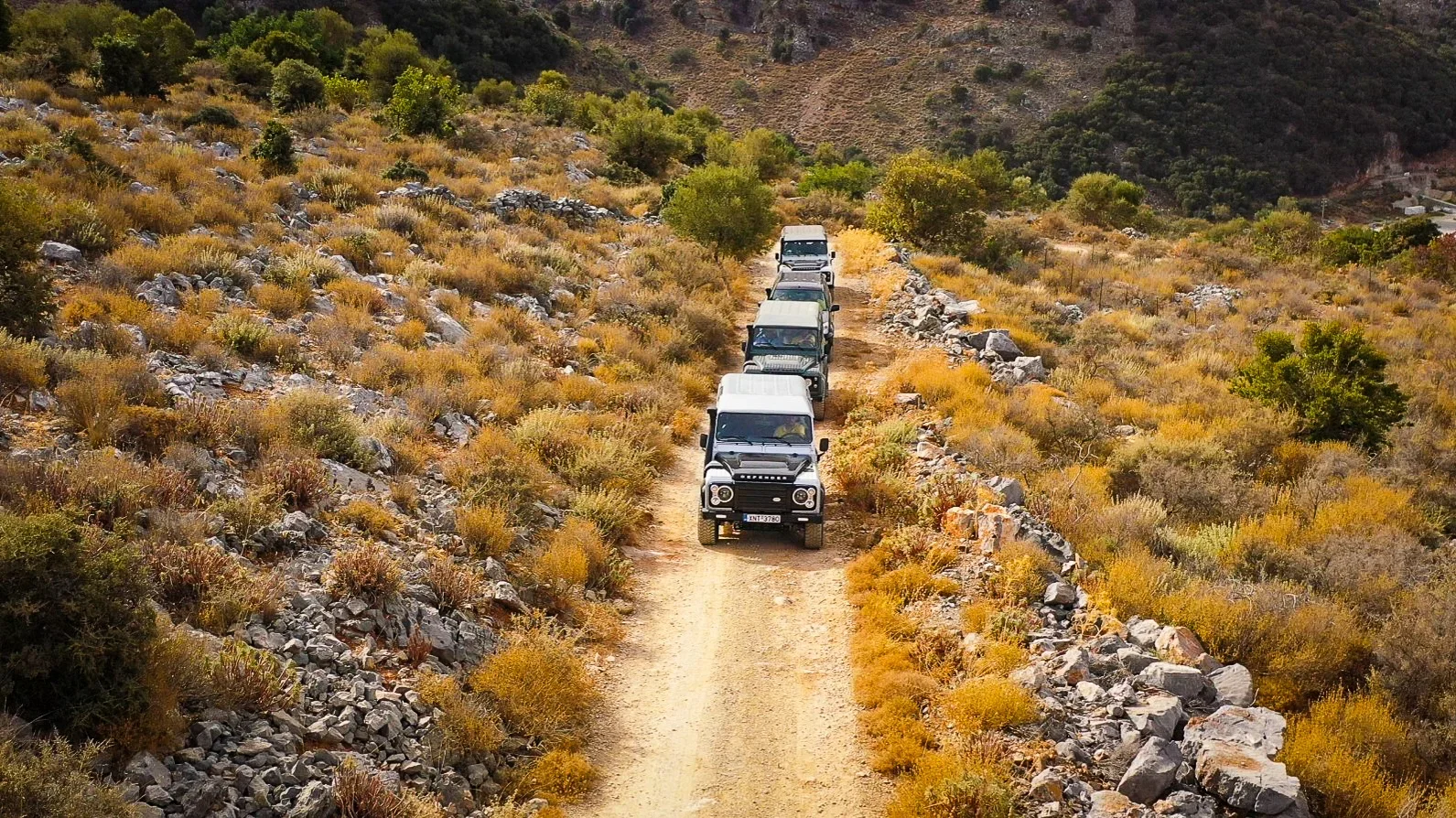
The term covers a spread of experiences, so it helps to know what sits behind the name. At its core, a jeep safari means driving or riding in a four-wheel-drive vehicle along dirt roads, forest trails and mountain passes that a normal hire car should not attempt. A professional guide leads the way, usually with a small convoy of vehicles, and handles the navigation and the harder sections of track.
Beyond the driving, most tours are built around stops. You might pause at a gorge viewpoint, walk a short trail to a cave or spring, visit a village square, and sit down to a long lunch. Many operators fold in tastings of olive oil, wine and raki, plus a look at a pottery workshop or a working farm. The mix of adventure and slower cultural stops is what separates a safari from a plain sightseeing bus.
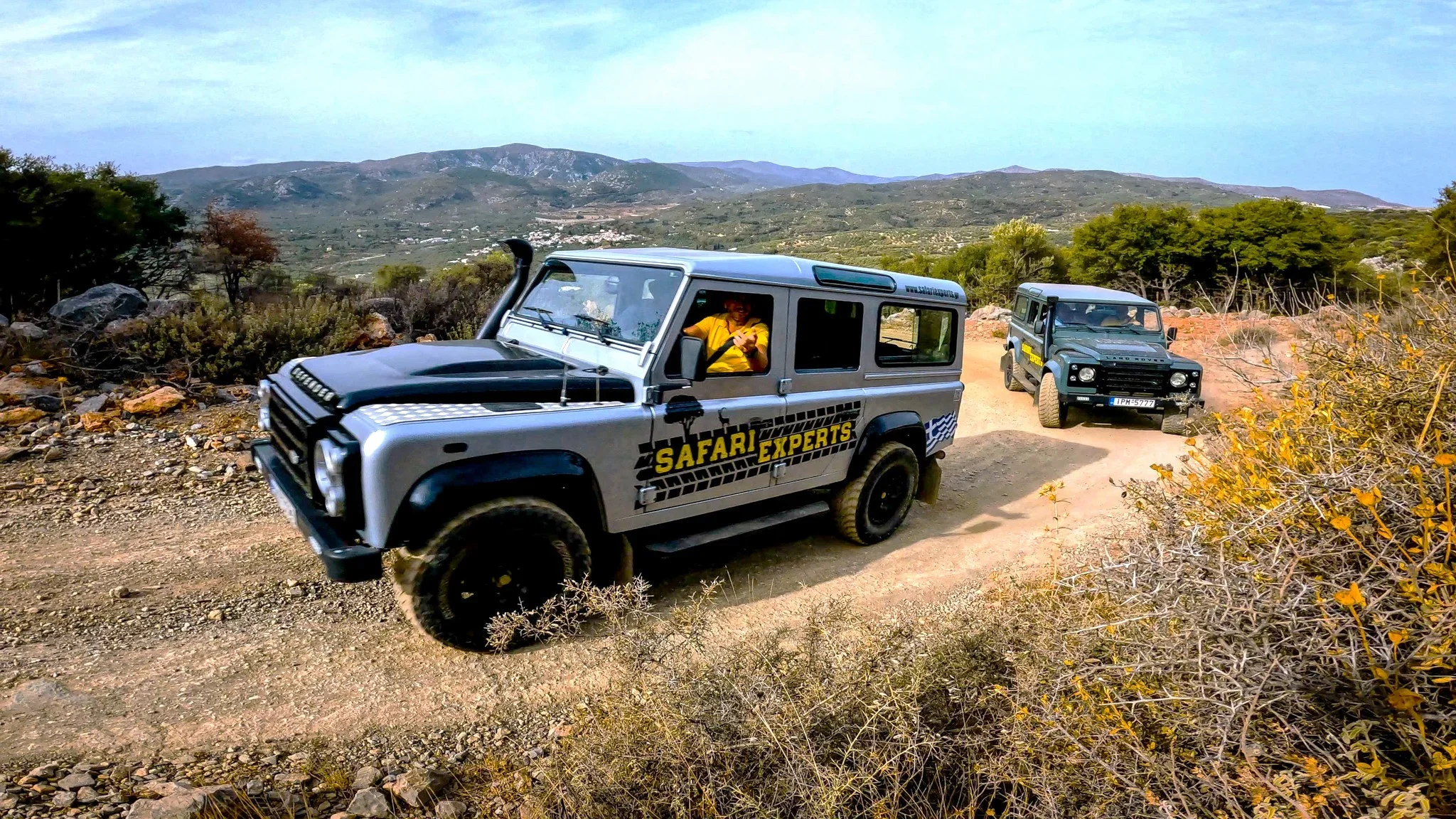
There are two common driving styles. On some tours you sit back as a passenger in a guided vehicle, which suits anyone who wants to relax and take photos. On others you can drive your own 4x4 in convoy, provided you carry a valid licence. Vehicles also vary: open or canvas-topped Jeeps deliver the full dusty ride, while air-conditioned Land Cruisers keep the heat and grit out. Neither is better on paper. It depends on how much of the raw experience you want.
Group size shapes the feel of the day too. Small-group and private safaris move quickly and can pull over on a whim, while larger convoys trade some flexibility for a lower price and a social atmosphere. Ask how many vehicles and people a tour carries before you book, because a six-jeep convoy stops and starts very differently from a single guided vehicle, and that changes how much time you actually get at each viewpoint.
Where a Crete Jeep Safari Takes You: Routes and Regions
Crete is long and mountainous, so the safari you take depends heavily on where you are based. Each region has its own character, its own landmarks and its own driving. Here are the routes worth knowing.
Lasithi Plateau and the Cave of Zeus
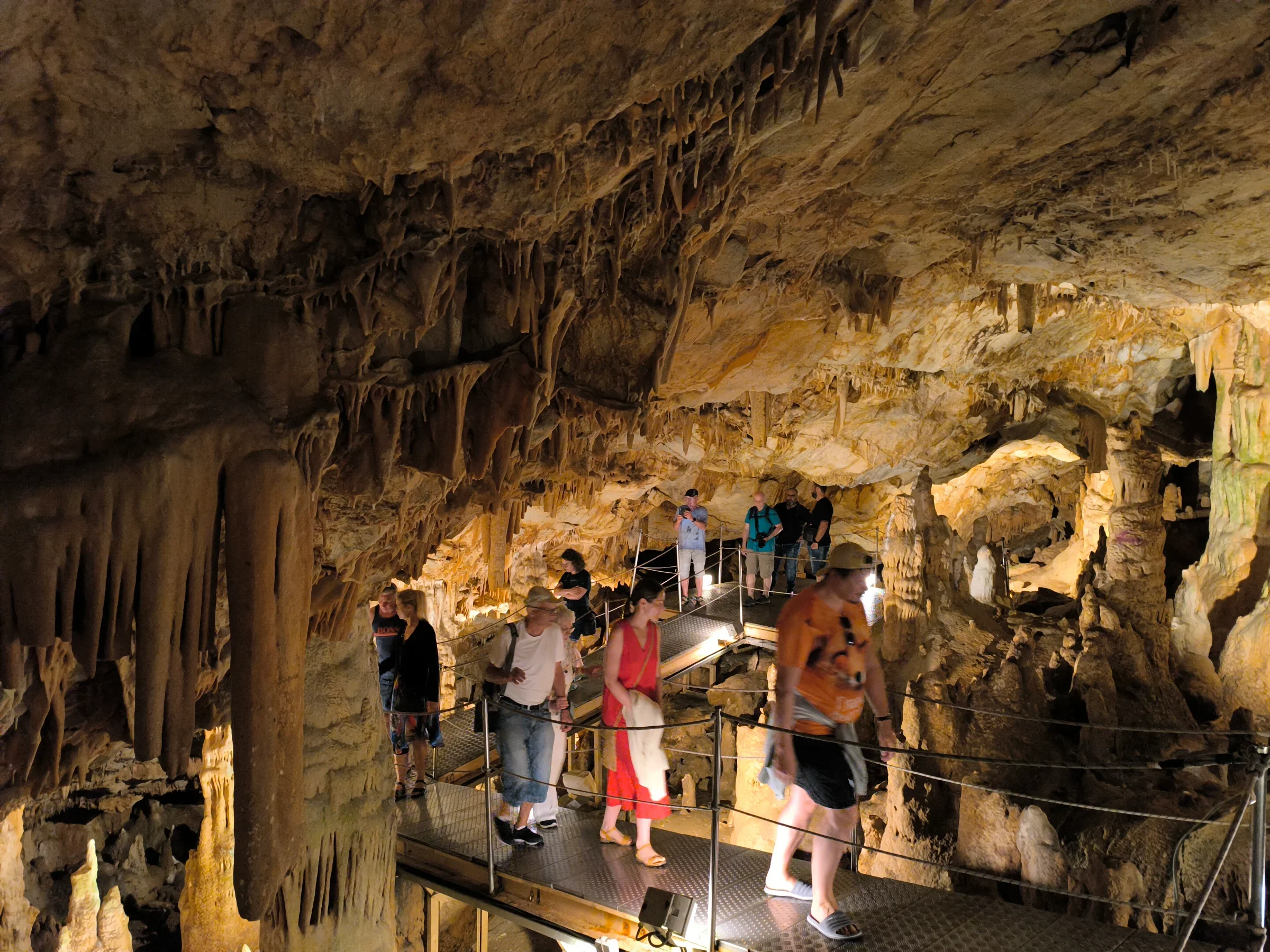
The eastern option runs up to the Lasithi Plateau, a fertile bowl of farmland ringed by the Dikti mountains at around 1,150 metres. Tours loop the plateau ring road past old stone windmills, drop into villages such as Tzermiado and Psychro, and stop at the Diktaion Andron, the cave known in myth as the birthplace of Zeus. The village of Krasi, with its ancient plane tree and cold springs, is a common lunch stop. It is a scenic, culture-heavy day rather than a hard off-road thrash, which makes it a favourite for families.
Psiloritis and the Highland Pastures
Central Crete is dominated by Psiloritis (Mount Ida), the island's highest massif. Safaris here climb through shepherds' country to high pastures, mountain refuges and long views over the interior. Expect fewer crowds, tougher tracks and a strong sense of the working mountain: sheepfolds, cheese-making huts and stone chapels. This is a route for travellers who want landscape and solitude over a packed list of sights.
The White Mountains, Omalos and Kallergi
In the west, the White Mountains (Lefka Ori) give the most dramatic high-alpine driving on the island. Routes cross the Omalos Plateau and climb toward the Kallergi Refuge at about 1,680 metres, with views down into the Samaria Gorge and out to the Libyan Sea. The air is cooler, the scale is bigger, and the switchback tracks feel genuinely remote. Anyone based around Chania or Platanias is well placed for this one.
Rethymno Gorges to Preveli
Behind Rethymno, a classic route threads through a chain of gorges and springs before dropping to the south coast. Stops often include Lake Kournas, the Argyroupoli Springs, and the Kotsifou and Kourtaliotiko gorges, finishing at Preveli Palm Beach on the Libyan Sea. Some versions add the historic Arkadi Monastery. It is a full day that pairs off-road driving with a proper swim, which is why it books out fast in high summer.
Eastern Crete: Sitia and Mirabello
The far east around Sitia, Ierapetra and the Gulf of Mirabello stays quieter than the central island. Routes here run through remote uplands, past isolated chapels and down to empty coves, with a slower pace and less traffic. If you are staying in the east and want to avoid long transfers, a local safari beats driving two hours each way to join a central tour.
Once you know which region fits your base, the next step is matching a specific tour to your group. Curated 4x4 experiences for each of these routes are collected in one place through Travel & Do.
How the Main Safari Regions Compare
If you are choosing between regions, it helps to line them up by difficulty, scenery and best base. Lasithi is the easiest driving and the most culture-led, built around the plateau, the Cave of Zeus and village stops, and it works best from the Heraklion and Hersonissos side. Psiloritis is a step up: higher, wilder and quieter, with rougher tracks and long views, suited to central bases and travellers who want landscape over a packed list of sights. The White Mountains and Omalos deliver the most dramatic high-alpine driving and the biggest scale, reached most easily from Chania. The Rethymno gorge routes to Preveli mix off-road driving with springs, a monastery and a beach swim, which makes them the most varied full day on offer. Put simply, choose Lasithi for an easy family day, Psiloritis for solitude, the White Mountains for drama, and the Rethymno route for variety.
Food and Tavernas on the Trail
Lunch is not an afterthought on most safaris. The eating stop is often the emotional centre of the day, held at a village taverna or a family farm well away from the coastal strips. Expect a table of shared plates: grilled meat or slow-cooked lamb, horta (wild greens), local cheeses, bread, tomatoes and olives, usually with the household wine and a shot of raki to finish.
Many tours build in tastings before or after the meal. A stop at an olive oil producer explains grades and pressing, a small winery or farm pours a few Cretan varieties, and a pottery workshop shows a craft that has run on the island for millennia. These stops are where the cultural side of the day lives, and they are worth choosing a tour for. If food and small producers matter to you, check that lunch and tastings are included rather than paid extras before you book.
It is also worth knowing that the food stop doubles as the rest of the day. On a long, dusty route the shaded taverna table is where the group slows down, swaps stories with the guide, and lets the midday heat pass before the drive back to the coast. That is why a rushed lunch is often a sign of an itinerary trying to squeeze in too much.
Weather and the Best Time for a Jeep Safari
Season shapes the experience more than most visitors expect. May, June, September and October are the sweet spots: warm but not brutal, with green spring hills early and softer light in autumn. Tracks are dry and passable, and the mountain air stays comfortable even when the coast is hot.
July and August still run daily, but midday heat inland can be intense, so an air-conditioned vehicle and an early start matter more. Carry water and sun cover. In winter and early spring, high routes over Psiloritis and the White Mountains can close or turn to mud with snow at altitude, so tours shift to lower gorge-and-village itineraries. If your heart is set on a specific high route, travel in the shoulder season and keep a spare day in case weather forces a change.
Getting There and Pick-Up Logistics
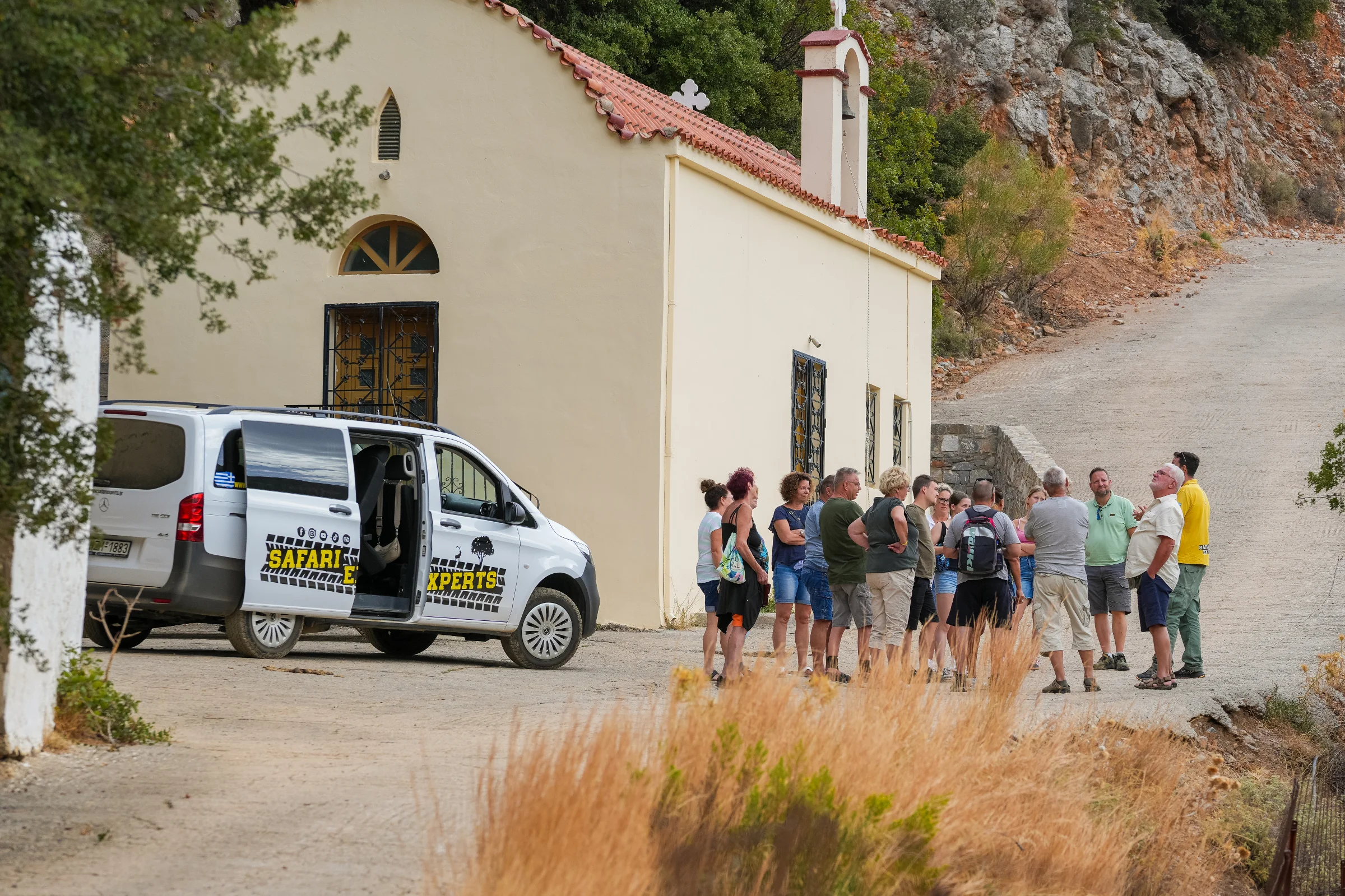
The convenient part of a jeep safari is that you rarely arrange your own transport. Nearly all tours include hotel pick-up and drop-off, with meeting points across the main resort zones of Heraklion, Hersonissos, Malia, Rethymno, Chania and Georgioupoli. Pick-up is usually early, often between 8 and 9 in the morning, because the drive to the trailhead can take an hour or more before the off-road section even starts.
When you book, confirm the pick-up window, the return time and where exactly the vehicle waits, since large resorts can have several gates. If you are staying somewhere rural or in a villa off the main roads, ask whether the operator can reach you or whether you should meet at a nearby landmark. Building the day around a confirmed pick-up saves the classic mistake of standing in the wrong car park while the convoy leaves.
One more logistics note: mountain routes run to their own clock. If a stop runs long or weather slows the convoy, return times can drift later than the printed schedule, so avoid booking anything tight for the same evening. Leave the airport transfers and dinner reservations for another day.
Shared vs Private, Half-Day vs Full-Day: How to Choose
The single biggest decision is format, and it comes down to four trade-offs.
Shared tours put you in a vehicle or convoy with other travellers. They cost less, they are social, and they follow a fixed route and timetable. Private tours cost more but flex around your group: you set the pace, choose stops, and can tailor the day to children, photographers or slower walkers.
Full-day safaris of around eight hours cover more ground and usually include the big lunch and several stops. Half-day tours, where offered, trade breadth for a gentler commitment, which suits families with young children, anyone prone to motion sickness on rough tracks, or travellers who want an afternoon back at the beach.
A quick way to decide: pick shared and full-day if budget and meeting people matter and you want the complete experience; pick private if you value control, comfort or a specific route; and pick half-day if time, stamina or young kids set the limit. Whatever the format, compare what is actually included, lunch, tastings, swim stops and entrance fees, rather than the headline price alone.
🔗 Choose the Sunset Jeep Safari in Heraklion: Off-Road Tour & BBQ Dinner for a shorter afternoon and evening safari experience.
Common Mistakes to Avoid
A few errors show up again and again. The first is underdressing for the mountains: it can be twenty degrees cooler and windier at altitude than on the beach, so bring a layer even in July. The second is the wrong footwear. Short trails to caves, springs and viewpoints are uneven, and sandals turn them into a chore.
Third, people underestimate the dust and the bumps. If anyone in your group struggles with rough roads, choose an air-conditioned Land Cruiser and a shorter route rather than an open Jeep on a full-day climb. Fourth is booking the wrong region for your base and spending half the day in transfers. Match the safari to where you are staying. Finally, do not skip the small print: check whether you can drive or only ride, whether lunch is included, and what the cancellation terms are if mountain weather closes a route.
Where to Stay for Easy Safari Access
Where you sleep decides which routes are realistic. If the Lasithi or Psiloritis itineraries appeal, a base around Heraklion, Hersonissos or the Lasithi foothills keeps transfers short. For the White Mountains, Omalos and the Rethymno gorge routes, the Chania and Rethymno sides are far more convenient.
A private villa suits safari days better than a busy resort. You get an early, quiet start for that 8am pick-up, space to spread out dusty gear at the end of the day, and often a rural setting that already sits closer to the trailheads. Curated villa stays across each of these regions, matched to the routes above, are gathered through My Creta Villas.
Final Thoughts
A Crete jeep safari is one of the few day trips that shows you the island most visitors miss: the high plateaus, the working villages, the gorges and the long lunches that happen far from the coast. The trick is matching the format and region to your group, your base and the season, then booking early in summer when the best routes fill. Get those choices right and a single day off-road can end up being the part of the holiday you talk about most.
Frequently asked questions
Is a Crete jeep safari suitable for children?
Yes, most tours accept children, and the culture-led routes such as Lasithi work well for families. For very young kids, choose a half-day or an air-conditioned vehicle, and confirm that child seats are available when you book.
Do I need to drive, or can I just ride along?
Both are common. Many operators let you drive your own 4x4 in convoy if you hold a valid licence, while others carry you as a passenger with a guide at the wheel. If you would rather relax and shoot photos, book a guided-vehicle tour.
How much does a jeep safari in Crete cost?
Shared full-day tours commonly run around 75 to 105 euros per person, with lunch and tastings sometimes included and sometimes charged separately. Private tours cost more but let you shape the route. Always compare inclusions, not just the sticker price.
What should I bring?
Closed shoes, a warm layer for altitude, sun protection, water, a swimsuit if the route reaches the coast, and a camera. Keep valuables minimal, since open vehicles get dusty.
When is the best time to go?
Late spring and early autumn give the best balance of comfort and open routes. High summer works with an early start and air conditioning, while winter pushes tours to lower gorge-and-village itineraries.
How rough is the off-road driving?
It varies by region. Lasithi and most village routes are mild and fine for nervous passengers, while Psiloritis and the White Mountains include steeper, looser tracks. If rough roads worry you, say so when booking and pick an easier itinerary in a comfortable, air-conditioned vehicle.
Can I combine a jeep safari with a swim?
Yes on several routes. The Rethymno itinerary to Preveli and some eastern routes reach the coast, so pack a swimsuit and a towel if a swim stop matters to you. Confirm the beach stop is on the route before you book, since not every safari reaches the sea.
How far in advance should I book?
In July and August the best routes and small-group tours fill days ahead, so book early if your dates are fixed. In the shoulder season you have more flexibility, though reserving a day or two out still helps secure hotel pick-up and a seat on the itinerary you want.
Related Articles
Continue exploring Crete
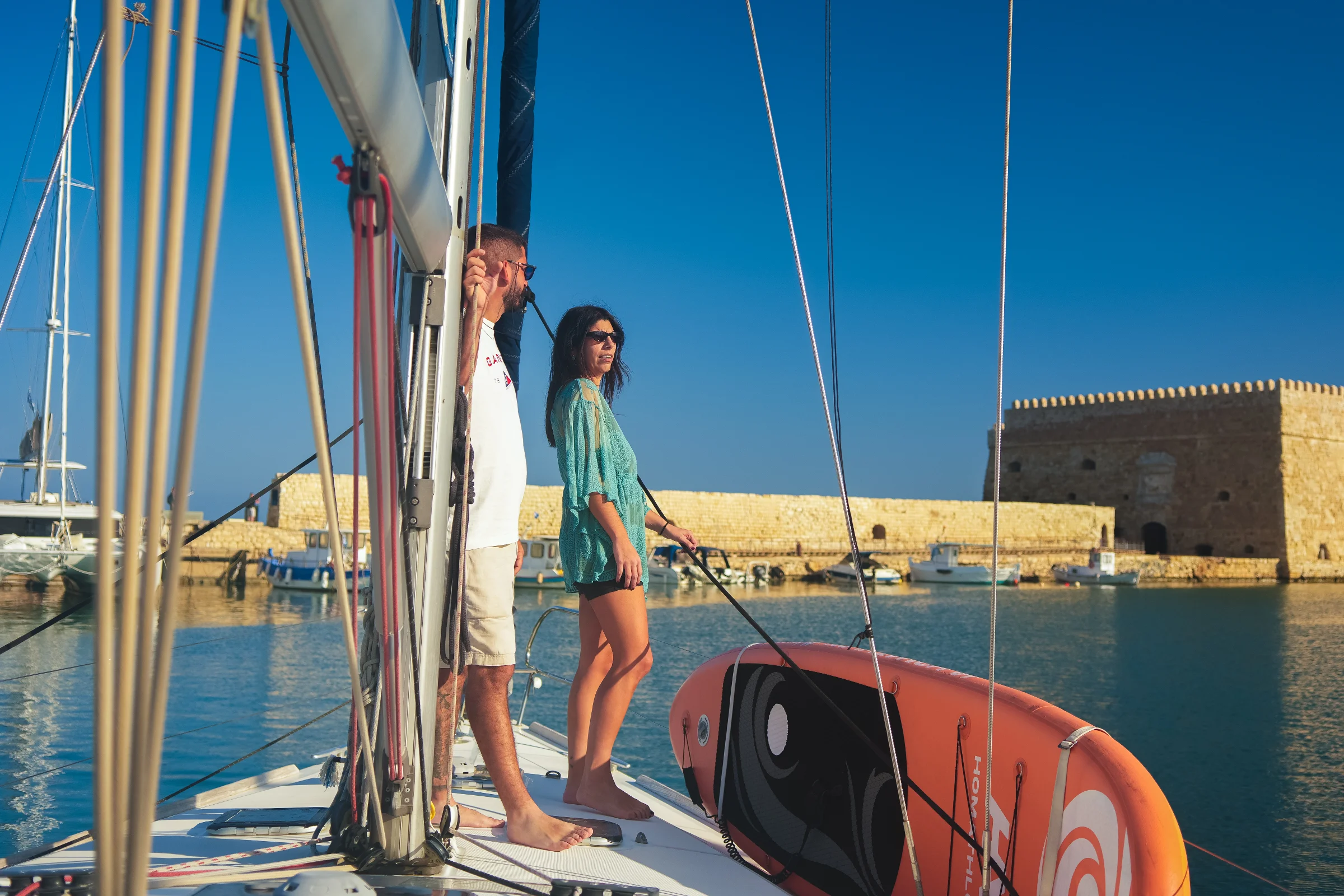
One Day in Heraklion: The Complete Itinerary for Crete's Capital
Most visitors get exactly one day in Heraklion, and most of them spend it queuing at Knossos in the worst of the afternoon heat. It does not have to go that way. This is the order we would put the day in — the palace first thing, the Old Town on foot while the shade still favours you, the museum indoors when the sun is at its worst, and the Venetian harbour at the end. Every time and price below comes from our own booking calendar, so you can plan the day around what is genuinely running rather
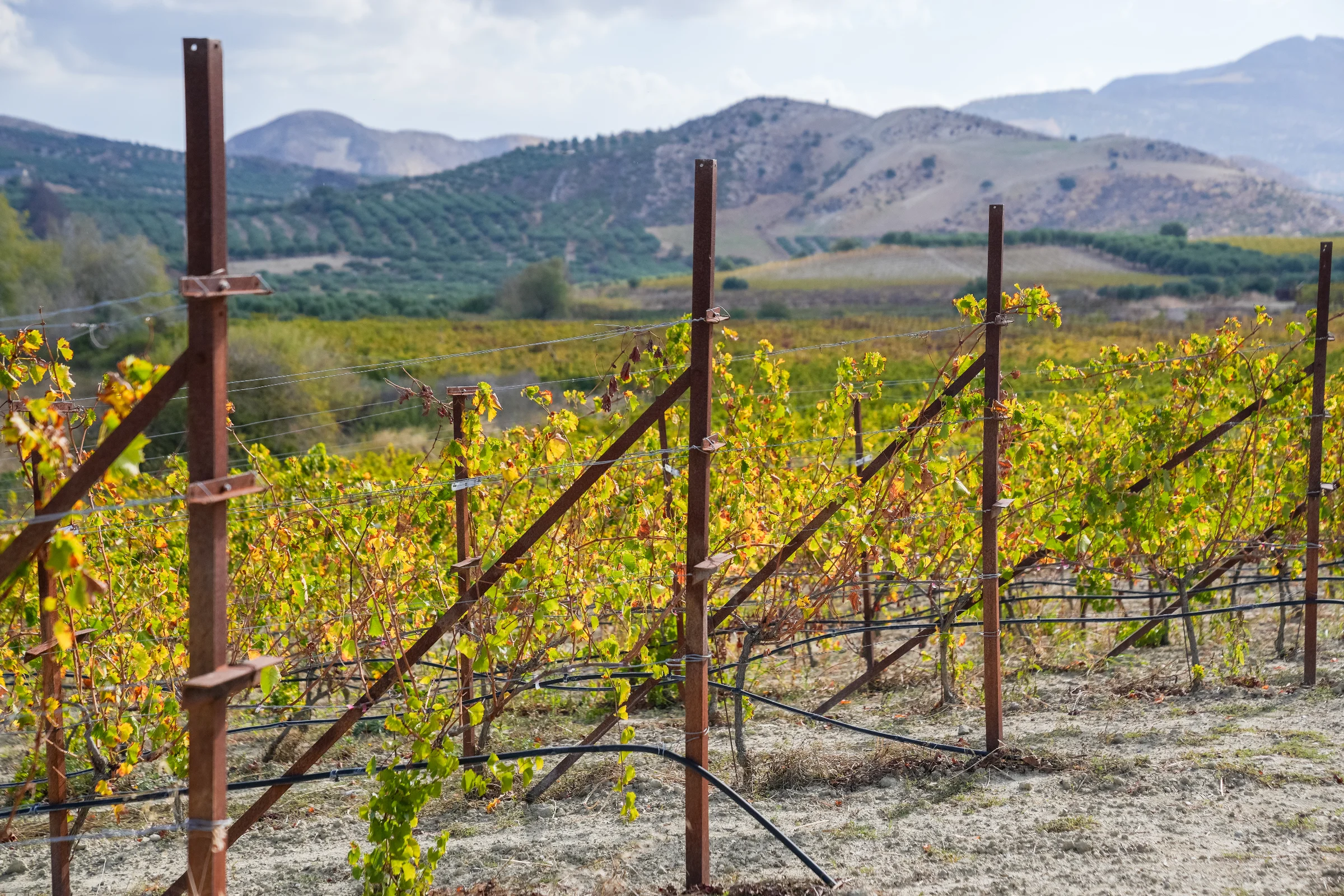
Cretan Red Wine: The Grapes, the Blends and What the Label Hides
Crete's red wines are easier to enjoy than to read. The island's leading red grape is almost never named on the front of a bottle, the two appellations built on it print no recipe at all, and the most confident Englishlanguage writing about Cretan wine repeats three claims that Greek planting and appellation records flatly contradict. This is the grapebygrape, labelbylabel version: what the four native reds taste like, why they are blended rather than bottled alone, what a PDO and a PGI
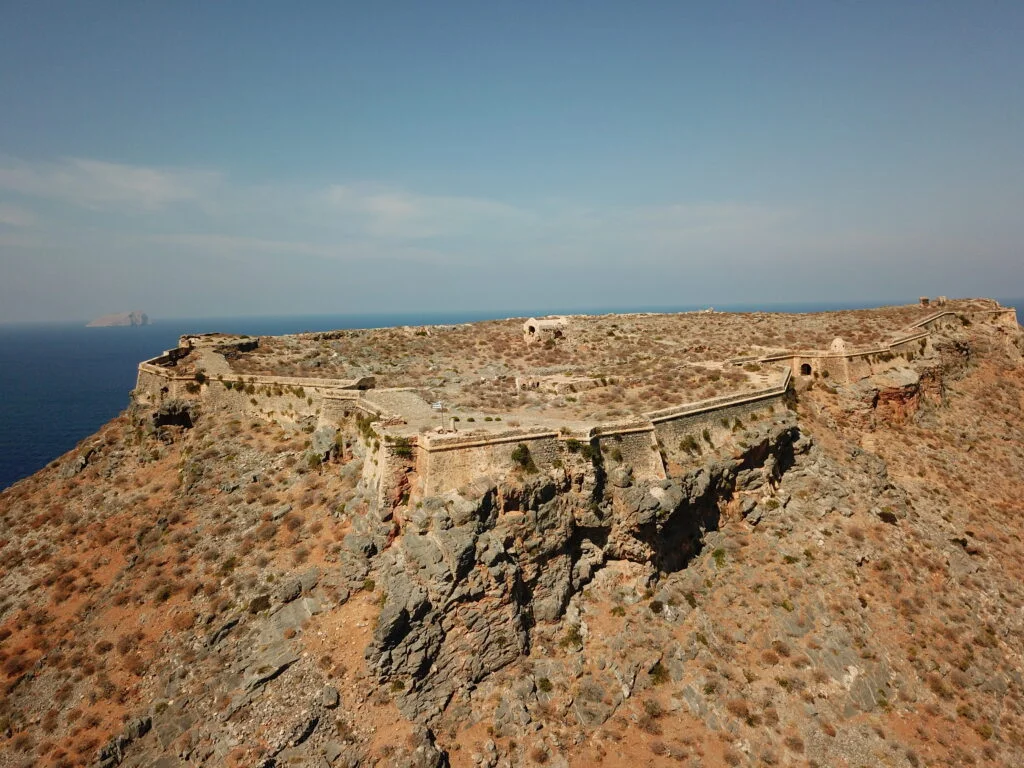
Venetian Fortresses of Crete: History and Visitor Guide
The Venetian fortresses of Crete still guard harbours, hilltops and remote islands across the coast. Some have become city landmarks, while others require a boat journey or a steep walk to reach their walls. This guide covers their history, the best fortresses to visit and how to include them in a trip around Crete.
Let Crete come to you
Sign up to get authentic stories, travel tips, and new experiences
By entering my email, I agree to receive marketing notifications from travel & do.