 Back to blog
Balos Beach, Crete: The Complete Guide to the Lagoon, the Walk, and Getting There
On this page
Quick Summary
Balos Beach is in western Crete, in the Kissamos area on the Gramvousa Peninsula.
It is known for turquoise water, white sand, and the Balos Lagoon setting.
You can reach it by boat from Kissamos Port or by driving to the parking area and walking down.
The walk from the parking area is steep enough to matter, especially in summer heat.
It is one of the most beautiful beaches in Crete, but it is not the easiest to reach.
Balos Beach
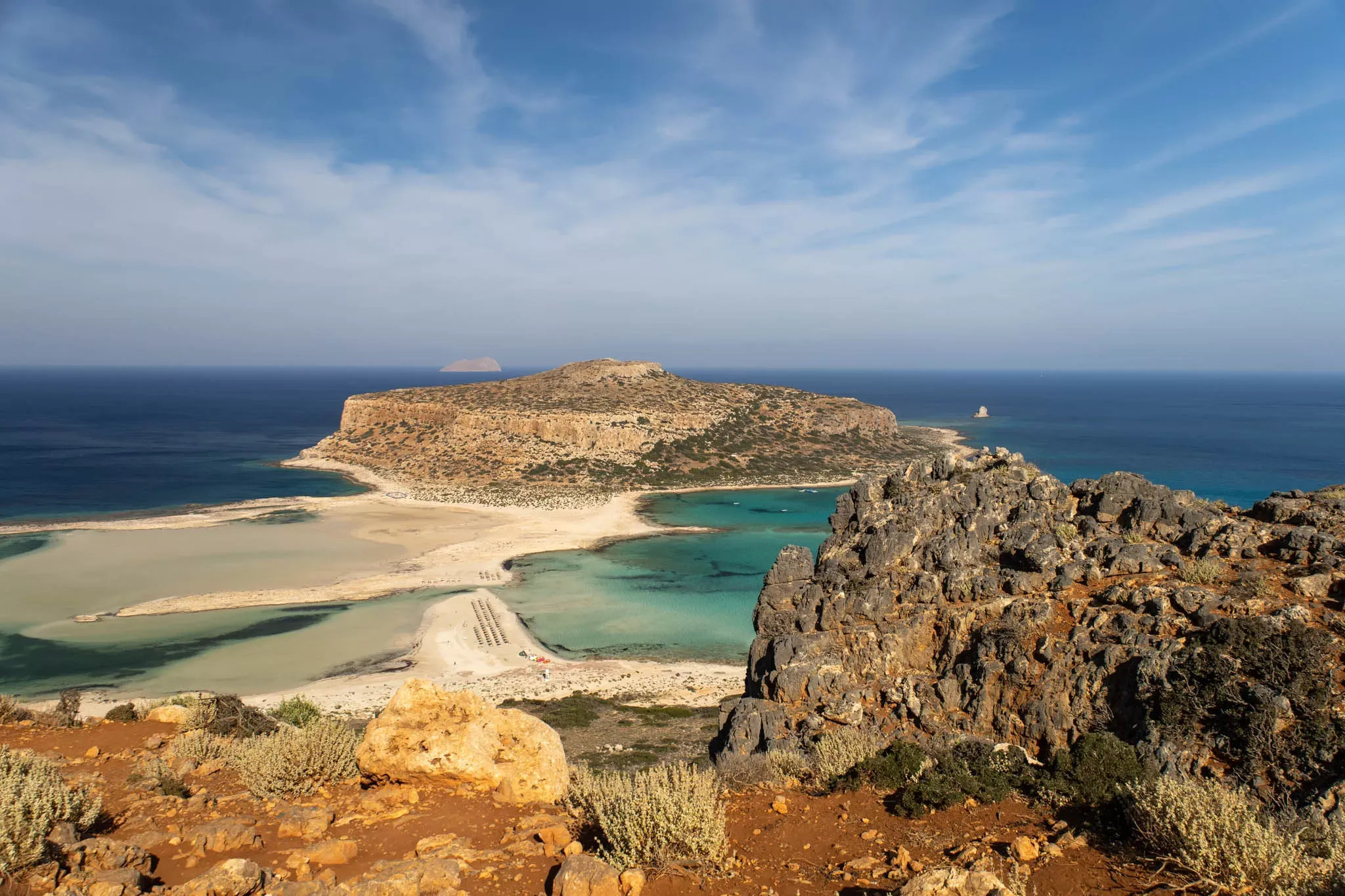
Balos Beach is a lagoon beach in western Crete, set on the Gramvousa Peninsula near Kissamos. It is one of the island's most recognisable coastal landscapes, with shallow water, pale sand, and views over the lagoon that look different from almost every other beach on the island.
What makes Balos stand out is the setting as much as the beach itself. The approach, the colour contrasts, and the wide open view over the lagoon create a place that feels more like a natural landscape than a standard beach stop. The sand in some areas shows a faint pinkish tone because of crushed shells, which is part of why the shoreline photographs so distinctively.
It is not a beach with rows of sunbeds or a beach club setup. Balos is scenic first and convenient second, which is worth knowing before you go.
Why It Is Famous
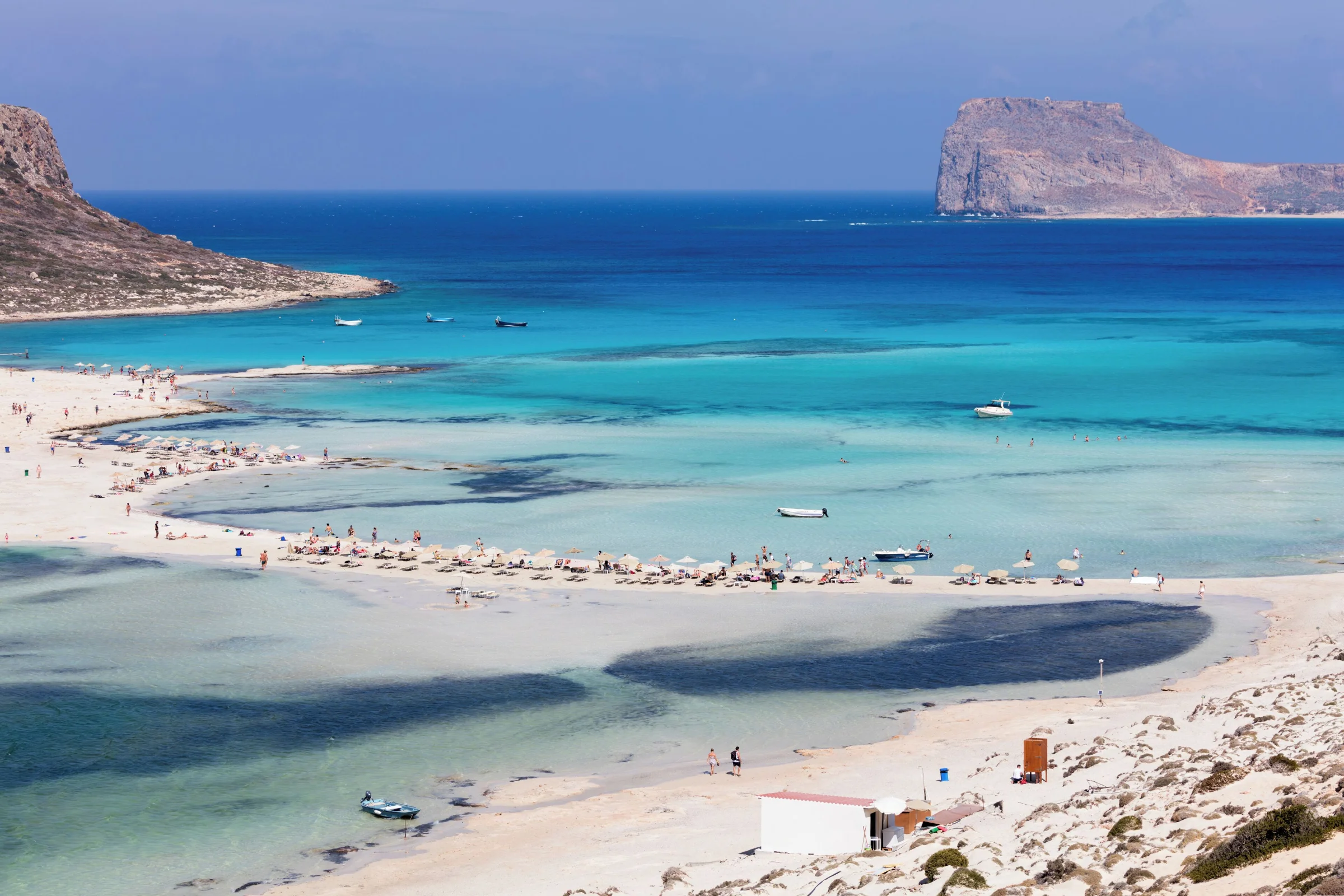
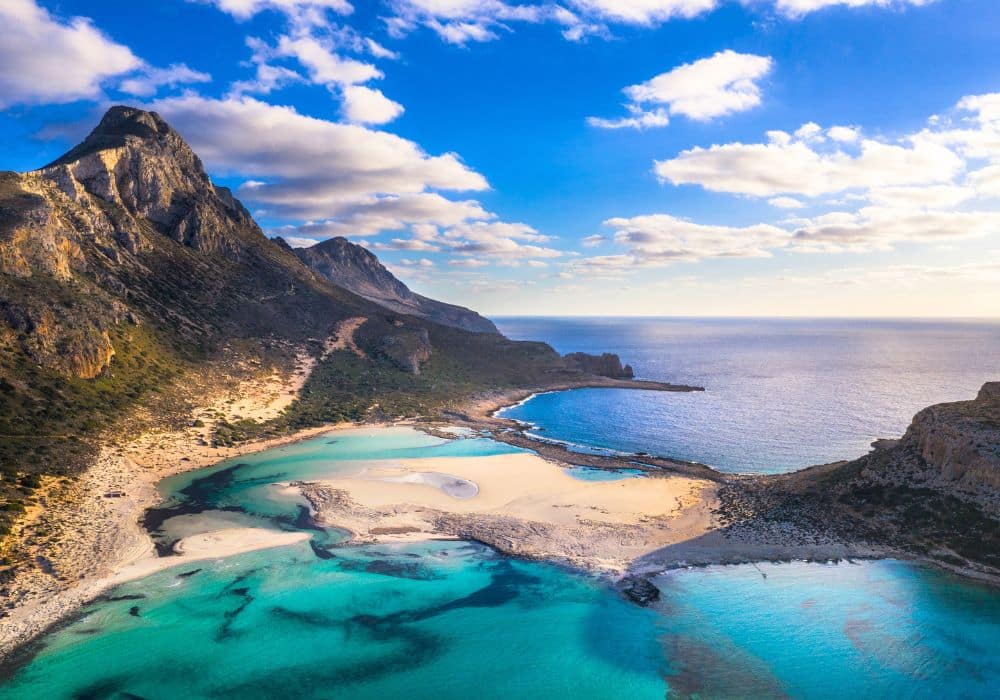
Balos is famous for a combination of things that are genuinely rare in one place: shallow, warm, clear water, a lagoon enclosed by a curved sandbar, dramatic headlands on either side, and the visual effect of the pale sand against the deeper blue beyond the lagoon mouth.
The beach is also closely tied to Gramvousa Island and the surrounding peninsula, which makes it part of a bigger western Crete experience rather than a standalone swim spot. Many of the boat trips from Kissamos include a stop at the island before reaching Balos, which adds a Venetian fortress and open sea views to the day.
That wider setting is one reason it appears consistently on lists of the best beaches in Greece, not just in Crete.
Balos or Elafonisi
This is one of the most common questions people ask when planning a western Crete beach day, and the honest answer is that it depends on what kind of day you want.
Balos suits travelers who want a wilder landscape, a lagoon setting, and a more adventurous arrival. The beach feels more remote, the scenery is more dramatic, and the combination with Gramvousa makes for a fuller day if you go by boat.
Elafonisi suits travelers who want easier access and a more straightforward beach day. The approach by road is simpler, the beach is broader, and it is less demanding physically. The pink sand there is more pronounced than at Balos, but the overall setting is less enclosed and less dramatic.
If your priority is scenery and the sense of arriving somewhere that takes some effort to reach, Balos has the edge. If you want a relaxed all-day swim with less planning, Elafonisi is the more practical choice.
How to Get There
You have two main options: drive to the parking area above the beach, or take a boat from Kissamos Port.
By car, the route from Kissamos takes you along a dirt road for the final section. The road is passable in a standard car but rough enough that you should drive carefully, particularly after rain. The parking area sits above the lagoon, and from there you walk down to the beach. The parking fee applies during the main season.
By boat, ferries run from Kissamos Port during the season, usually with a stop at Gramvousa Island included. This is the option most visitors without their own transport choose, and it avoids the dirt road entirely. Check departure times carefully, as the boat schedule determines how long you have at the beach.
If you drive, expect a rugged final stretch and a real walk after you park. If you go by boat, the approach by sea gives you one of the best first views of the lagoon, which is a strong argument for that route even if you have a car.
How Long the Walk Takes
The walk from the parking area down to Balos takes around 20 minutes at a steady pace. The path is not technical, but it is rocky in places and descends significantly, which means the return walk climbs back up in the same conditions.
The return climb is the part people remember most. In July or August, walking uphill on an exposed path in midday heat is genuinely tiring, and it catches some visitors off guard after a long beach day. Starting early reduces this problem considerably.
Good shoes matter here more than at most Cretan beaches. Flip-flops are not the right choice for the track down and especially not for the climb back up. Closed shoes or sturdy sandals with a heel strap are a better idea.
Sunbeds and Facilities
Balos is not set up like a resort beach. There are some sunbeds available, but the supply is limited relative to the number of visitors in peak season, and they are concentrated near the beach bar rather than spread evenly across the sand. If you arrive late on a busy summer day, you may not find one.
The beach has a small snack bar and shop near the shore that sells drinks, snacks, and basic supplies. The prices are higher than you would pay in a town, which is normal for a remote location. This is worth knowing if you are watching your budget.
Bring everything you think you might need. Water especially. The walk in the heat uses more than people expect, and the facilities are limited enough that self-sufficiency makes the day significantly more comfortable.
Things to Do
Swim in the lagoon. The shallow, clear water is the main reason people come to Balos. The lagoon stays calm even when the open sea beyond is rougher, which makes it a good option for children and for anyone who wants a long, easy wade rather than a deep-water swim.
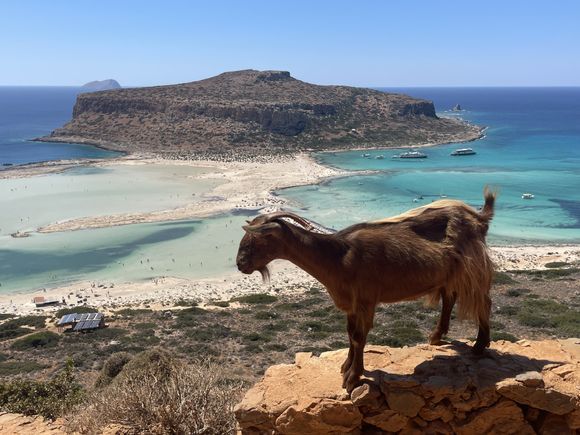
Walk to the viewpoints above. The views from the path down are part of the Balos experience, not just a transition to get through. Most people stop to photograph the lagoon from above before descending, and this is where the full scale of the setting becomes clear. The curve of the sand, the colours of the water, and the shape of the peninsula are all more dramatic from height.
Combine it with Gramvousa Island. If you go by boat, the Venetian fortress on Gramvousa is a natural addition. The island has history, panoramic views, and a very different character from the beach, which gives the day two distinct experiences rather than one.
Arrive early and stay for the morning. The first hours of the day are when Balos is at its quietest and coolest. The light is better for photography, the walk is less punishing, and the beach feels more like the remote lagoon it actually is.
Bring your own shade. A small travel umbrella or a compact shade solution is worth the weight in the bag. The beach has limited natural shelter, and the sun exposure at Balos is significant from mid-morning onward.
What to Expect on Site
Balos is busy in summer, particularly between late June and early September when boat trips arrive regularly and the parking area fills early. Even on a crowded day, the scale of the lagoon means the beach does not feel as packed as smaller, more accessible spots. The space is wide enough that you can usually find a patch of sand with some distance from other groups.
The water is shallow for a long way into the lagoon, which makes it good for children but less suitable if you want to swim lengths or dive. The lagoon mouth opens to deeper water if you want a longer swim.
The sand is fine and pale, and the contrast with the water is as striking in person as it is in photographs, which is not always the case with famous beaches. Balos largely delivers what the pictures suggest.
Expect a place that is scenic first and convenient second. That is part of its appeal, but it also means the beach works best for travelers who are willing to put in some effort for the reward.
Weather and Best Time to Visit
Balos is a summer beach and is effectively closed to visitors outside the main season, roughly May to October, with peak crowds from late June through August.
May and June are a good time to visit. The water is warming up, the path is not baking hot, and the crowds are smaller than in high summer. The light in June is long and warm, which suits both photography and a full day on the beach.
September and October are also good. The water is at its warmest after the summer, the air temperature is lower than August, and the visitor numbers drop noticeably after the school holidays end.
July and August are the hottest and busiest months. The beach is worth visiting in these months, but the walk demands more preparation, the parking fills faster, and the boat trips run at full capacity. An early arrival makes a significant difference.
Morning is consistently the best time of day regardless of month. The light is softer, the heat is lower, and the lagoon colours are at their most vivid before the midday glare flattens everything.
Where to Stay
Kissamos is the most practical base for a Balos trip. It is the closest town with proper accommodation, restaurants, and the port for boat departures. Staying here means a short drive or no drive at all if you go by sea.
Falasarna is another option if you want to combine Balos with more west-coast beach time. It is one of the best beaches in western Crete in its own right, and basing yourself nearby lets you cover both without long daily drives.
Travelers coming from Chania or Rethymno can visit Balos as a day trip, but it is a long day. The drive from Chania to the parking area takes around 1.5 hours, and you need to factor in the walk and enough time at the beach to make the journey worthwhile.
Balos is not a quick detour. It works best when the day is built around it.
Nearby Attractions
Balos fits naturally into a western Crete itinerary that covers coast, history, and inland scenery.
Gramvousa Island, reached by the same boat trip, has a well-preserved Venetian fortress at the top that is worth the climb for the views over the open sea and back toward the peninsula. The island also has a small beach on its sheltered side.
Falasarna is one of the most rewarding beaches in western Crete, with a wide sandy shore, clear water, and good facilities. It is about 30 kilometres from the Balos parking area and easy to combine on the same day if you have a car.
Kissamos has a small but worthwhile Archaeological Museum covering finds from the wider area, including material from the ancient city of Kissamos that stood here in the Roman period. The town also has a good harbour-front with cafes and tavernas, which makes it a natural place to eat after a beach day.
Elafonisi is on the opposite side of the Chania peninsula, around 1.5 hours by road from Balos. The two beaches are too far apart to combine comfortably in one day unless you are based centrally and have an early start.
Things to do nearby
Book a guided experience in this area
Related Articles
Continue exploring Crete
Ammoudara Beach Heraklion: Complete Visitor Guide
Ammoudara Beach combines a long sandy coastline with easy access to Heraklion city. Organised sections, water sports and beachfront restaurants make it a practical base for families, couples and active travellers. This guide covers swimming conditions, the best parts of the beach, transport and experiences around Ammoudara Heraklion.
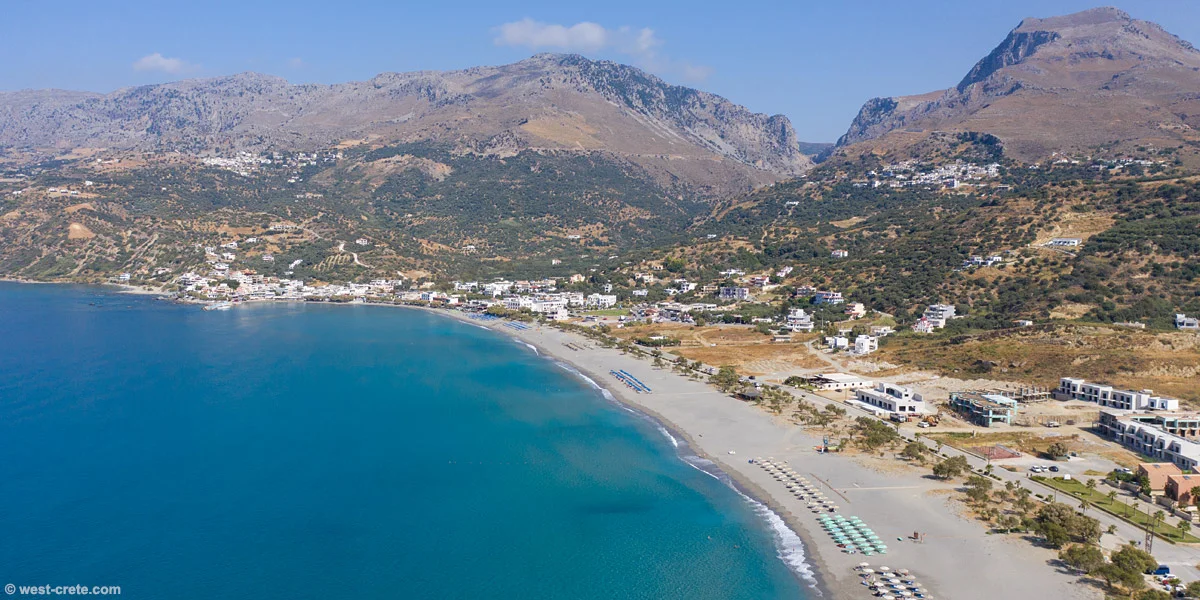
Plakias Beach: The Complete Guide to South Crete's Longest Bay
Plakias is one of the longest beaches in Crete, a 1.3 km stretch of grey-golden sand facing the Libyan Sea in the south of Rethymno. It holds a Blue Flag, offers a full range of water sports and organised facilities, and sits in a bay calm enough for families but open enough to attract windsurfers and divers. What makes it more interesting than most Cretan beach towns is that it also works as a genuine base. From here you can reach Preveli, the Kotsifou Gorge, and a string of quieter coves withi
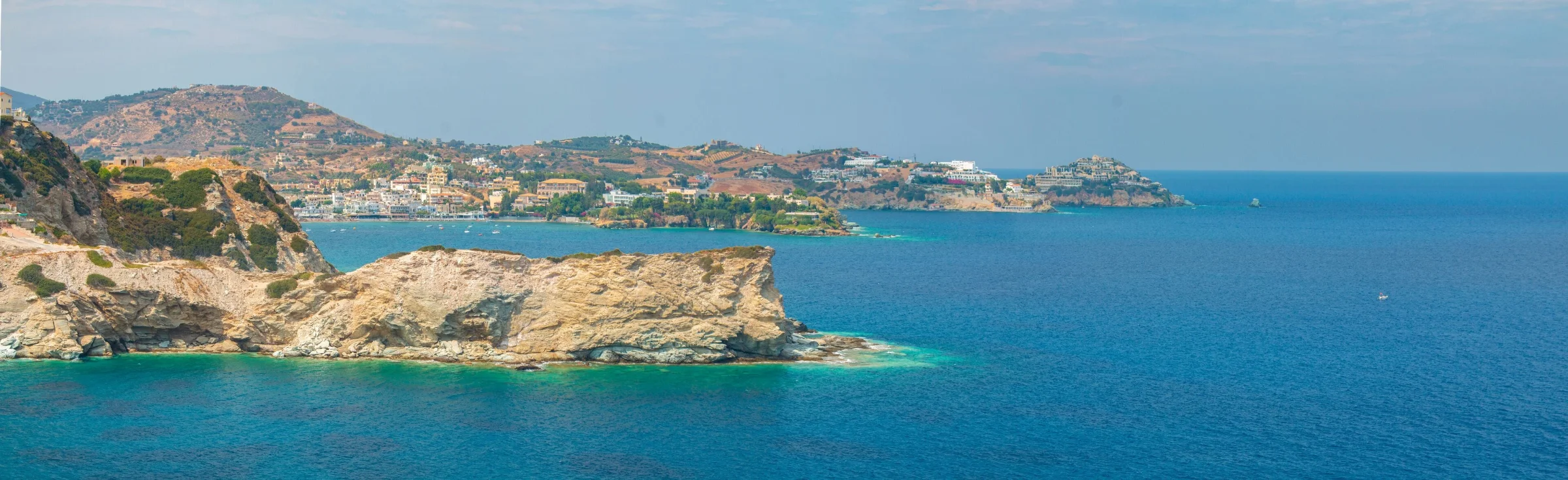
Agia Pelagia Beach, Crete: What to Know Before You Go
Agia Pelagia Beach is one of the easiest Cretan beaches to reach from Heraklion, and one of the most rewarding for a short stay or a full beach day. Set in a sheltered bay with clear water, nearby coves, tavernas, and a strong local identity, it works well for visitors who want more than just sand and sea. This guide covers what makes it different, when to go, and why many travelers choose it as a base in northern Crete.
Let Crete come to you
Sign up to get authentic stories, travel tips, and new experiences
By entering my email, I agree to receive marketing notifications from travel & do.