 Back to blog
Crete Catamaran Cruise: The Complete Guide to Routes, Boats and Booking
On this page
- Quick Summary
- Introduction
- What a Catamaran Cruise in Crete Actually Involves
- Where Catamaran Cruises Go: Top Routes and Destinations
- Catamaran vs Sailing Boat: Which to Choose
- Shared, Semi-Private and Private Cruises Compared
- Morning, Full-Day and Sunset Cruises
- Weather, Sea Conditions and the Best Time to Sail
- Getting There: Departure Ports Around Crete
- How to Choose the Right Crete Catamaran Cruise
- Common Mistakes to Avoid
- Frequently Asked Questions
- Final Thoughts
Quick Summary
A Crete catamaran cruise is the most comfortable way to reach the beaches, lagoons and islets that road trips cannot. Here is the short version before the detail.
- Top routes: Balos Lagoon and Gramvousa in the west, Dia Island off Heraklion, plus Elafonisi and Marathi Bay for quieter swims.
- Cruise length: full-day trips run around 7 hours, Dia Island cruises around 5 to 6 hours, and sunset sailings around 4 hours.
- Formats: shared seats for value, semi-private for a smaller group, or a private charter for full control of the route.
- Usually included: professional crew, snorkeling gear, a stand-up paddleboard, drinking water, soft drinks, wine and a light meal.
- Best months: late April to early November, with the calmest seas in May, June, September and early October.
- Main ports: Kissamos, Chania Old Port, Souda, Rethymno, Heraklion, Hersonissos and Agios Nikolaos.
Introduction
Booking a Crete catamaran cruise is one of the decisions that reshapes a whole holiday. The island is large, its best swimming spots are spread across a long coastline, and many of the finest beaches sit at the end of rough tracks or cannot be reached by car at all. A catamaran solves that problem in a single day. You step aboard a wide, stable, twin-hull boat, the crew handles the route, and the coast opens up from the water instead of from a car park.
This guide is written for travellers who want to get the choice right the first time. It explains what these cruises actually involve, where they go, how the boat types and formats differ, what you pay for, and when the sea is at its best. By the end you should know whether you want a lively shared day trip to Balos, a calm sunset sail off Heraklion, or a private charter shaped around your own group.
What a Catamaran Cruise in Crete Actually Involves
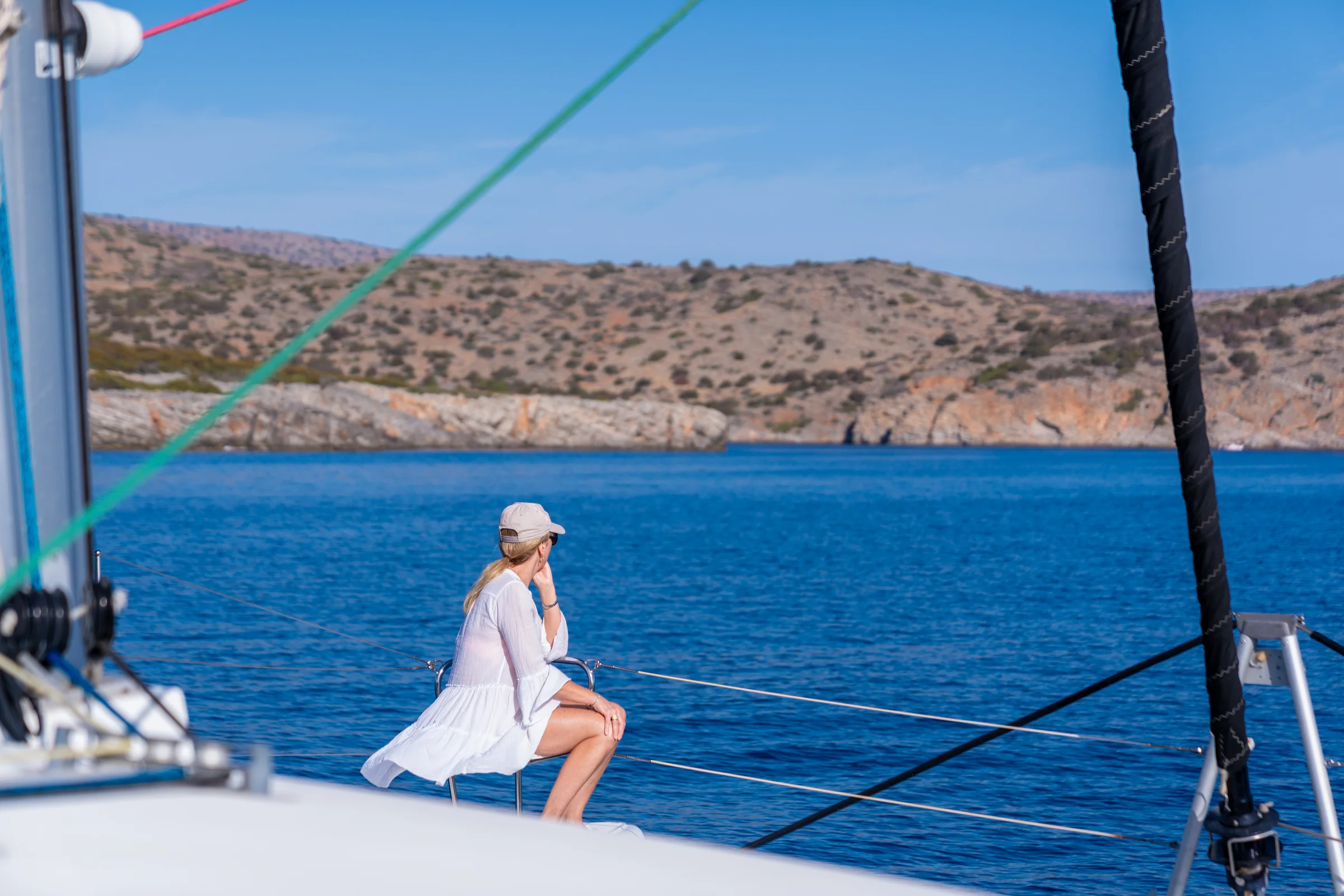
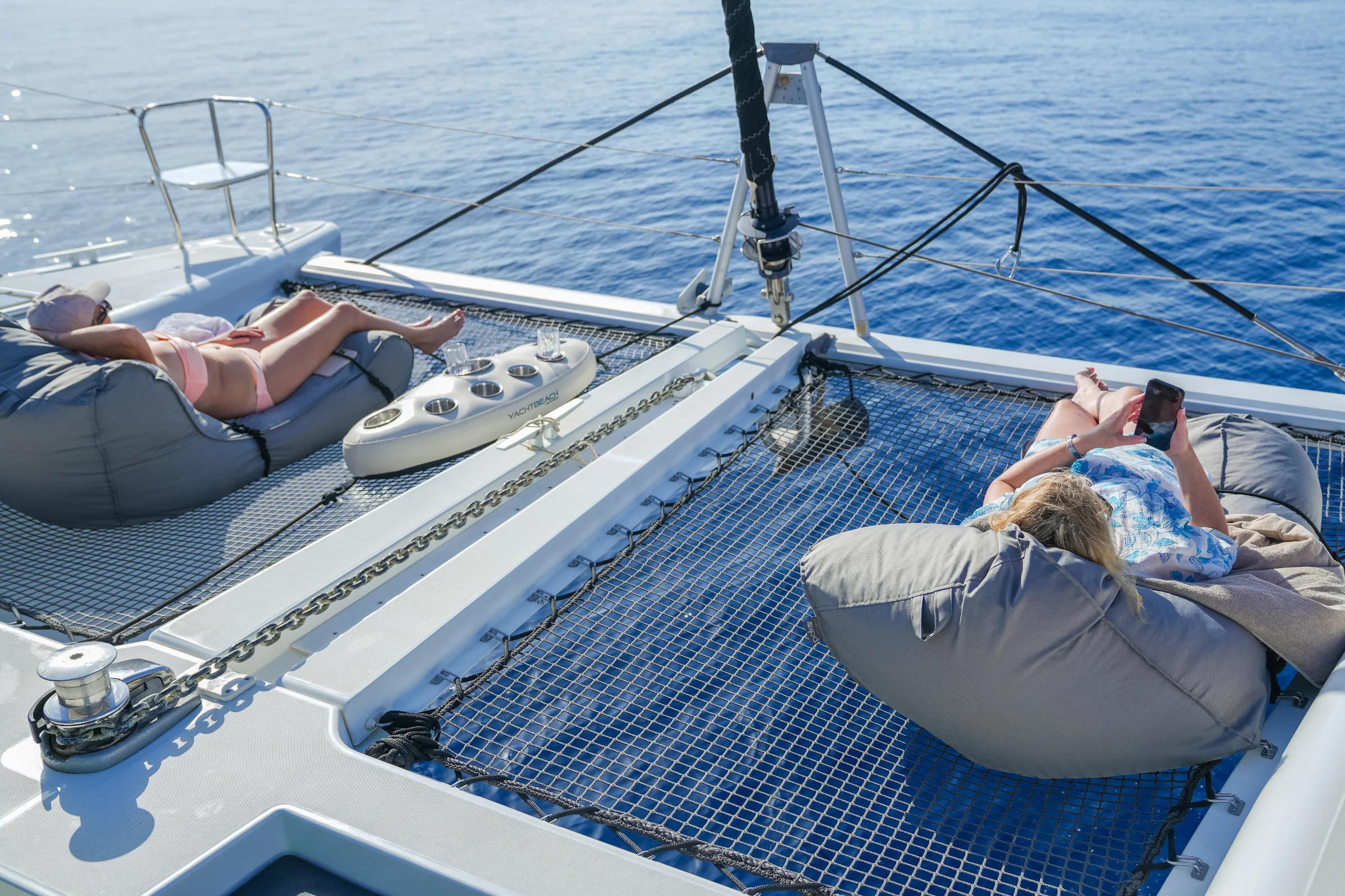
A catamaran has two hulls joined by a wide deck. That design matters more than it sounds. Compared with a single-hull yacht, a catamaran sits flatter on the water, rolls less at anchor, and gives you far more flat space to spread out. On a typical day cruise you get sunbeds or nets at the bow, a shaded cockpit for lunch, and a swim platform at the back.
The rhythm of the day is consistent across most operators. You board at a set port, the crew runs through safety and the plan, and the boat motors or sails to the first swim stop. There you anchor in a bay, swim, snorkel and often try a paddleboard. Lunch or snacks are served on board, usually with wine, beer and soft drinks. On the way back there may be a second, quieter stop before the boat returns to port. Sunset trips follow the same shape but compress it into the golden hours of the late afternoon and evening.
Crews on these cruises are professional and multilingual, and they know the coast in detail. That local knowledge is a real part of what you are buying, because the best swim stops shift with the wind and the crowds, and a good skipper reads both.
For the best Catamaran Cruises check here.
Where Catamaran Cruises Go: Top Routes and Destinations
The route defines the day far more than the brand of boat. These are the destinations that most cruises are built around.
Balos Lagoon and Gramvousa sit at the far northwest tip of the island and are the headline trip out of the Chania region. Balos is a shallow lagoon of white sand and pale turquoise water, and Gramvousa is a small island crowned by a Venetian fortress. Balos is hard to reach by land, involving a long dirt road and a walk, so arriving by catamaran is both easier and more scenic. Most Balos day cruises leave from Kissamos and run around seven hours.
Dia Island lies a short sail off Heraklion and is the natural choice for anyone staying in central Crete. Dia is uninhabited, reached only by boat, and ringed by sheltered bays with some of the clearest water on the island. Cruises here tend to run around five to six hours and stay calmer and less crowded than the Balos run, which makes them a strong pick for families and couples who want a relaxed day rather than a headline sight.
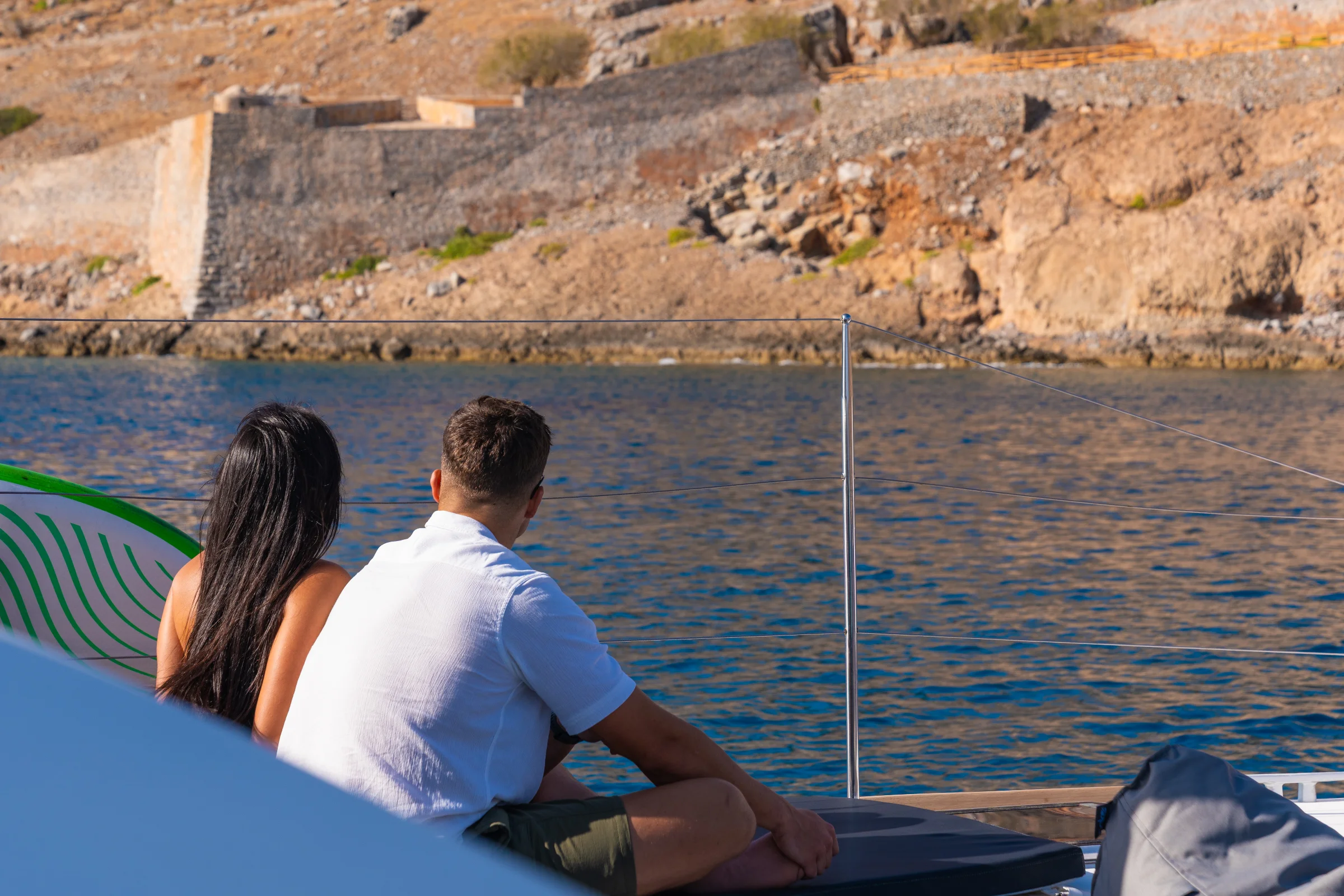
Elafonisi and Kedrodasos in the southwest are pink-tinged sand and shallow lagoons, reached on longer cruises from ports such as Paleochora. Marathi Bay near Souda is a gentler, protected option that suits shorter sunset sailings. Further east, cruises from Elounda and Agios Nikolaos take in the Mirabello Gulf and pass the fortress island of Spinalonga.
If you only have time for one trip, match the route to your base. Staying near Chania points you toward Balos and Gramvousa. Staying near Heraklion points you toward Dia. Trying to combine both in one cruise is not realistic given the distances.
Once you have settled on a region, this is a good moment to line up the specific trip. Browse the curated sailing options on Travel & Do to compare routes, boat sizes and departure times in one place.
Catamaran vs Sailing Boat: Which to Choose
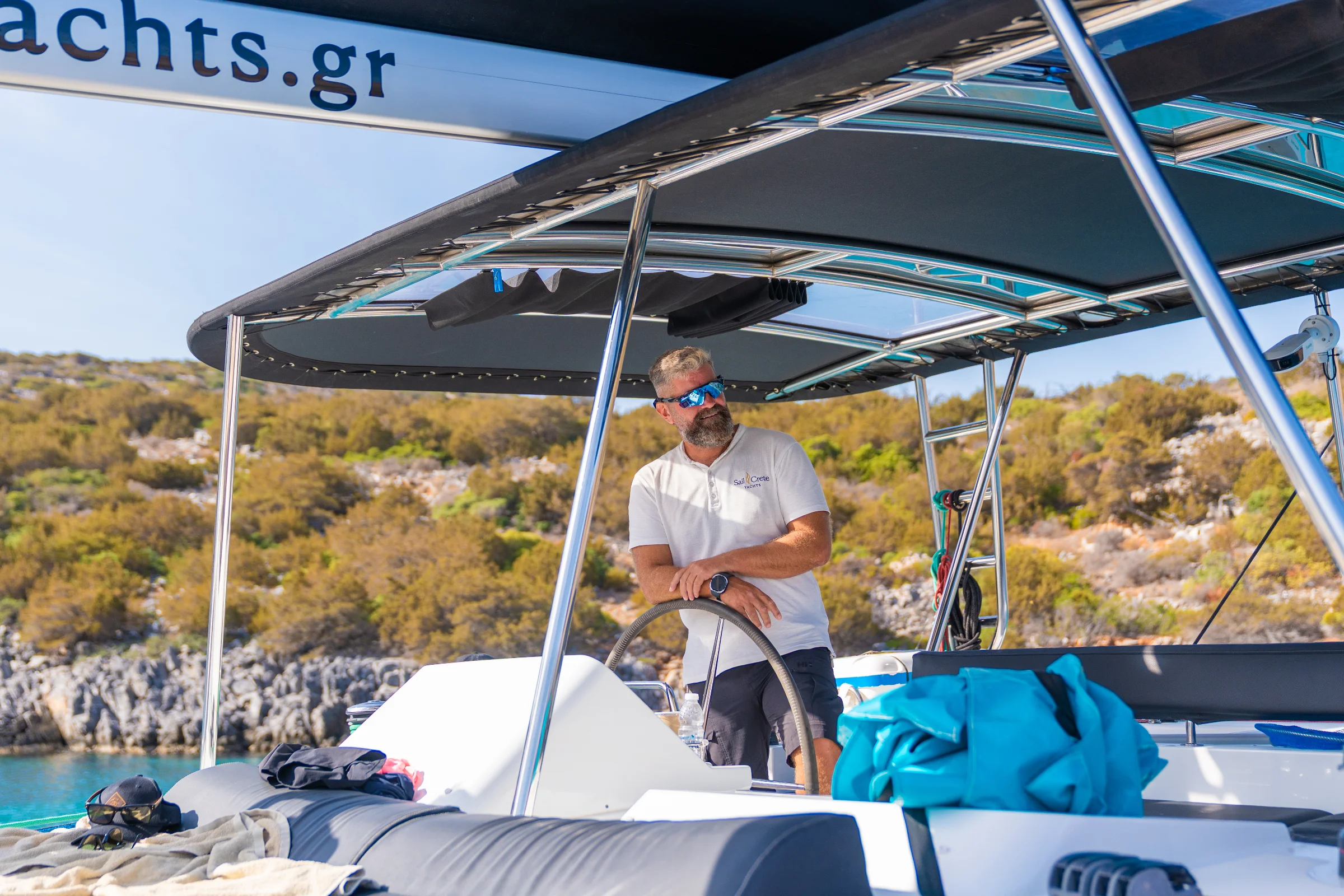
Both appear in search results for the same trips, and the difference is worth understanding. A catamaran gives you stability, deck space and shade, which is why it dominates the day-cruise market in Crete. It is the better call for mixed groups, families with children, anyone prone to seasickness, and travellers who want to lounge rather than sail actively.
A single-hull sailing boat or yacht heels over under sail, offers less flat space, and feels more like traditional sailing. It can be cheaper for a small group and appeals to people who want the motion and feel of the wind. For most first-time visitors booking a day on the water, the catamaran is the more comfortable and sociable choice, and it is the format this guide focuses on.
Shared, Semi-Private and Private Cruises Compared
The format you book changes both the price and the feel of the day more than any other single factor.
A shared cruise puts you on the boat with other guests, usually up to somewhere between sixteen and twenty people depending on the vessel. It is social, lively and the most affordable way to get on the water. You follow a fixed route and timetable. This is the default for solo travellers, couples on a budget and anyone happy to share the deck.
A semi-private cruise caps the group at a smaller number, giving you more space and a calmer atmosphere without paying for the whole boat. It is a middle path that suits small friend groups.
A private charter books the entire catamaran for your group alone. You get flexibility over the route, the timing and the pace, plus privacy for a celebration, a proposal or a family day. It is priced as a whole-boat rate rather than per person, so it makes most sense for larger groups where the cost divides well, or for travellers who value privacy highly.
Prices across all three depend on the season, the length of the cruise, the size and age of the boat, and how much food and drink is included. Shared seats are the entry point. Private charters sit well above them. Booking early in the season or outside the July and August peak generally brings the rate down.
For the best Catamaran Cruises check here.
Morning, Full-Day and Sunset Cruises
Time of day shapes the trip as much as the route. Morning and full-day cruises give you the most swimming, the brightest water for photos, and the best chance of reaching more than one bay. They also coincide with the strongest midday sun, so shade and sunscreen matter.
Sunset cruises trade swimming time for atmosphere. They run around four hours in the late afternoon and evening, usually with one swim stop, drinks and light food, and the main event being the light over the sea as the sun drops. They are calmer, cooler and more romantic, which makes them a favourite for couples. The trade-off is less time in the water and, in the shoulder months, a cooler ride home after dark, so bring a layer.
If your group cannot agree, a full-day cruise with a late return often captures both the swimming and a share of the evening light.
Food and Drinks on Board
Catering is a bigger part of the experience than many people expect. Most day cruises include a light lunch or a spread of snacks, fresh fruit, and drinks that typically cover water, soft drinks, wine and beer. Some premium operators run a full Mediterranean menu prepared on board by a dedicated cook, using Cretan ingredients.
What is included varies, so read the inclusions before you book. The key questions are whether a real meal is served or only snacks, whether alcohol is part of the package or paid separately, and whether special diets can be handled. On a private charter you can often shape the menu in advance.
Planning where to base yourself around these cruises is easier once the trip is set. My Creta Villas lists stays close to the main sailing ports so you can keep transfers short on cruise day.
Weather, Sea Conditions and the Best Time to Sail
The Cretan sailing season runs from late April to early November. Within that window the sea, not the calendar, decides the quality of your day.
July and August bring the warmest water and the longest days, but also the busiest boats and, on the north and west coasts, the strongest afternoon winds. The northwest around Balos in particular can get choppy when the meltemi wind blows, which sometimes shortens or reroutes trips. May, June, September and early October tend to offer calmer seas, softer heat and thinner crowds, which many regular visitors consider the sweet spot for a cruise.
Wind matters more than most first-timers realise. A good operator will move swim stops, change the order of the route, or occasionally cancel and rebook when the sea is unsafe. If you have only one possible cruise day, build in a spare day where you can so a weather change does not cost you the trip entirely.
Getting There: Departure Ports Around Crete
Cruises leave from ports strung along the whole north coast, so your base determines your realistic options.
In the west, Kissamos is the main gateway for Balos and Gramvousa, while Chania Old Port, Kolymvari and Souda serve shorter coastal and sunset sailings. In the centre, Rethymno, Panormo, Heraklion and Hersonissos cover the middle of the island, with Heraklion the hub for Dia Island. In the east, Agios Nikolaos and Ierapetra open up the Mirabello Gulf and the south coast.
Factor in the drive to the port. A Balos cruise from Kissamos is a long day if you are staying near Heraklion, and the early start plus the transfer can turn a relaxing plan into a rushed one. Booking a cruise close to where you sleep is one of the simplest ways to improve the day.
How to Choose the Right Crete Catamaran Cruise
Work through these in order and the decision usually makes itself.
Start with your base and travel time, since that narrows the sensible ports immediately. Then set your priority for the day, whether that is a headline sight like Balos, quiet swimming like Dia, or atmosphere like a sunset sail. Next choose your format, shared for value, semi-private for space, or private for control. Check the boat itself, its size, age, shade and guest limit, because a modern catamaran with proper shade transforms a hot day. Confirm the inclusions, especially food, drinks and gear. Finally match the time of day to your group, remembering that children usually do better on morning trips with more swimming.
Couples chasing romance lean toward sunset and private. Families lean toward morning, shorter, calmer routes such as Dia, and boats with easy swim access. Groups celebrating something specific are best served by a private charter where the crew can prepare for the occasion.
Common Mistakes to Avoid
A few errors come up again and again.
Booking the biggest party boat when you wanted a calm sail, or the reverse, is the most common. Read the guest numbers and the tone of the trip, not just the destination. Ignoring the wind is the next, especially on the west coast in high summer, where an exposed afternoon run to Balos can be rough. Assuming every cruise includes a proper meal is another, since some only offer snacks. Underestimating the drive to a distant port turns an early start into a scramble. Choosing a midday arrival at a famous beach in peak season means sharing it with every other boat, when an earlier or later slot is quieter.
Finally, leaving the booking until you arrive can backfire in July and August, when the good cruises sell out days ahead. Reserve the boat before you travel and keep a backup day for weather.
## Where to Stay for a Catamaran Cruise
Because these cruises reward short transfers, it pays to sleep near your chosen port. Basing yourself around Chania or Kissamos puts the Balos and Gramvousa trips within easy reach. Staying near Heraklion or Hersonissos lines you up for Dia Island and the central ports. Rethymno works as a middle base if you want to keep both west and central options open, and Agios Nikolaos suits anyone drawn to the eastern gulf.
A villa often works better than a hotel for cruise days, giving you an early breakfast on your own schedule, space to dry gear afterwards, and parking near the harbour. My Creta Villas gathers stays close to each sailing region so you can match your accommodation to the trip you have booked.
Frequently Asked Questions
Where do catamaran cruises in Crete depart from?
From ports along the north coast, including Kissamos and Chania in the west, Rethymno and Heraklion in the centre, and Agios Nikolaos in the east. Balos trips usually leave from Kissamos and Dia trips from Heraklion.
How long does a catamaran cruise last?
Full-day cruises to Balos Lagoon typically run around seven hours, Dia Island cruises around five to six hours, and sunset sailings around four hours.
What is included in the price?
Most cruises include the crew, snorkeling gear, a paddleboard, drinking water, soft drinks, wine or beer, and a light meal or snacks. Always check whether a full meal or only snacks is served.
What is the difference between a shared and a private cruise?
A shared cruise puts you on board with other guests and follows a set route, and it is the affordable option. A private charter books the whole boat for your group with a flexible route and is priced per boat.
Can children join a catamaran cruise?
Yes. Families are welcome on most day cruises, and the calmer routes such as Dia Island tend to suit young children best.
When is the best time to sail? The season runs from late April to early November. May, June, September and early October usually bring the calmest seas and thinnest crowds.
Will I get seasick on a catamaran? Catamarans are far more stable than single-hull yachts, so seasickness is less likely, especially on sheltered routes and in the calmer months.
Final Thoughts
A Crete catamaran cruise turns a long coastline into a single, easy day on the water, and the quality of that day comes down to a handful of choices you make before you board. Pick the region that matches where you are staying, choose the format that matches your group, check the boat and the inclusions, and watch the wind. Get those right and the sea does the rest, whether that means the white sand of Balos, the quiet bays of Dia, or the slow gold of a sunset sail.
When you are ready, compare the routes and boats on Travel & Do and line up a stay near your port with My Creta Villas, then book early so the weather is the only variable left.
Related Articles
Continue exploring Crete
One Day in Heraklion: The Complete Itinerary for Crete's Capital
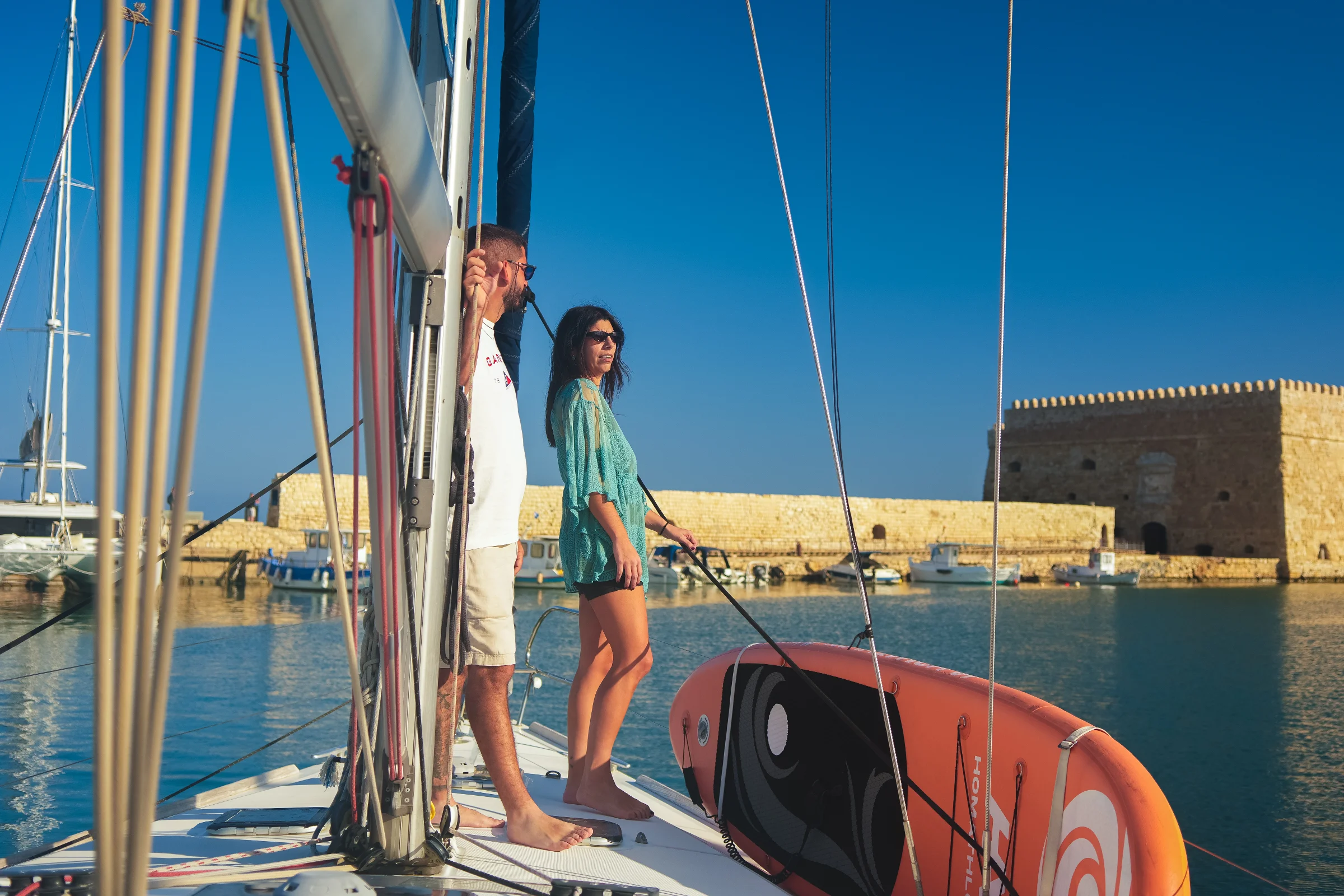
Most visitors get exactly one day in Heraklion, and most of them spend it queuing at Knossos in the worst of the afternoon heat. It does not have to go that way. This is the order we would put the day in — the palace first thing, the Old Town on foot while the shade still favours you, the museum indoors when the sun is at its worst, and the Venetian harbour at the end. Every time and price below comes from our own booking calendar, so you can plan the day around what is genuinely running rather

Cretan Red Wine: The Grapes, the Blends and What the Label Hides
Crete's red wines are easier to enjoy than to read. The island's leading red grape is almost never named on the front of a bottle, the two appellations built on it print no recipe at all, and the most confident Englishlanguage writing about Cretan wine repeats three claims that Greek planting and appellation records flatly contradict. This is the grapebygrape, labelbylabel version: what the four native reds taste like, why they are blended rather than bottled alone, what a PDO and a PGI
Venetian Fortresses of Crete: History and Visitor Guide
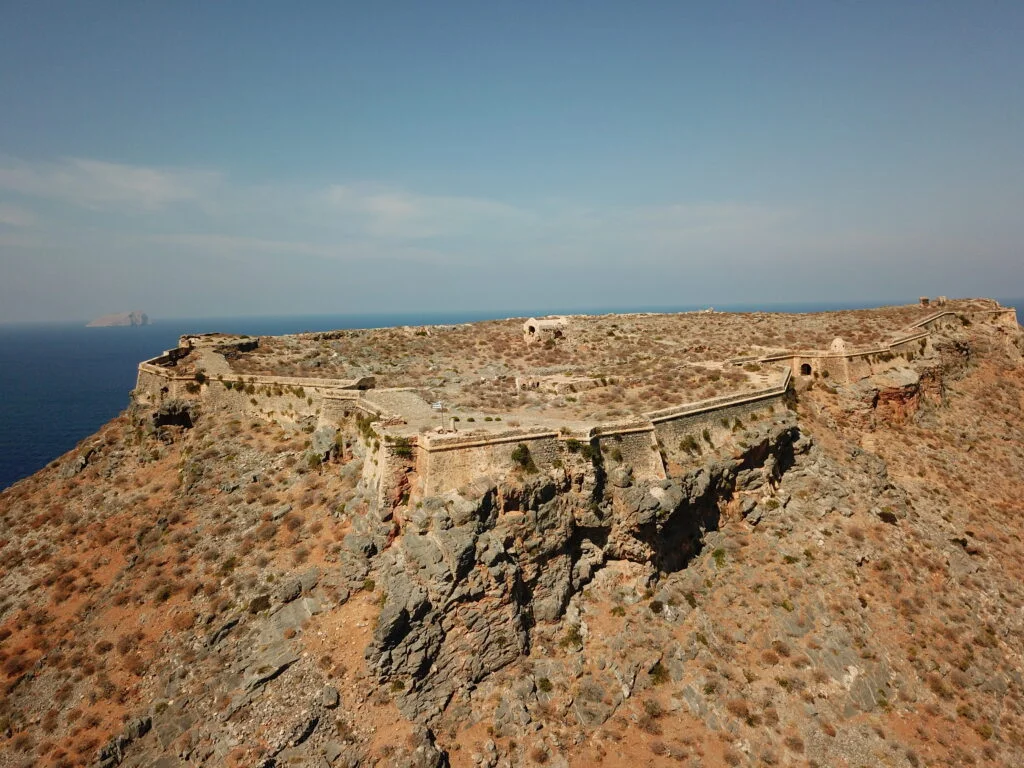
The Venetian fortresses of Crete still guard harbours, hilltops and remote islands across the coast. Some have become city landmarks, while others require a boat journey or a steep walk to reach their walls. This guide covers their history, the best fortresses to visit and how to include them in a trip around Crete.
Let Crete come to you
Sign up to get authentic stories, travel tips, and new experiences
By entering my email, I agree to receive marketing notifications from travel & do.