 Back to blog
Venetian Fortresses of Crete: History and Visitor Guide
On this page
- Quick Summary
- What Are the Venetian Fortresses of Crete?
- Why Crete Has So Many Venetian Fortresses
- The Best Venetian Fortresses in Crete
- Koules Fortress, Heraklion
- The Venetian Walls of Heraklion
- Fortezza of Rethymno
- Firka Fortress, Chania
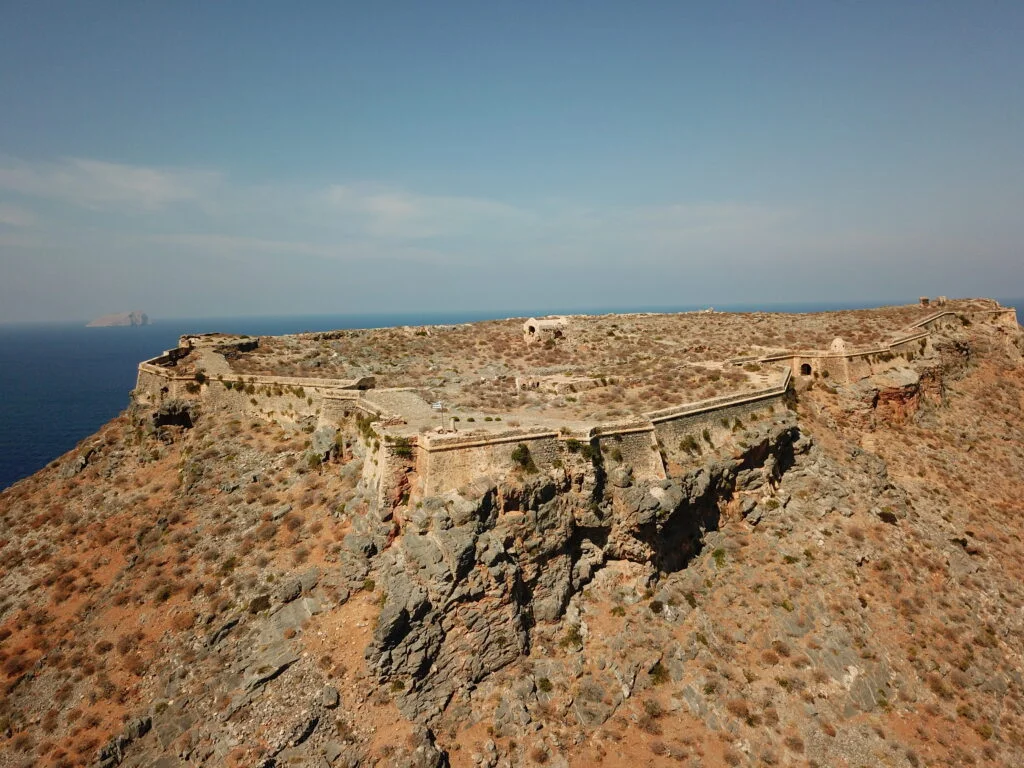
- Gramvousa Fortress
- Spinalonga Fortress
- Frangokastello
- Which Fortress Should You Visit?
- How to Plan a Venetian Fortress Route
- Chania Region
- Rethymno Region
- Heraklion Region
- Lasithi Region
- History and Architecture
- Food, Bars and Tavernas
- Weather and Best Time to Visit
- Getting There
- Where to Stay
- Nearby Attractions
- Chania Venetian Harbour
- Balos Lagoon
- Rethymno Old Town
- Heraklion Historical Centre
- Elounda and Plaka
- Chora Sfakion
Quick Summary
The Venetian Republic controlled Crete from the early 13th century until the Ottoman conquest.
Crete’s fortresses protected ports, cities, trading routes and strategic coastal passages.
The best-known examples include Koules, Fortezza, Firka Fortress, Gramvousa, Spinalonga and Frangokastello.
Heraklion contains both a harbour fortress and one of the Mediterranean’s strongest systems of city walls.
Gramvousa and Spinalonga can only be reached by boat.
Fortezza, Koules and Firka can easily be explored while visiting the surrounding old towns.
Spring and autumn are the most comfortable seasons for visiting exposed walls and hilltop fortifications.
Opening hours and entrance fees vary between sites and may change during the year.
What Are the Venetian Fortresses of Crete?
The Venetian fortresses of Crete are part of the defensive network created while the island was governed by the Republic of Venice.
Crete occupied an important position between Europe, North Africa and the eastern Mediterranean. Its harbours allowed Venetian ships to stop, trade, repair and resupply while travelling towards other territories.
Protecting these routes required more than one castle. Venice constructed and expanded city walls, harbour forts, sea fortresses, bastions and isolated coastal strongholds across the island.
Some were built beside growing towns, including Koules Fortress in Heraklion and Fortezza in Rethymno. Others occupied islands and remote coastal points, including Gramvousa, Spinalonga and Frangokastello.
Their purpose also changed over time. After the Ottoman conquest, many fortresses continued to serve as military bases, prisons, settlements or administrative centres. Their surviving buildings therefore reflect more than one historical period.
Why Crete Has So Many Venetian Fortresses
Venice gained control of Crete after the Fourth Crusade and governed the island for more than four centuries. Known as the Kingdom of Candia, Venetian Crete became a major commercial and military base.
The island’s long coastline created several points that needed protection. Pirates, rival maritime powers and the expanding Ottoman Empire all threatened Venetian shipping.
Early medieval castles were not designed to resist gunpowder weapons and heavy artillery. During the 15th and 16th centuries, Venice strengthened Crete’s defences with lower, thicker walls, angular bastions and positions for cannons.
The fortresses were placed where they could control harbour entrances or observe large sections of the coast. Koules guarded the harbour of Candia, modern Heraklion. Fortezza overlooked Rethymno from Paleokastro Hill. Gramvousa controlled the sea passages near Crete’s northwestern edge.
Chania also received new bastions, harbour defences, shipyards and a lighthouse during the Venetian period. Similar fortification projects appeared at Souda, Spinalonga and smaller coastal settlements.
The Best Venetian Fortresses in Crete
Koules Fortress, Heraklion
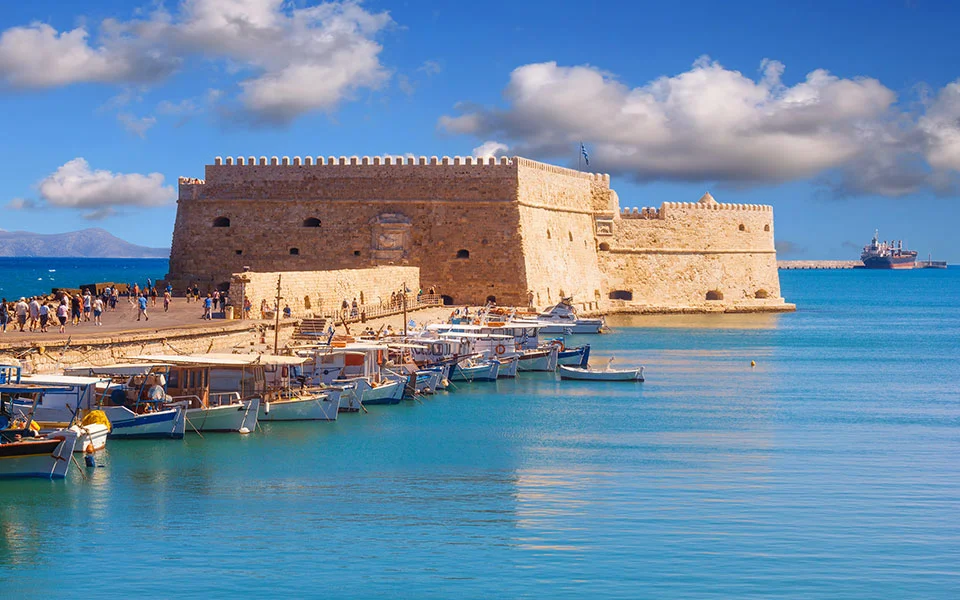
Koules Fortress stands at the entrance to Heraklion’s old Venetian harbour. The Venetians called it Rocca a Mare or Castello a Mare, meaning fortress of the sea.
The present structure was built during the early 16th century, replacing an older harbour tower that had been damaged. Its thick outer walls contained storage rooms, barracks and cannon positions intended to protect the port.
Marble reliefs of the winged lion of Saint Mark, the symbol of Venice, remain visible on parts of the exterior. Inside, visitors can walk through vaulted rooms and reach the upper level for views across the harbour and city.
Koules is one of the easiest Venetian fortresses of Crete to visit. It is located within walking distance of central Heraklion, the Archaeological Museum and Lions Square.
The Venetian Walls of Heraklion
Heraklion itself was surrounded by a vast defensive system of walls and bastions. The Venetians spent decades expanding the fortifications as the Ottoman threat became more serious.
The walls followed a roughly triangular route around the city and incorporated major gates, bastions, underground passages and defensive platforms. They helped Candia resist an Ottoman siege that lasted from 1648 until 1669.
Several sections remain integrated into modern Heraklion. Visitors can walk along parts of the walls, see gates such as Chanioporta and visit the Martinengo Bastion, where the tomb of writer Nikos Kazantzakis is located.
The official Heraklion route follows approximately three kilometres of walls, gates and bastions.
Fortezza of Rethymno
The Fortezza of Rethymno stands on Paleokastro Hill, directly above the Old Town and the Cretan Sea.
Construction began in 1573, after earlier defences proved inadequate against pirate raids and naval attacks. The original plan was to create a fortified area large enough to protect the city’s residents during an invasion.
Inside the walls were administrative buildings, military storerooms, residences and a cathedral. After Rethymno fell to the Ottomans in 1646, the cathedral was converted into the Mosque of Sultan Ibrahim, whose large dome remains one of Fortezza’s main landmarks.
Fortezza is large enough to justify at least an hour. The ramparts provide broad views across Rethymno Old Town, the harbour and the surrounding coast.
Firka Fortress, Chania
Firka Fortress occupies the western entrance of Chania Venetian Harbour. It formed part of the city’s coastal defences and supported the protection of the harbour entrance.
The name Firka comes from a Turkish word associated with military barracks. Under Ottoman rule, the fortress was used by soldiers and later functioned as a prison.
Firka is also connected with a major moment in modern Cretan history. On 1 December 1913, the Greek flag was raised here during the official ceremony marking the union of Crete with Greece.
Part of the complex now houses the Maritime Museum of Crete. From the waterfront outside, visitors have one of the clearest views towards Chania’s lighthouse and sea wall.
Gramvousa Fortress
The fortress of Imeri Gramvousa stands on a rocky island off Crete’s northwestern coast. Its position allowed the Venetians to observe ships travelling through the sea passages between Crete and the Peloponnese.
Built during the late 16th century, the fortress remained under Venetian control even after much of Crete had fallen to the Ottomans. Venice eventually surrendered it in 1692 after it was handed over through betrayal.
During the Greek War of Independence, Cretan rebels occupied Gramvousa. The isolated island later became associated with piracy when its residents began attacking passing ships to survive.
Visitors arrive by boat and follow a steep path to the fortress. Inside the walls are the remains of buildings, water cisterns, a church and defensive positions. The main reason to complete the climb is the view over Gramvousa, Balos Lagoon and the open sea.
Spinalonga Fortress
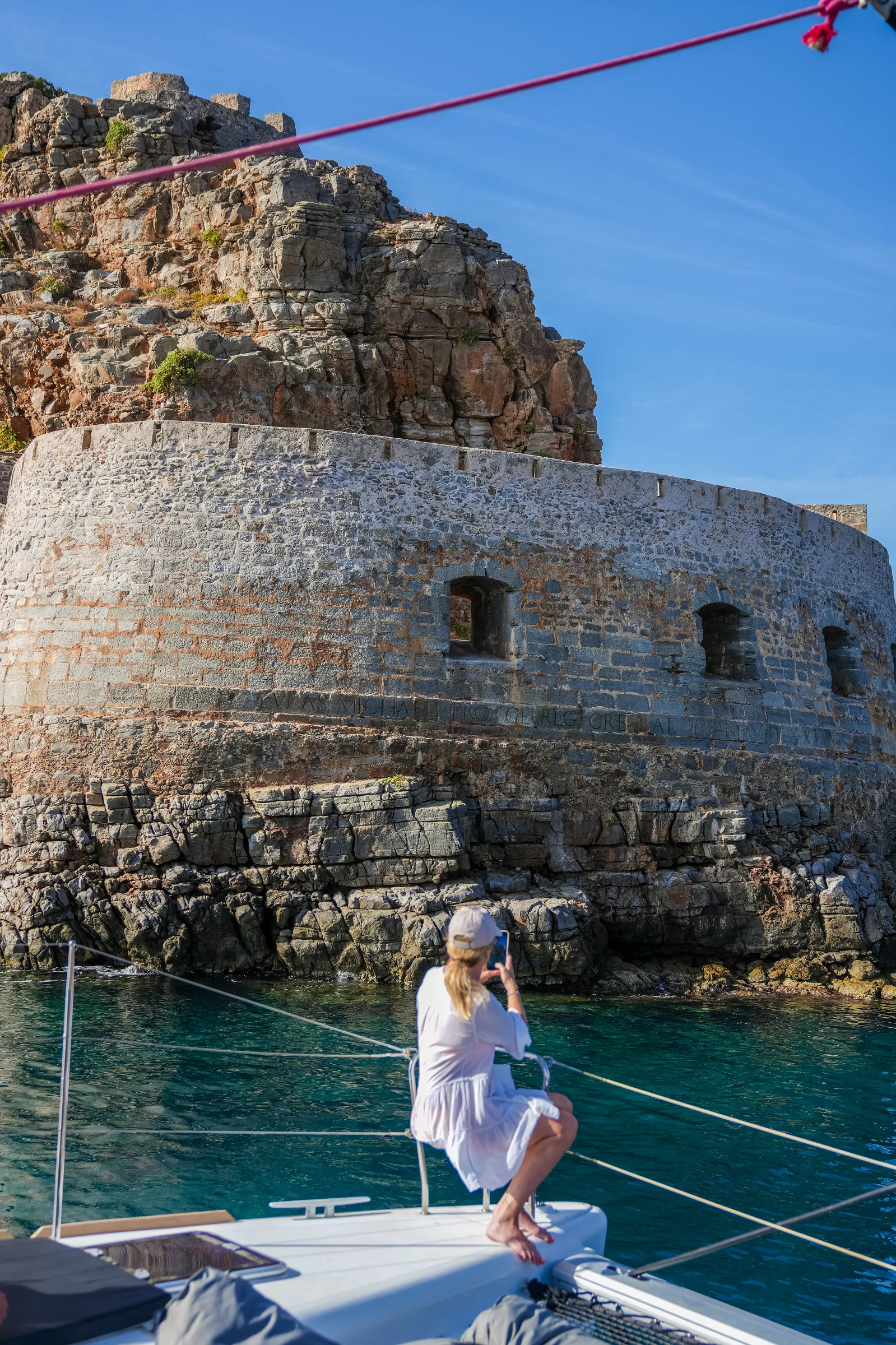
Spinalonga lies at the entrance to the natural harbour of Elounda in eastern Crete.
The Venetians began constructing the fortress in 1579, building over the remains of an earlier defensive site. The position protected the harbour, nearby salt pans and the northern approach to Mirabello Bay.
Spinalonga remained under Venetian control until 1715, decades after the fall of Candia. Under Ottoman rule, it developed into a residential and commercial settlement.
The island later became known for a different chapter of history. From 1904 until 1957, it operated as a leper colony. The streets visitors walk through today therefore contain Venetian fortifications, Ottoman houses and buildings connected with the former colony.
Spinalonga can only be reached by boat from Plaka, Elounda or Agios Nikolaos.
Frangokastello
Frangokastello stands close to the sea on the south coast of Chania, east of Chora Sfakion.
The Venetians constructed the rectangular fortress during the late 14th century. Its purpose was to protect the coast from piracy and help Venice control the independent communities of the Sfakia region.
The castle has four corner towers connected by straight defensive walls. A relief of the lion of Saint Mark survives above the main entrance.
Frangokastello later became associated with the Greek War of Independence. In 1828, Cretan and Epirote fighters led by Hatzimichalis Dalianis were killed during a battle against Ottoman forces.
Local tradition connects this battle with the Drosoulites, shadowy figures said to appear near the fortress around the anniversary of the fighting.
Which Fortress Should You Visit?
The best choice depends on where you are staying and how much time you have.
Choose Koules Fortress when staying in Heraklion. It is centrally located and can be combined with the Venetian harbour, city walls and Archaeological Museum.
Choose Fortezza when visiting Rethymno. It is the most extensive urban fortress on the list and provides an excellent overview of the Old Town.
Choose Firka Fortress for a shorter historical stop while walking around Chania Venetian Harbour.
Choose Gramvousa for a boat trip that combines history, a hill walk and coastal scenery.
Choose Spinalonga for the broadest historical experience. Its Venetian fortifications form only one part of a site that also includes Ottoman and 20th-century history.
Choose Frangokastello during a road trip along Crete’s south coast. The fortress is compact, but its setting beneath the White Mountains makes it worth the journey.
How to Plan a Venetian Fortress Route
It is not practical to visit every major Venetian fortress in one day. Crete is a long island, and the sites are spread between remote islands, city centres and the south coast.
A useful route is to organise the fortresses by region.
Chania Region
Begin with Firka Fortress and the Venetian Harbour in Chania Old Town. On another day, travel to Kissamos for a boat trip to Gramvousa.
Frangokastello requires a separate journey across the mountains to the south coast. Combine it with Chora Sfakion, nearby beaches or Imbros Gorge.
Rethymno Region
Fortezza is within walking distance of Rethymno Old Town. It can be combined with the old harbour, Venetian Loggia, Rimondi Fountain and historic neighbourhoods.
Heraklion Region
Visit Koules Fortress and continue along the old harbour before walking towards the city’s Venetian walls. The route also passes several Venetian monuments, including the Loggia and Morosini Fountain.
Lasithi Region
Take a boat from Plaka, Elounda or Agios Nikolaos to Spinalonga. Longer cruises may also include swimming around Kolokytha or Mirabello Bay.
History and Architecture
Venetian fortresses in Crete do not all look the same because they were built at different times and for different purposes.
Frangokastello follows the form of a medieval rectangular castle with corner towers. Koules is a compact harbour fort designed to hold artillery close to the water.
Fortezza and the Heraklion walls show the influence of later military engineering. Their thick walls and angular bastions were designed to resist cannon fire and reduce exposed surfaces.
Island fortresses such as Gramvousa and Spinalonga relied partly on their natural surroundings. Steep cliffs, narrow landing points and open water made them difficult to attack.
Ottoman additions are also visible. Mosques, barracks, houses and later defensive alterations show how the fortresses continued to be used after the Venetian period.
Food, Bars and Tavernas
The city fortresses are easy to combine with local food.
Around Koules, walk towards central Heraklion for bakeries, meze restaurants and cafés near Agios Titos and Lions Square.
Below Fortezza, Rethymno Old Town has tavernas around the harbour, Neratze Mosque and the streets behind the Rimondi Fountain.
Near Firka Fortress, the Chania waterfront has many restaurants, although quieter tavernas can be found in Topanas and the streets behind the harbour.
Boat trips to Gramvousa may include snacks or meals, depending on the vessel. Kissamos is a good place for seafood after returning to port.
Plaka, opposite Spinalonga, has waterfront tavernas serving fish, local salads and Cretan dishes.
Weather and Best Time to Visit
The most comfortable periods for exploring the Venetian fortresses of Crete are April to June and September to October.
Temperatures are generally suitable for walking, and exposed hilltops are easier to manage than during peak summer.
In July and August, visit city fortresses early in the morning or late in the afternoon. Fortezza, Gramvousa and Spinalonga offer limited shade.
The climb to Gramvousa can be particularly demanding during midday heat. Carry water, wear shoes with grip and avoid loose sandals.
Winter works well for Koules, Firka and Fortezza, although opening schedules may be reduced. Boat access to Gramvousa and Spinalonga is limited and more dependent on weather conditions.
Getting There
Koules Fortress is located beside Heraklion’s old harbour and can be reached on foot from the city centre.
Fortezza is above Rethymno Old Town. The entrance is reached by a short uphill walk.
Firka Fortress is at the western end of Chania Venetian Harbour.
Gramvousa is reached by boat, usually from Kissamos. Access to the fortress requires a steep walk from the landing area.
Spinalonga is reached by boat from Plaka, Elounda or Agios Nikolaos.
Frangokastello is best reached by car. The roads from Chania and Rethymno cross mountainous areas and include several bends.
Always check official opening information before travelling. Archaeological sites may close on public holidays, while boat routes can be changed because of wind or sea conditions.
Where to Stay
Stay in Heraklion for easy access to Koules, the Venetian walls and the island’s main archaeological museum.
Stay in Rethymno Old Town to explore Fortezza on foot and experience one of Crete’s best-preserved Venetian urban centres.
Stay in Chania Old Town for Firka Fortress, the harbour and access to organised trips towards Kissamos and Gramvousa.
Stay in Kissamos when Balos and Gramvousa are a major part of your itinerary.
Stay in Elounda or Agios Nikolaos for boat trips to Spinalonga and the eastern coast.
Stay around Sfakia or Frangokastello for a quieter trip focused on the south coast, beaches and mountain villages.
Nearby Attractions
Chania Venetian Harbour
Combine Firka Fortress with the lighthouse, Venetian shipyards, Maritime Museum and the streets of Chania Old Town.
Balos Lagoon
Balos is normally included in boat routes to Gramvousa and is one of the best-known coastal landscapes in western Crete.
Rethymno Old Town
Below Fortezza, the Old Town contains Venetian houses, Ottoman mosques, fountains and narrow pedestrian streets.
Heraklion Historical Centre
The Venetian Loggia, Morosini Fountain, Basilica of Saint Mark and Church of Agios Titos are all close to Koules and the harbour.
Elounda and Plaka
These coastal villages provide the main access points for Spinalonga and views of its fortified walls.
Chora Sfakion
Chora Sfakion can be combined with Frangokastello during a drive along the southern coast of Chania.
Frequently asked questions
What are the best Venetian fortresses in Crete?
The best-known Venetian fortresses are Koules in Heraklion, Fortezza in Rethymno, Firka in Chania, Gramvousa, Spinalonga and Frangokastello.
Why did the Venetians build fortresses in Crete?
The fortresses protected harbours, cities, trade routes and coastal settlements from piracy, rival naval powers and Ottoman attacks.
What is the largest Venetian fortress in Crete?
Fortezza is one of the largest complete fortress complexes visitors can explore. Heraklion’s wider system of Venetian city walls covers a larger urban area.
Which Venetian fortress is in Heraklion?
Koules Fortress stands at the entrance to Heraklion’s old harbour. The city also retains extensive Venetian walls, bastions and gates.
Can you visit Gramvousa Fortress?
Yes. Gramvousa is reached by boat, usually from Kissamos. Visitors must follow a steep and uneven path to reach the fortress.
Is Spinalonga a Venetian fortress?
Yes. The Venetians constructed a major fortress on Spinalonga from 1579. The island later became an Ottoman settlement and a leper colony.
Is there a Venetian fortress in Chania Old Town?
Firka Fortress stands at the western entrance of Chania Venetian Harbour. The Old Town also retains bastions, walls, shipyards and other Venetian structures.
How many days do you need to visit Crete’s main fortresses?
Allow at least three or four separate days if you want to see fortresses in several regions. Gramvousa, Spinalonga and Frangokastello each require a dedicated journey.
Related Articles
Continue exploring Crete
One Day in Heraklion: The Complete Itinerary for Crete's Capital
Most visitors get exactly one day in Heraklion, and most of them spend it queuing at Knossos in the worst of the afternoon heat. It does not have to go that way. This is the order we would put the day in — the palace first thing, the Old Town on foot while the shade still favours you, the museum indoors when the sun is at its worst, and the Venetian harbour at the end. Every time and price below comes from our own booking calendar, so you can plan the day around what is genuinely running rather
Cretan Red Wine: The Grapes, the Blends and What the Label Hides
Crete's red wines are easier to enjoy than to read. The island's leading red grape is almost never named on the front of a bottle, the two appellations built on it print no recipe at all, and the most confident Englishlanguage writing about Cretan wine repeats three claims that Greek planting and appellation records flatly contradict. This is the grapebygrape, labelbylabel version: what the four native reds taste like, why they are blended rather than bottled alone, what a PDO and a PGI
Arkadi Monastery: History, What to See and Visitor Guide
Arkadi Monastery is one of the most important historical and religious sites in Crete. Its peaceful courtyard and Renaissance church stand at the centre of a story shaped by learning, resistance and the events of 1866. This guide covers the history of Moni Arkadiou, what to see and how to plan a visit from Rethymno.
Let Crete come to you
Sign up to get authentic stories, travel tips, and new experiences
By entering my email, I agree to receive marketing notifications from travel & do.