 Back to blog
Knossos Palace in Crete: Worth It, Tickets, Labyrinth and What It’s Famous For
On this page
Quick Summary
Knossos Palace sits about 6 km southeast of Heraklion and is one of the most important Minoan sites in Crete.
The palace was built in two main phases, first around 1900 B.C. and again between 1700 and 1450 B.C.
It was the royal residence and also the administrative and religious centre of the Minoan civilisation.
The site is tied to the legends of King Minos, the Minotaur, and the Labyrinth.
The most useful visitor questions are whether it is worth it, whether you can buy tickets at the gate, and how much of the myth is actually visible on site.
What Is Knossos
The Palace of Knossos is the best-known archaeological site on Crete and one of the defining monuments of the Minoan world. It is not just a single building, but a large palace complex with wings, courtyards, storage areas, ceremonial rooms, and residential spaces. In modern travel writing, people often call it the gateway to Minoan civilisation because it gives visitors a direct look at one of Europe's earliest advanced cultures. The site matters because it combines archaeology, mythology, and the history of Crete in one place.
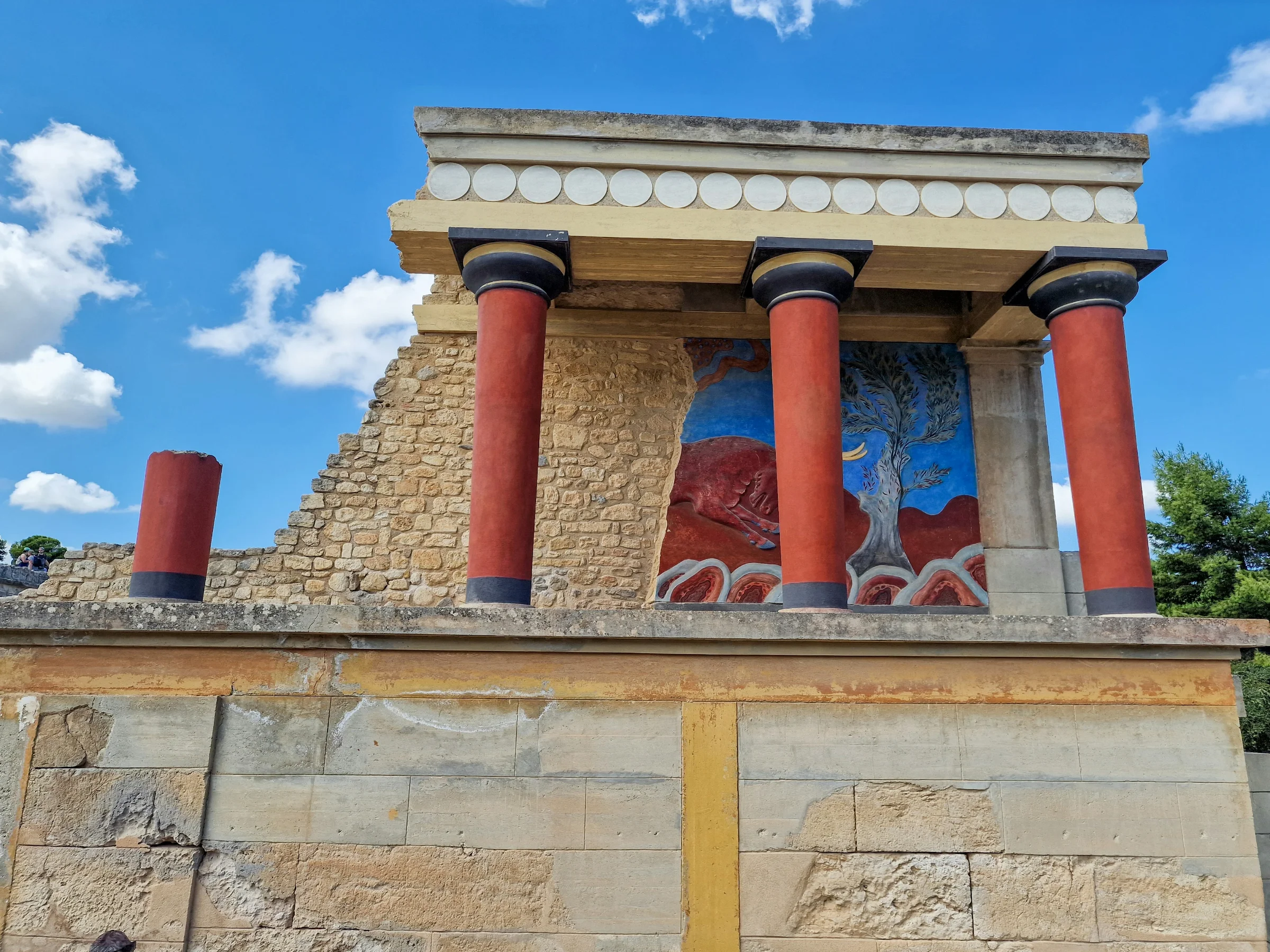
The strongest themes around Knossos are archaeological site, Minoan palace, King Minos, royal villa, lustral basin, and east wing. That is useful because it tells us what readers already expect to learn. They do not want a dry excavation report, they want to understand why Knossos still matters and what they will actually see there. The palace works as both a real historical site and a mythic symbol, which is why it attracts so much search interest.
Defining Features
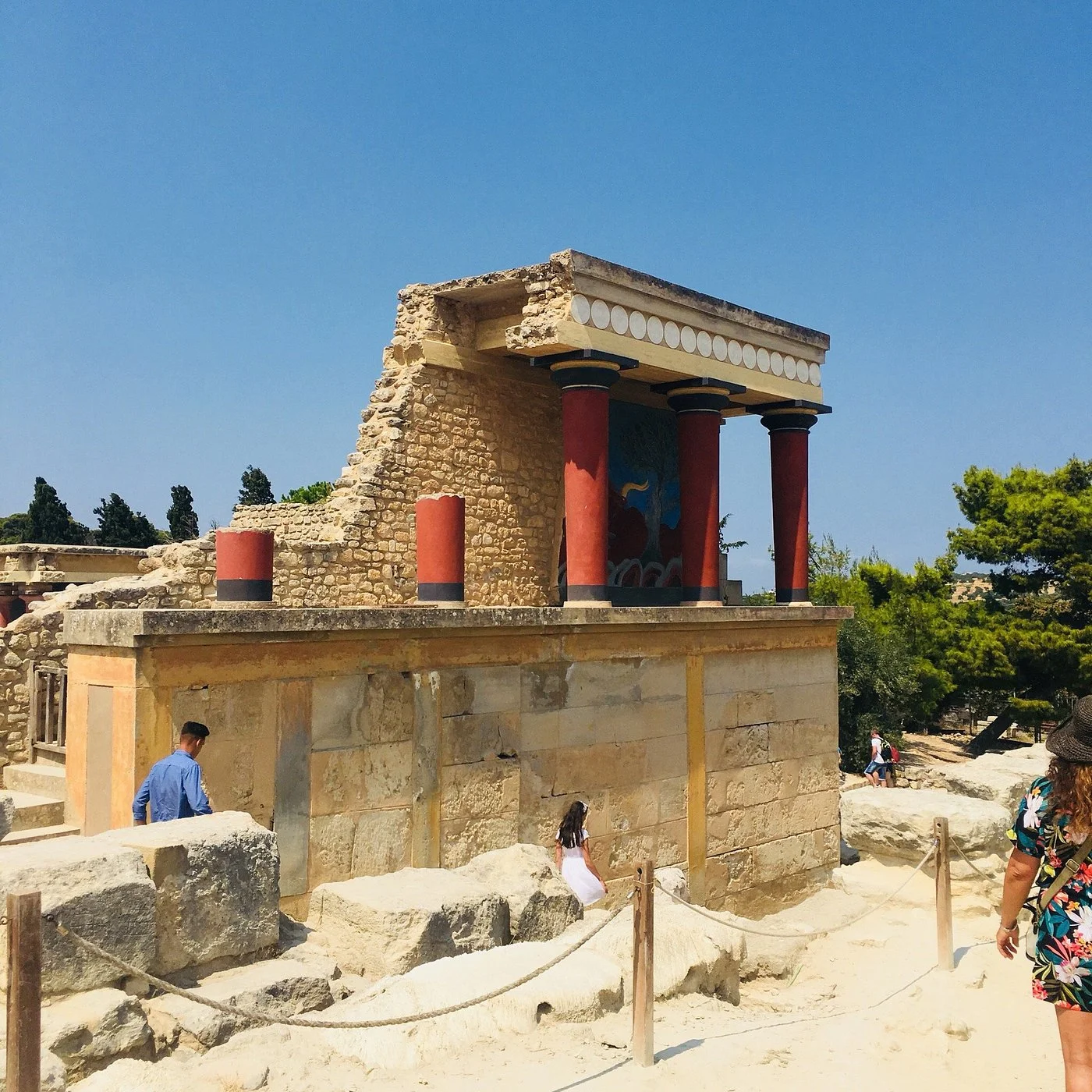
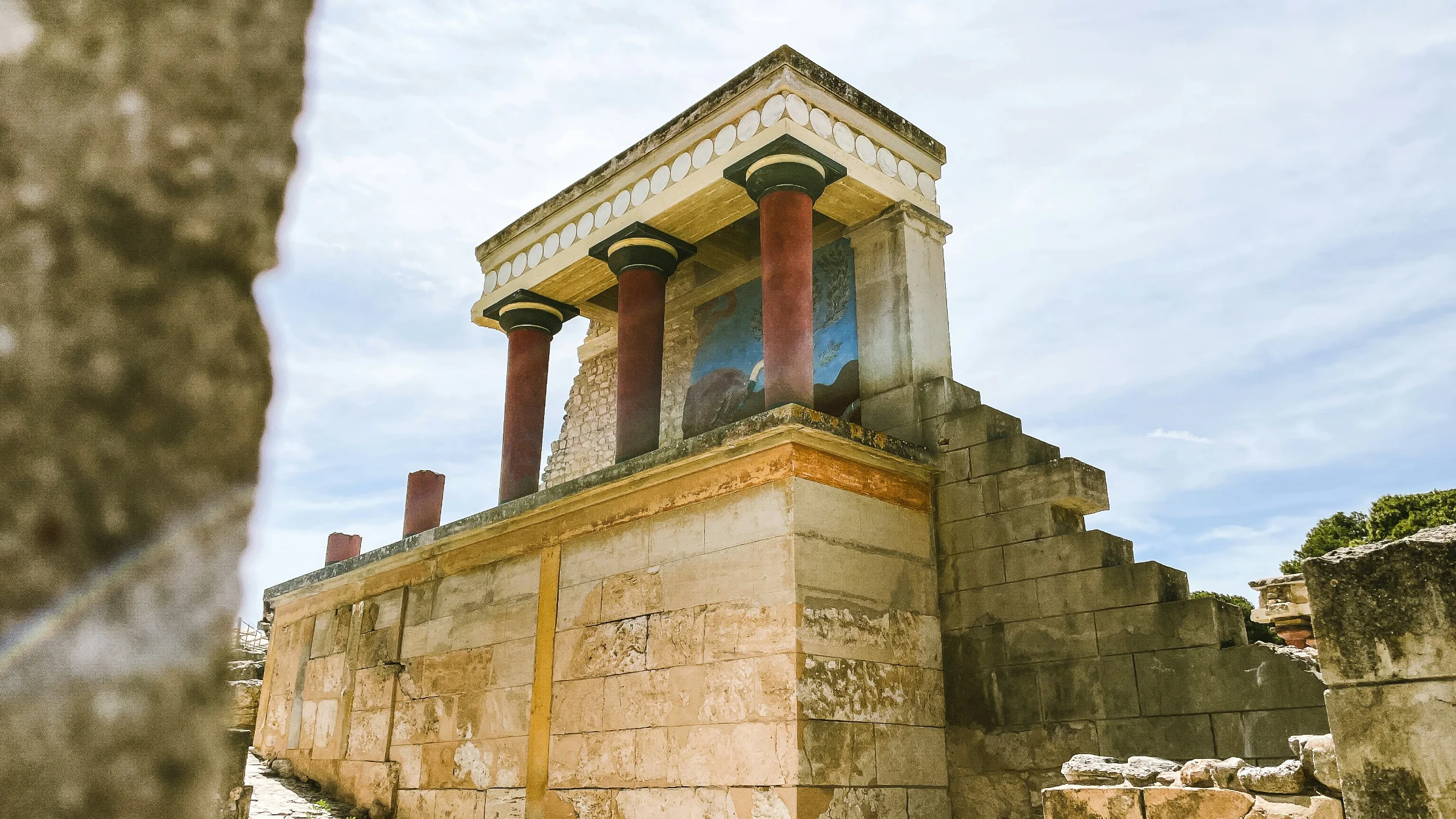
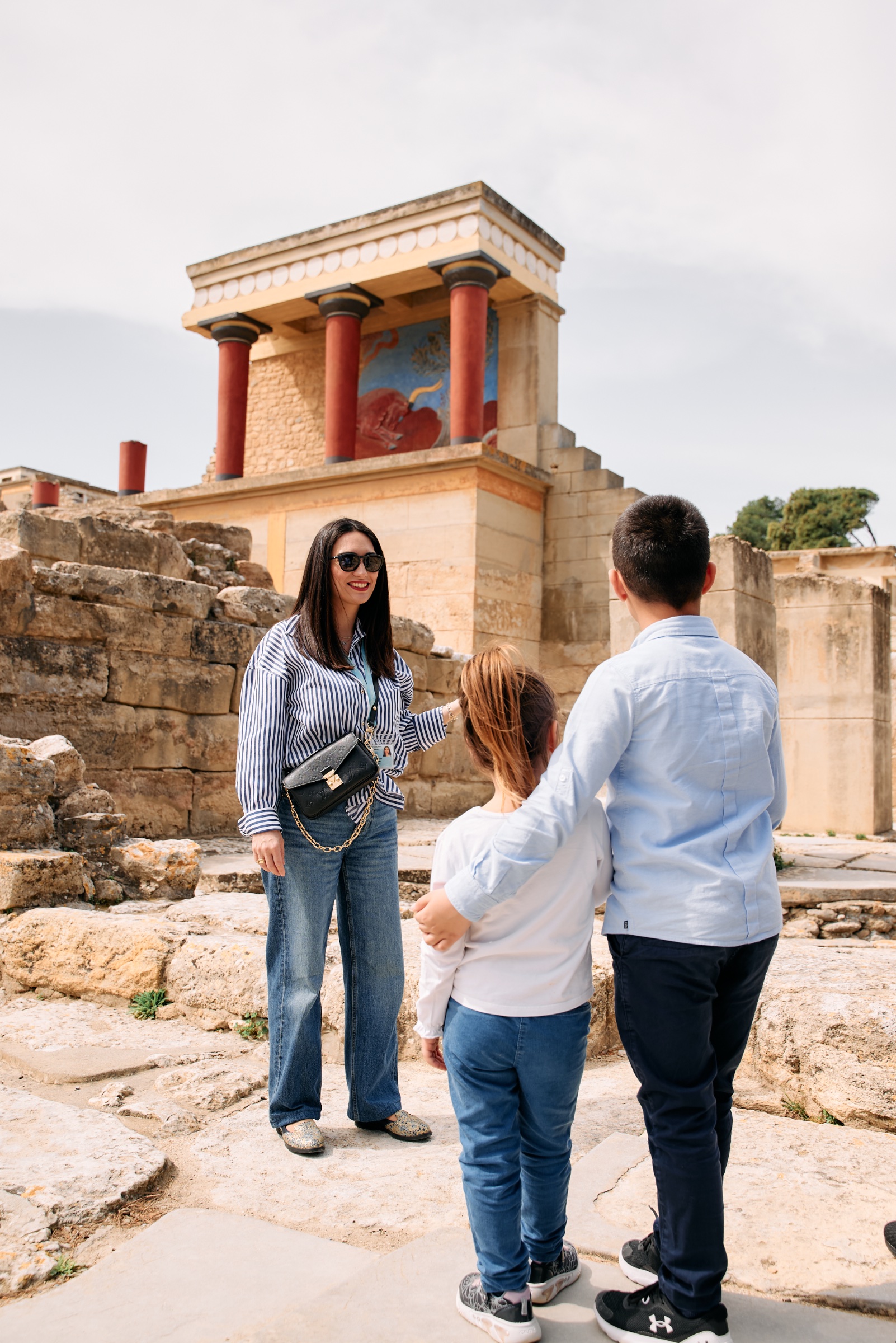
The most recognisable parts of Knossos are its reconstructed columns, the west wing with the throne room, and the eastern wing with the royal chambers and decorated spaces. The site also includes the north entrance, storage rooms, the theatre area, the royal road, and nearby features such as the royal villa and the lustral basin. For a reader, the value of Knossos is not only what survived, but how clearly the palace layout still suggests power, ceremony, and administration.
The palace covers about 22,000 square metres, which helps explain why it feels like a major complex rather than a ruin with a few walls. It was also built and rebuilt over time, first around 1900 B.C. and then again between 1700 and 1450 B.C., so the site reflects several layers of Minoan life. That long development is one reason historians keep returning to it. It is also why the site still feels important even for visitors who are not deep archaeology fans.
History & Identity
According to tradition, Knossos was the seat of King Minos, and that myth gives the site much of its lasting fame. Historically, Knossos was the foremost centre of the Minoan civilisation and an administrative and religious hub, not merely a palace for a ruler. That distinction matters because it frames the site as the heart of a society, not just a royal home.
The legend of the Labyrinth grew from this setting, and that is where many visitors get curious about whether there is a real maze inside the palace. The short answer is that the labyrinth belongs to myth and later interpretation, while the archaeological site itself is a palace complex with a complicated layout. Some of the underground or enclosed spaces, such as lustral basins, probably fed the imagination of later storytellers. In other words, the legend is part of the Knossos experience, but it is not a literal room you can walk through.
Things to Do
Walk the main palace circuit. Start with the main courtyards and follow the path through the principal wings, because this is the easiest way to understand the site's scale and plan. You will get the clearest sense of how the palace functioned as a seat of power, ceremony, and storage. The reconstructed sections help visitors imagine the original height, colour, and structure better than many other ancient sites in Greece.
See the throne room and west wing. The west wing includes one of the most discussed spaces at Knossos, and it helps explain why the site is so often used to illustrate Minoan hierarchy and ritual. Even if you are not a specialist, this part of the palace gives the visit a focal point. It is one of the strongest arguments for saying Knossos is worth it, because the site does not feel like random ruins. Instead, it feels readable.
Explore the east wing. The east wing housed royal chambers, workshops, and storerooms. This is where the palace starts to feel like a lived-in and working centre rather than just a ceremonial monument. The east wing also gives a good chance to understand the practical side of Minoan life. That balance between ritual and daily function is one of Knossos's strongest themes.
Look for the royal villa and nearby features. The Royal Villa is often highlighted in travel writing because it sits just outside the main palace zone and adds another layer to the site. The same is true of the theatre area, the royal road, and the lustral basin, all of which deepen the sense that Knossos was a planned and ceremonial landscape. These areas are useful for travellers who want more than the standard "main ruins" loop.
Connect the myth to the site. Visitors usually arrive with the Minotaur story in mind, and Knossos is one of the best places in Greece to explain why myth and archaeology often overlap. The labyrinth story is not literally visible in stone, but it remains central to the site's identity. To answer the question directly: there is no physical labyrinth you can walk through, but the myth is woven into every part of the experience.
Is Knossos Worth Visiting?
Yes, Knossos Palace is worth visiting if you are interested in Greek history, archaeology, or mythology. The reason is simple, it is one of the few sites in Crete where you can see a major Bronze Age palace and connect it to stories you already know from school or literature.
For some travellers, the answer is also about expectations. Knossos is not a perfectly preserved palace, and it does not work like a museum with pristine objects in glass cases. What it offers instead is a layered, partial, and highly interpretive visit that becomes more interesting if you understand the historical context. If you want a short stop with big historical payoff, it is a strong choice.
History & Archaeology
Knossos is especially important because it was built and rebuilt in major phases and remained central to the Minoan world for centuries. That long life explains why the site contains so many different spaces, from ceremonial rooms to workshops and storage areas. The palace's excavation history also matters, with early work by Minos Kalokerinos and major excavation by Sir Arthur Evans beginning in the late 19th century. That excavation history shaped how visitors see Knossos today.
The site's archaeology is also inseparable from reconstruction debates. Some restored sections help with interpretation, while others have been criticised by specialists over the years, which is common with famous ancient sites. For a travel audience, the useful message is that Knossos is a place where archaeology is still visible as a working story, not just a finished display. That makes it especially appealing for first-time visitors to Crete.
Food, Bars & Tavernas
There is no need to treat the immediate area around Knossos like a food destination in its own right, because the site is better approached as a half-day cultural visit. Most travellers combine it with lunch or dinner in Heraklion, where there are more options and a better overall atmosphere after the visit.
Visitors often pair the palace with a meal in Heraklion's centre, especially if they arrive from the city by car or tour. That makes the day feel rounded out without overpromising around the site itself. If you want to explore Heraklion's food scene in depth, that is better left for a dedicated city guide.
Weather & Best Time to Visit
Spring and autumn are the easiest times to visit Knossos because temperatures are more comfortable and the site feels less punishing under the sun. Summer is still possible, but the palace has very little shade, so early morning or late afternoon visits work best.
Winter visits are usually calmer, but travellers should expect a different rhythm and shorter daylight hours. That can actually suit readers who want a more reflective visit and fewer people in frame. The key point, whichever season you choose, is to plan around heat and crowds rather than treating any month as automatically ideal.
Getting There
The official source places Knossos about 6 km southeast of Heraklion, which makes it easy to combine with a city stay. That short distance is one reason the palace is so often visited on a half-day trip. It is one of the most accessible major archaeological sites on Crete, reachable by car, taxi, or local bus from the city centre.
On the question of buying tickets at the gate, ticketing conditions can change, so check current availability before you go rather than assuming on-site purchase is always an option.
Where to Stay
Heraklion is the most practical base for visiting Knossos because it is close, convenient, and better connected for a short stay. That works especially well for travellers who want to combine archaeology with food, shopping, and a city evening.
If you want to give this section a useful frame, think in terms of traveller type. Heraklion suits first-time visitors who want everything within reach, while more relaxed travellers may choose a coastal base and visit Knossos as a day trip. That approach gives you a realistic range of options without turning the section into a booking page.
Nearby Attractions
Heraklion is the obvious nearby stop, and it pairs naturally with Knossos because of its museums, city life, and transport links. The Heraklion Archaeological Museum in particular holds most of the objects excavated from the palace, so a combined visit gives the archaeology much more depth.
The immediate Knossos landscape also extends beyond the main palace. The royal villa, tomb area, theatre, and royal road are part of the same cultural zone and worth exploring if you have time. For most readers, the real case for Knossos is not a single ruin but a whole cultural landscape tied to the Minoan world. It is both the archaeological core of ancient Crete and one of the most direct ways to understand why the island matters historically.
Things to do nearby
Book a guided experience in this area

Related Articles
Continue exploring Crete
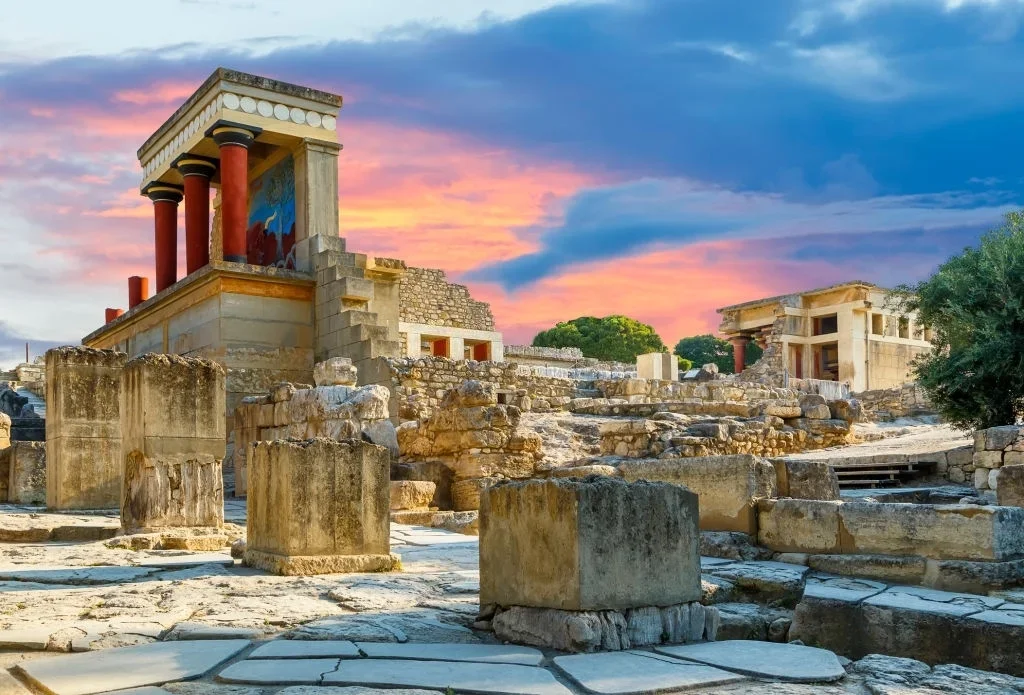
Knossos Guided Tour: What You Get, What It Costs and How to Plan the Day
A Knossos guided tour is the difference between walking past a low wall and understanding why the wall matters, because the site itself carries almost no explanatory signage. Nearly every guided tour sold for Knossos is a guide-only service: the state entrance ticket is a separate €20, bought in your own name. This guide sets out what a guided visit actually includes, what it costs once the ticket is added, and how to combine the palace with the Heraklion Archaeological Museum, where the origina
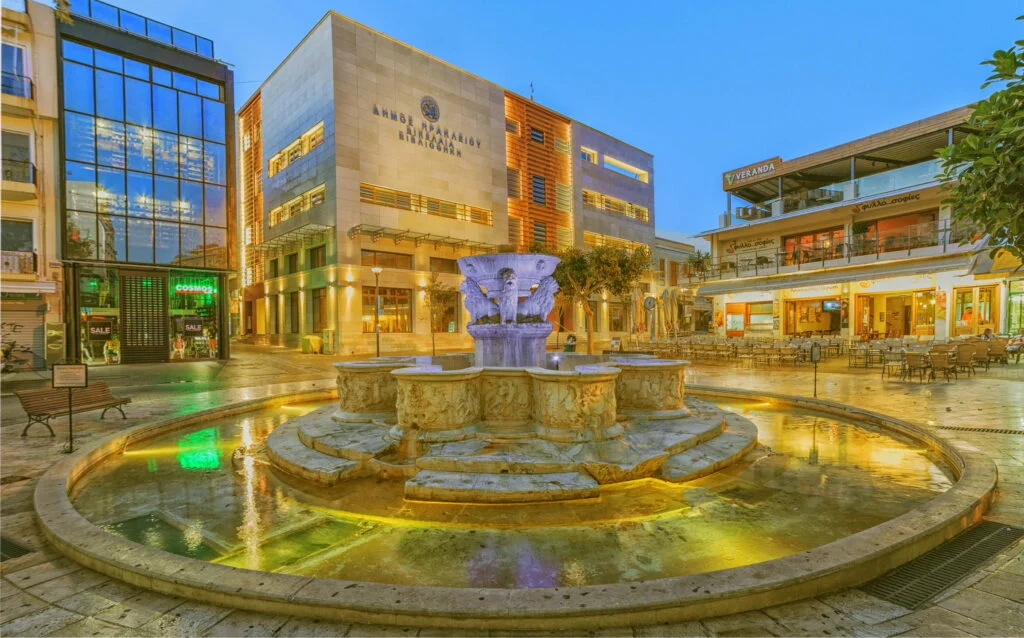
Morosini Fountain, Heraklion: The Venetian Monument at the Heart of the City
Morosini Fountain is one of Heraklion's best-known landmarks, and it sits right in the middle of the city's busiest historic square. Its Venetian design, lion heads, and central location make it an easy stop on any walk through the old town. This guide answers the most common visitor questions and explains why the fountain matters in the city's story.
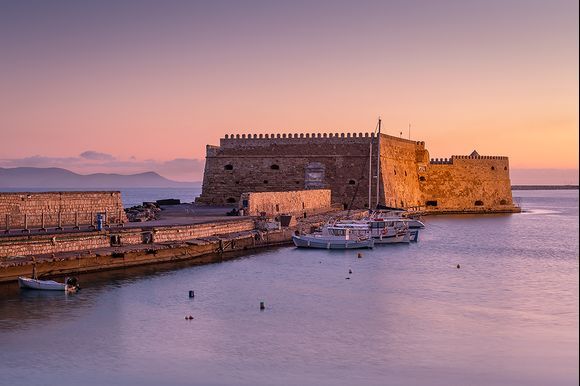
Koules Fortress: Is It Worth Visiting and How to Fit It Into a Heraklion Day
Koules Fortress stands at the entrance of Heraklion harbour, where it has dominated the waterfront for five centuries. If you are spending a day in Crete's capital, this is the landmark that sets the tone for the rest of the city. It connects directly to the Old Town, the harbour promenade, and some of the best eating and walking in central Heraklion. Start here and the rest of the day falls into place.
Let Crete come to you
Sign up to get authentic stories, travel tips, and new experiences
By entering my email, I agree to receive marketing notifications from travel & do.