Best Beaches in Rethymno
Summary
Rethymno is the central jewel of Crete's northern coastline, blending Venetian and Ottoman heritage with one of the island's most diverse and accessible beach landscapes. From a long, urban beach right at the city's doorstep to wild, palm-fringed coves on the dramatic south coast, the region offers an extraordinary range of seaside experiences within a comfortable driving distance. This guide highlights the top beaches around Rethymno suitable for swimming, sunbathing, snorkelling, watersports, and nature experiences — helping you choose the perfect coastal escape during your stay.
★Beach Quick Guide
| Beach | Distance | Best For | Facilities | Water | Crowd | Access |
|---|---|---|---|---|---|---|
| Rethymno Town Beach | ~0–3 km | Convenience, families, sunsets | Fully organized | Calm, sandy | High | Very easy, walking distance |
| Bali Beach | ~35 km | Sheltered bays, snorkelling, families | Fully organized | Calm, crystal clear | Moderate to High | Easy, by car |
| Preveli Beach | ~35 km | Scenic beauty, palm forest, nature | Semi-organized | Calm, river + sea | High | Moderate, drive + hike |
| Plakias Beach | ~38 km | Families, watersports, relaxation | Fully organized | Calm to moderate | Moderate | Easy, by car |
| Damnoni Beach | ~42 km | Families, quiet coves, snorkelling | Fully organized | Calm, clear | Moderate | Easy, by car |
| Triopetra Beach | ~55 km | Seclusion, long sandy stretch, nature | Semi-organized | Calm, clear | Low to Moderate | Moderate, winding road |
| Agia Galini Beach | ~60 km | Compact resort, fishing village vibe | Fully organized | Calm, sheltered | Moderate to High | Easy, by car |
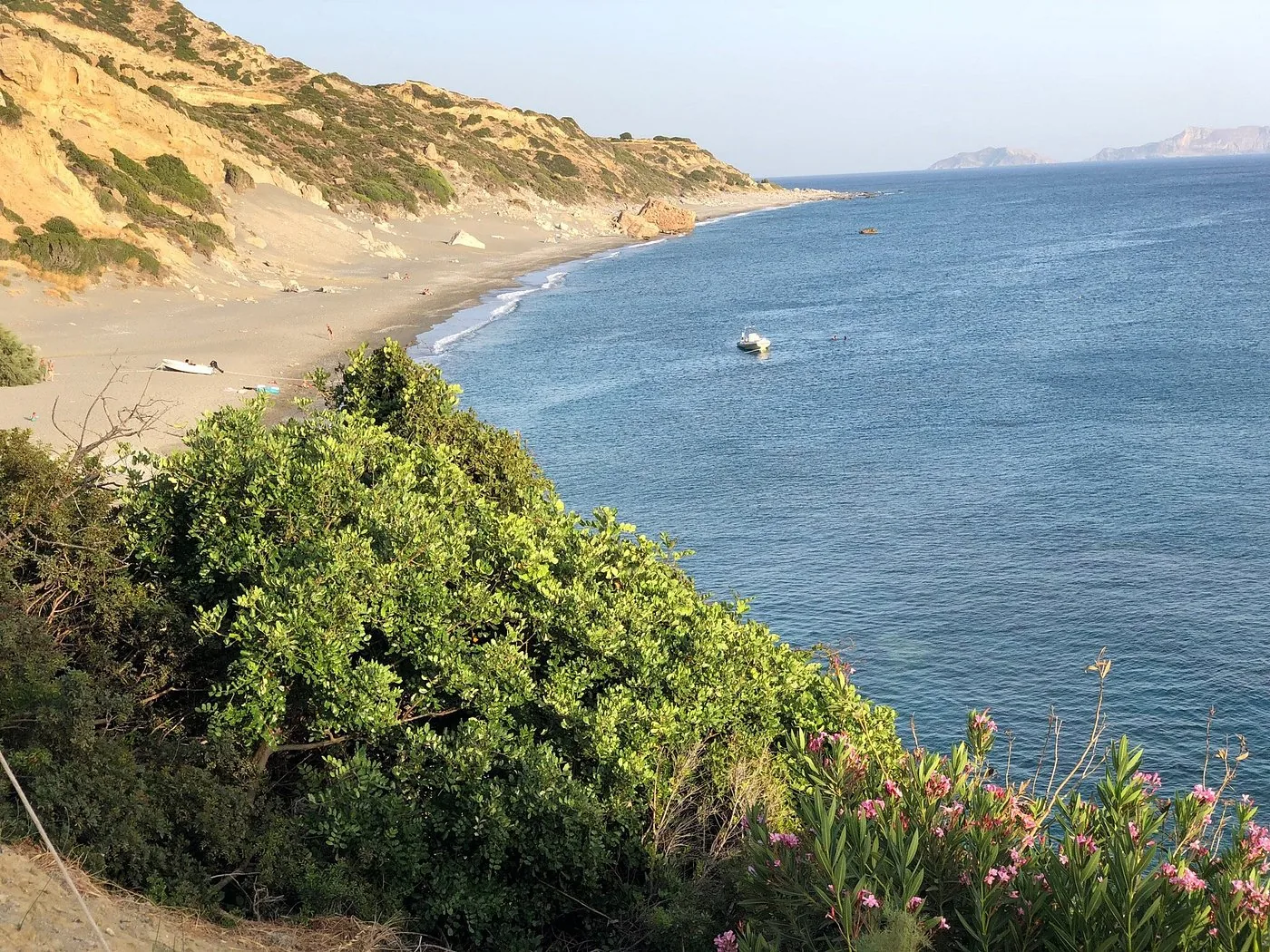
| Ligres Beach | ~55 km | Wild seclusion, nudism, crystal water | Wild | Calm, exceptionally clear | Low | Difficult, rough track |
1Rethymno Town Beach
City centre (~0–3 km) · Convenience, families, sunsets
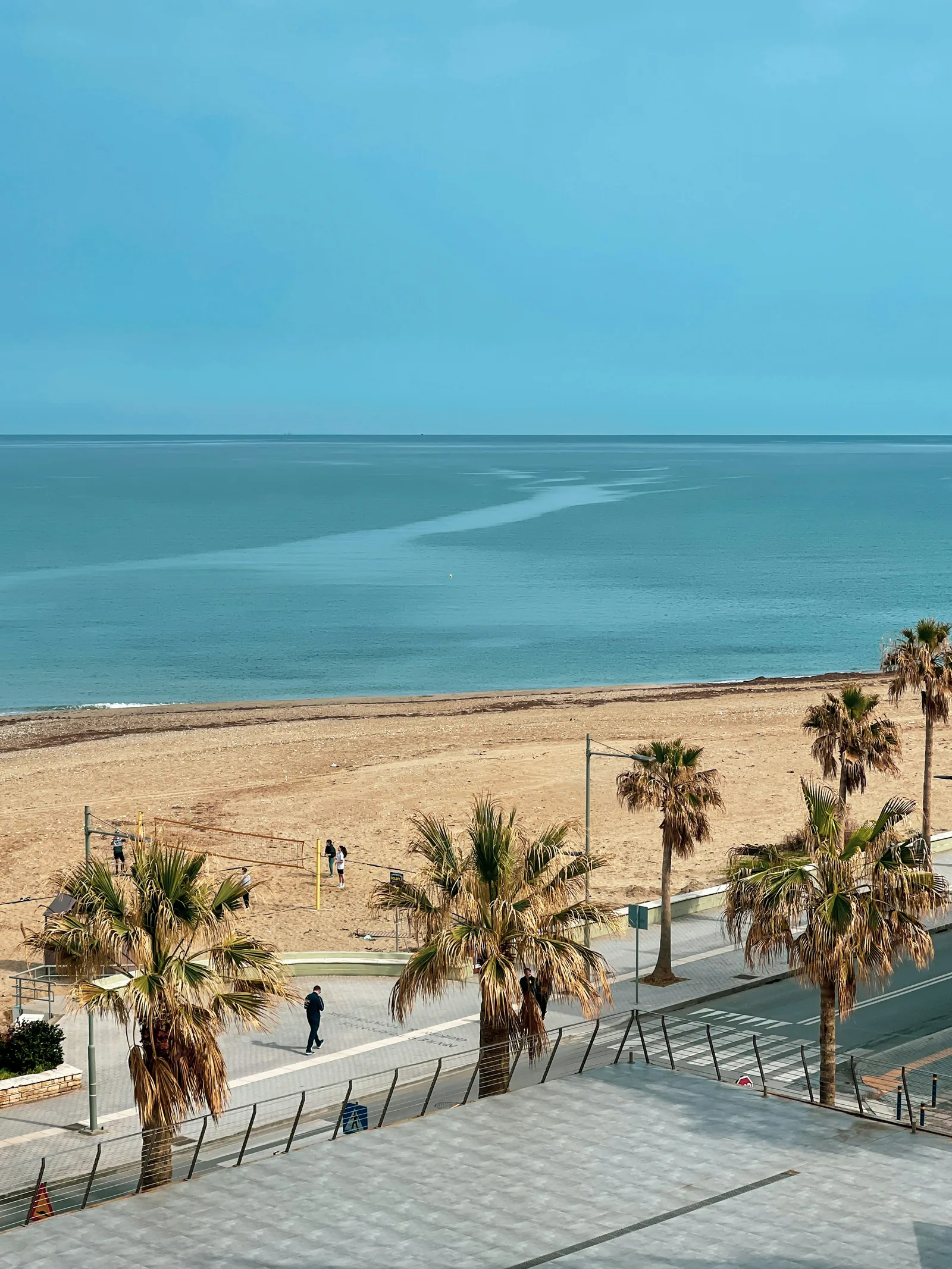
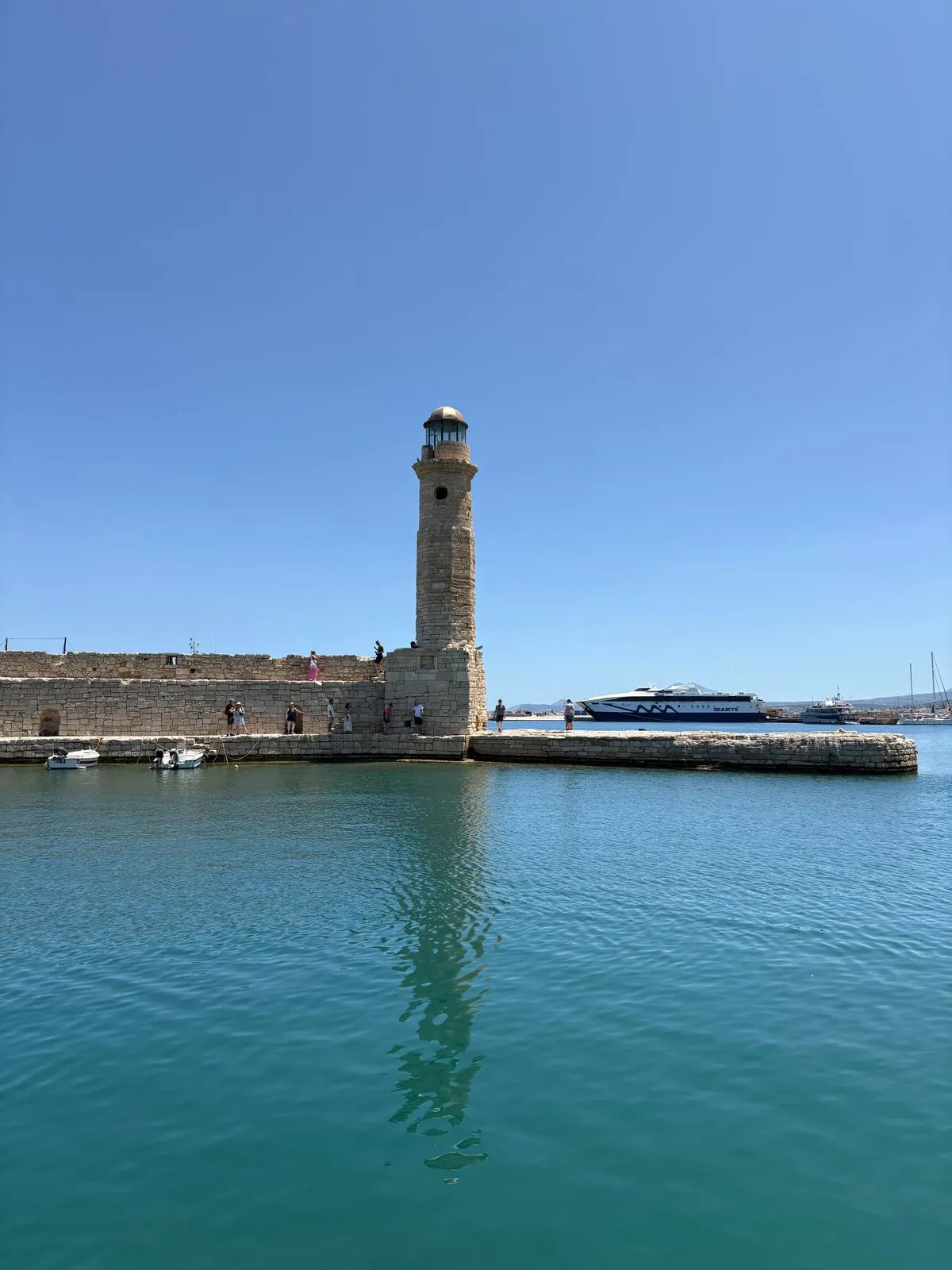
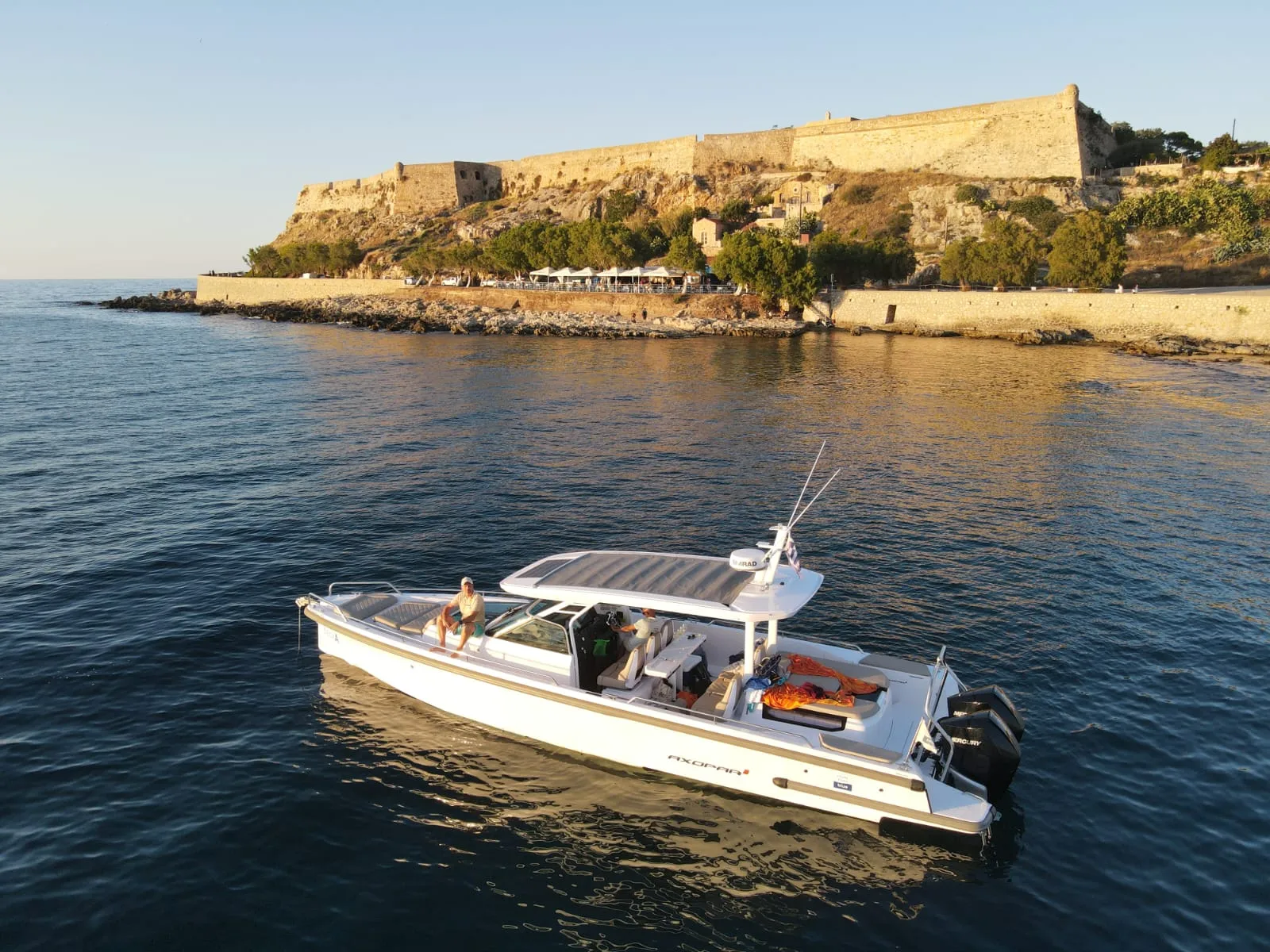
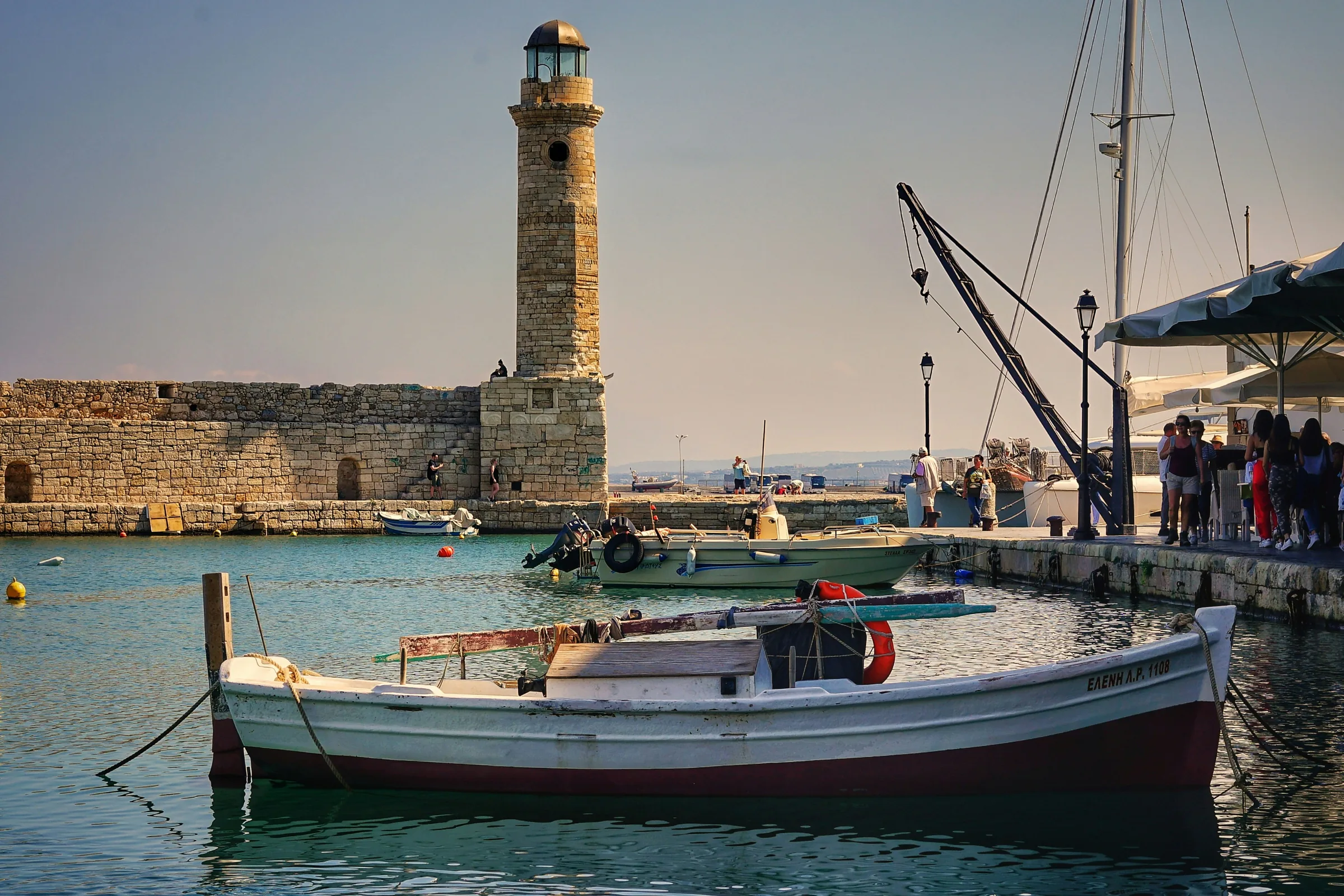
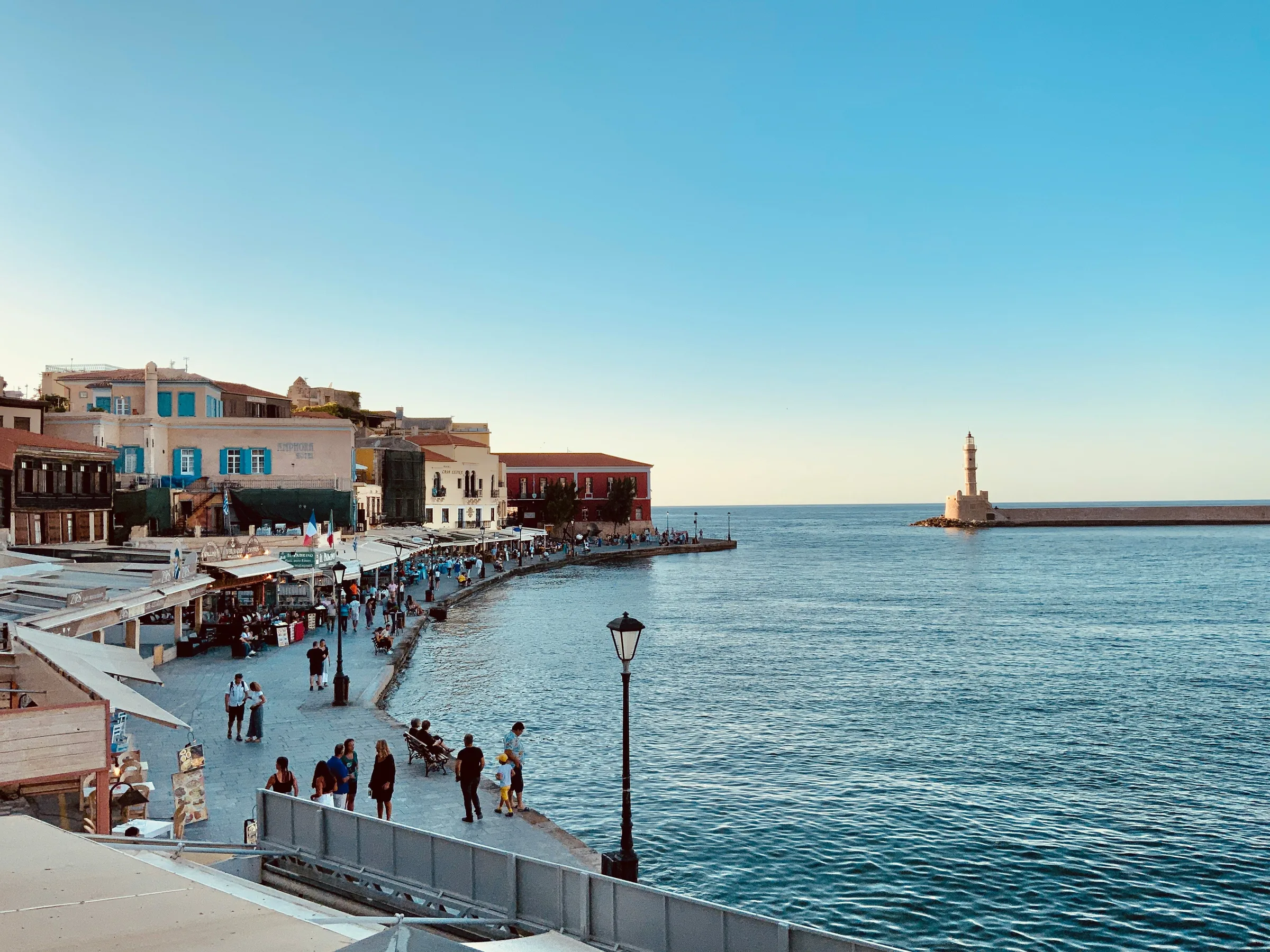
One of Crete's most convenient and charming urban beaches, Rethymno Town Beach is an asset that few other Mediterranean cities can match — a long, sandy, Blue Flag shoreline that begins within walking distance of the city's Venetian harbour and historic old town. For visitors staying in Rethymno, it offers an effortless beach experience without the need for a car, combined with the unique pleasure of swimming with a backdrop of minarets, Venetian fortifications, and the lighthouse of the old port. In the early morning and evening, the beach takes on a particularly magical quality as the light plays off the Fortezza above.
Infrastructure
Fully organized along most of its length – sunbeds, umbrellas, beach bars, showers, and watersports are all readily available. Numerous tavernas, cafes, and ice cream shops line the adjacent promenade. The further east you walk, the more organized and resort-oriented the beach becomes; the western end near the old harbour is quieter and less commercial.
Sand & Swim
Fine golden sand with a gentle, shallow entry that suits all swimming abilities. The water is calm and clear on most days. Afternoon northerly breezes can create a pleasant, refreshing chop that makes the water feel invigorating rather than rough.
How to get there
- The western end of the beach is a 5–10 minute walk from the centre of the old town and the Venetian harbour.
- The eastern resort strip is accessible by a short bus ride or a 15–20 minute walk along the seafront promenade.
Local secret: For the most atmospheric Rethymno beach experience, position yourself at the western end of the beach in the early morning — the view back toward the Venetian lighthouse and the minarets of the old town, with the Fortezza on the hill above, is genuinely extraordinary and makes for exceptional photographs before the day-trippers arrive.
2Bali Beach
Northeast coast (~35 km) · Sheltered bays, snorkelling, families
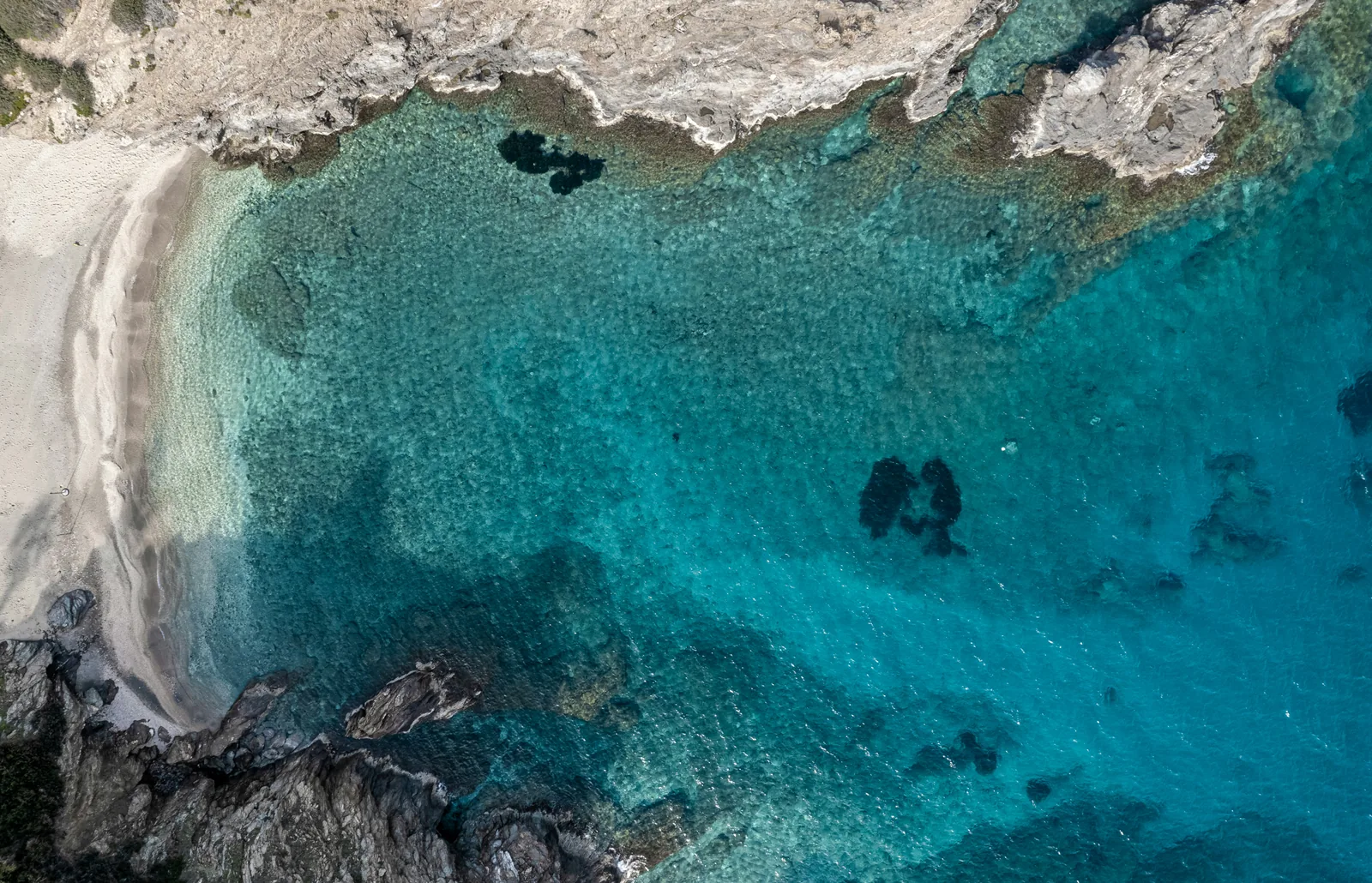
Tucked into a series of small, sheltered coves along the northern coast between Rethymno and Heraklion, Bali is one of the most picturesque resort villages in central Crete. Its multiple interconnected bays — each with a slightly different character — offer remarkably calm, transparent turquoise water, excellent snorkelling conditions, and a relaxed, unhurried atmosphere. The village spills down the hillsides between the coves in a fashion reminiscent of a small Aegean island, giving it a charm that distinguishes it from the more typical resort strips of the north coast.
Infrastructure
Fully organized – each main bay has its own cluster of sunbeds, umbrellas, and tavernas. Pedal boats and canoes are available for rent. The village offers a good selection of fish restaurants, small hotels, and studios.
Sand & Swim
A mix of fine sand and small pebbles depending on the cove, with exceptionally clear, calm water that is ideal for snorkelling and leisurely swimming. The enclosed bays are very well protected from open-sea conditions and are almost always calm.
How to get there
- Drive approximately 40–45 minutes east along the E75 national road toward Heraklion, then take the clearly signposted exit toward Bali village; the descent to the village involves a winding but paved road.
- Seasonal bus services connect Rethymno and Heraklion via Bali; confirm the stop locally.
Local secret: Explore the smallest, most northerly cove — known as Limani or the "harbour cove" — which is the least developed and often quietest of the Bali bays. The rocky underwater terrain here supports abundant marine life, and the visibility for snorkelling is frequently exceptional. A short walk between the coves on the network of stepped paths reveals superb panoramic views over the coastline.
3Preveli Beach
South coast (~35 km) · Scenic beauty, palm forest, nature
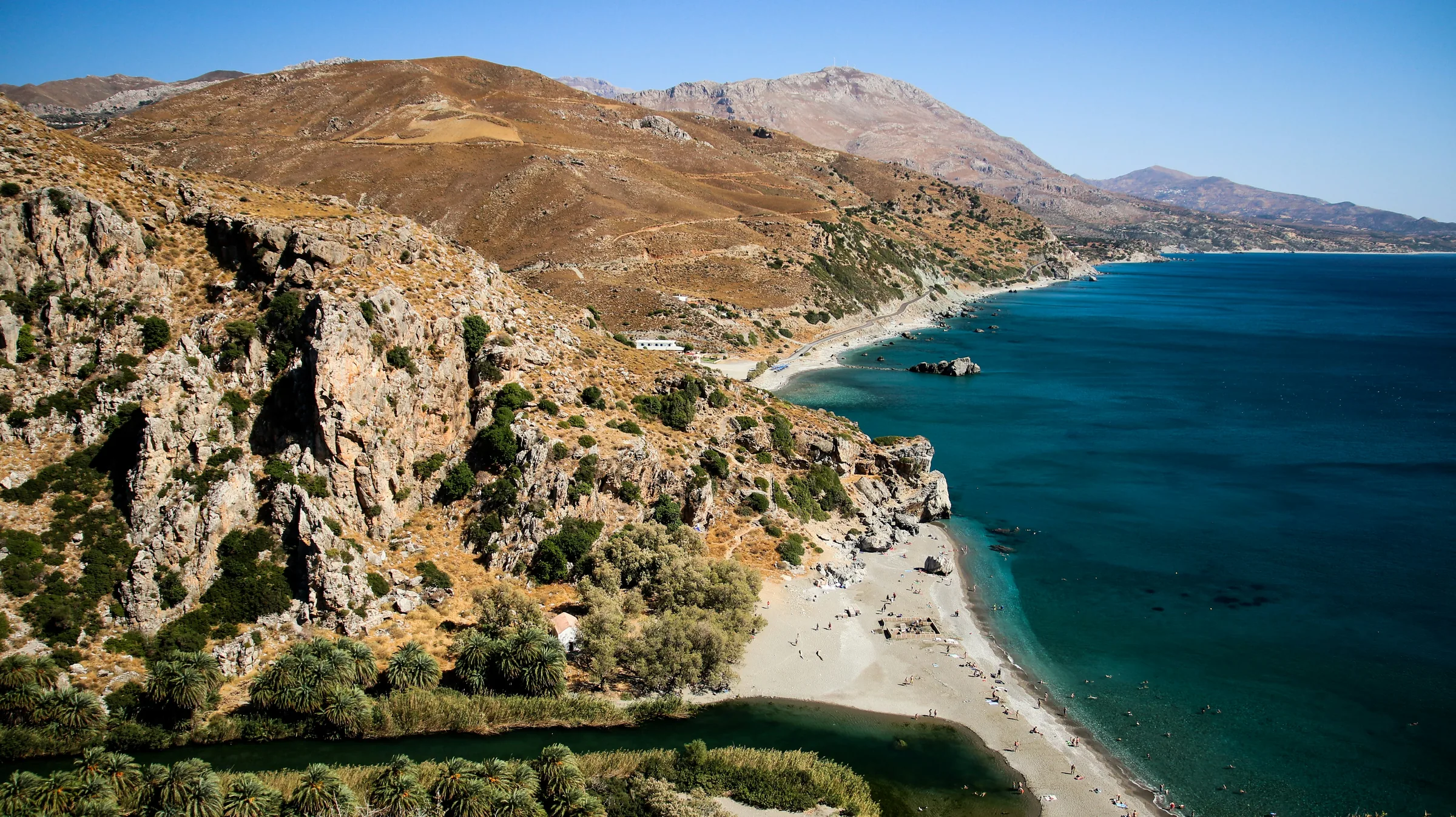
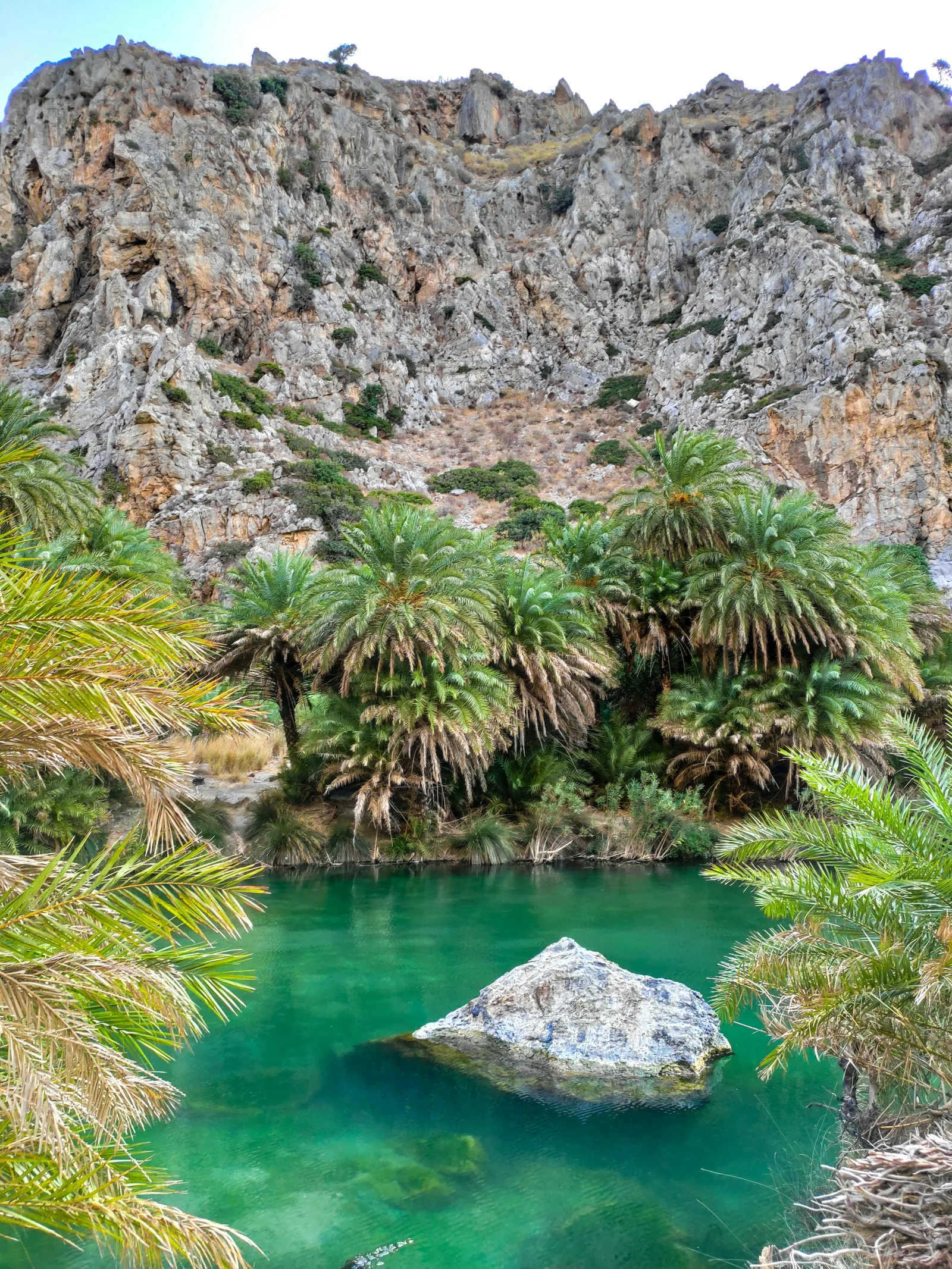
Without question one of the most iconic and visually spectacular beaches in Greece, Preveli owes its fame to a unique natural phenomenon: the Megalopotamos River flows through a dramatic gorge before emerging at the Libyan Sea, creating a freshwater lagoon fringed by a dense grove of Cretan date palms. The combination of a river, a palm forest, a sandy beach, and the deep blue of the south Cretan sea in a single landscape is genuinely breathtaking — and widely recognized as one of the natural wonders of the Mediterranean. Best visited early in the morning or later in the afternoon, when the quality of light in the gorge and on the lagoon is at its most extraordinary.
Infrastructure
Semi-organized – a small taverna operates near the clifftop car park at the top, and a basic seasonal canteen may be found on the beach itself in high season. There are no sunbeds or umbrellas in the palm forest area, preserving the natural character of the site. The most rewarding experience here is swimming in both the river lagoon and the sea.
Sand & Swim
A mix of coarse sand and small pebbles. You can swim in the cool, freshwater river — which forms a shaded pool beneath the palms — as well as in the clear, blue waters of the Libyan Sea directly at the beach. The entry into the sea is slightly steeper than on the north coast, but the water is calm and very swimmable. The south-coast position means it is generally sheltered from the Meltemi.
How to get there
- Drive approximately 45–50 minutes south via the spectacular Kourtaliotiko Gorge toward Plakias, then follow signs east toward Preveli Monastery and the beach. Park at the clifftop parking area and descend via the stepped rocky path (15–20 minutes down; the return climb is demanding). Sturdy footwear is essential.
- By boat: Regular summer boat taxis operate from Plakias and Agia Galini to Preveli Beach for those who prefer to arrive by sea.
Local secret: Bring a canoe or rent a paddleboat to explore upstream along the river beneath the palm canopy. Paddling just 200–300 metres into the gorge takes you away from the main beach crowd entirely and into a shaded, jungle-like setting of dramatic beauty. Many visitors who make the effort to reach Preveli never venture beyond the first 50 metres of the river — those who do are rewarded with complete solitude.
4Plakias Beach
South coast (~38 km) · Families, watersports, relaxation
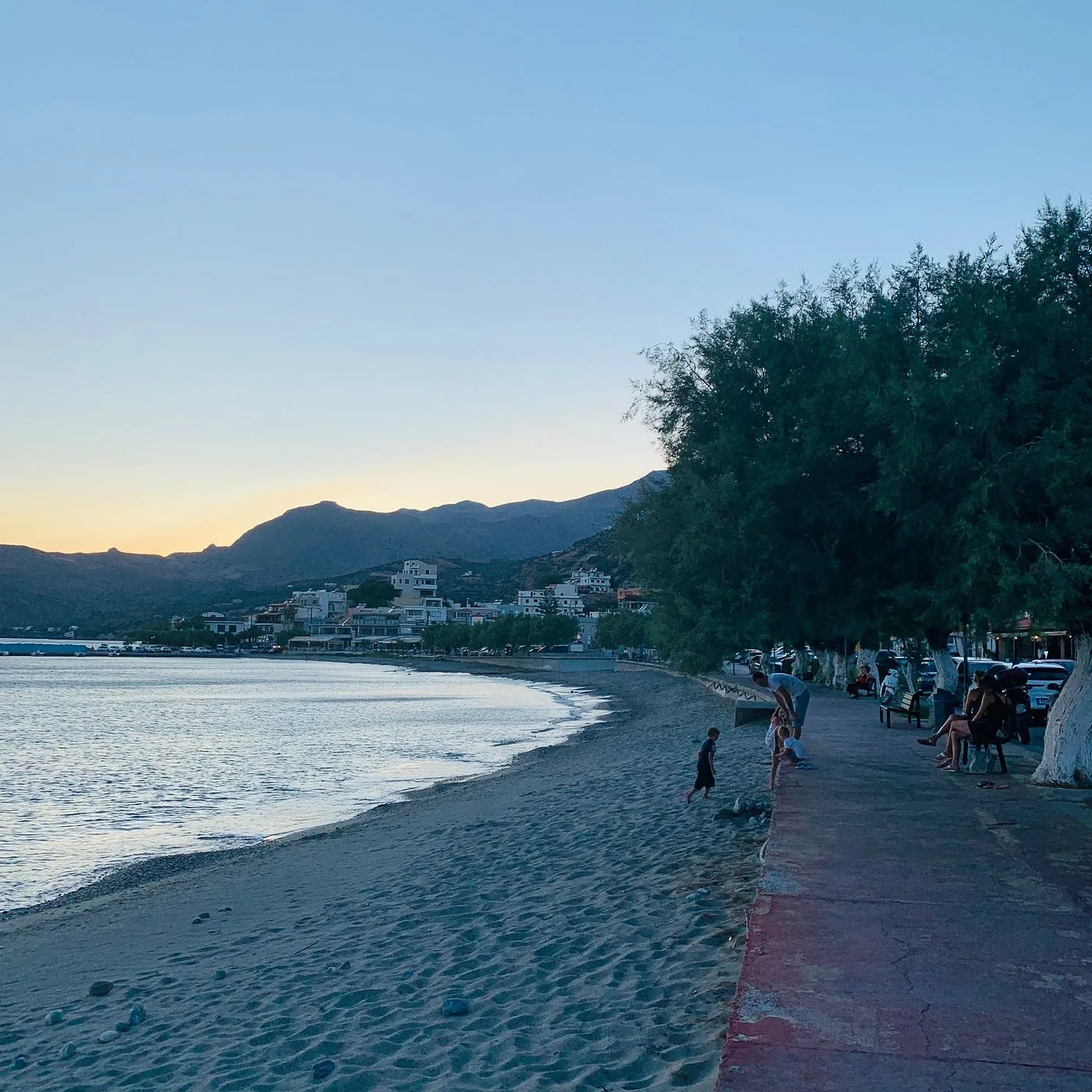
A wide, sweeping bay on the south coast, Plakias is the most developed resort on the Rethymno coastline that still manages to feel relaxed and genuinely friendly rather than overwhelmed by mass tourism. Its long sandy beach, backed by a low-key village with a good selection of tavernas, studios, and shops, makes it an ideal base for exploring the broader south coast. Plakias also benefits from a consistently tranquil sea, thanks to its sheltered position on the Libyan coast, and from being within easy reach of both Preveli and Damnoni beaches.
Infrastructure
Fully organized on the main central section – sunbeds, umbrellas, showers, and a watersports centre offering paddleboarding, canoe hire, and boat trips. The eastern end of the beach is less organized, quieter, and clothing-optional. The village behind the beach has excellent tavernas, mini-markets, and scooter/car hire facilities.
Sand & Swim
A pleasing mix of sand and fine pebbles with clear water that deepens gradually. The sea is typically very calm on the south coast, though southerly winds can occasionally build small waves that are enjoyable for confident swimmers.
How to get there
- Drive approximately 45 minutes south through the breathtaking Kourtaliotiko Gorge. The road is well-paved and the gorge itself is a scenic highlight worth stopping to appreciate.
- Seasonal bus services from Rethymno KTEL station run to Plakias during the summer months; check current schedules locally.
Local secret: Walk to the eastern, unorganized end of the beach beyond the main resort zone, where the sand and pebbles give way to more natural terrain and the crowd thins dramatically. The rock formations at this far end are interesting to explore at low tide, and the area offers a far more natural and peaceful atmosphere than the organized central section.
5Damnoni Beach
South coast (~42 km) · Families, quiet coves, snorkelling
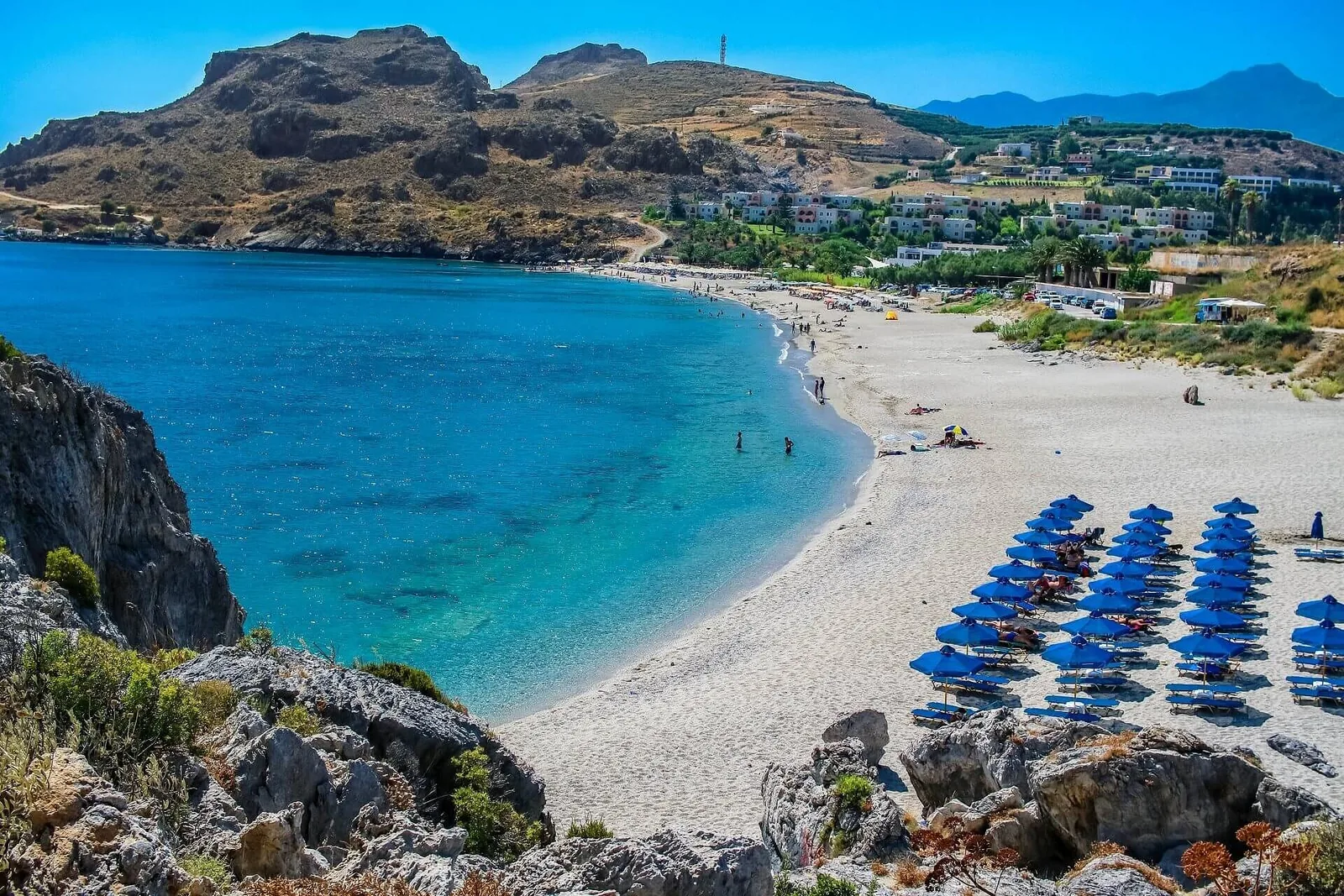
Just a few kilometres east of Plakias, Damnoni is a trio of small, beautiful coves set in a natural amphitheatre of low headlands covered in wild scrub and olive trees. It has a gentler, more intimate character than its larger neighbour, attracting families and couples who want good facilities and calm water without the resort-strip atmosphere of a larger beach. The three interconnected bays — Damnoni, Ammoudi, and Paligremnos — each have their own character and level of organization, allowing visitors to choose their preferred balance of comfort and seclusion.
Infrastructure
Fully organized on the main Damnoni bay – sunbeds, umbrellas, a beach bar, and showers are available. The adjacent Ammoudi cove is semi-organized with a small taverna, while Paligremnos, the furthest cove, is completely wild and popular with naturists.
Sand & Swim
Soft golden sand on the main beach with very calm, clear water that is exceptionally gentle in entry — making Damnoni one of the best beaches in the south for young children. Snorkelling around the rocky edges between the coves is rewarding.
How to get there
- Drive approximately 50 minutes south via the Kourtaliotiko Gorge to Plakias, then continue 4–5 km east along a signposted road to Damnoni. The road is paved and manageable for all standard rental vehicles.
Local secret: Follow the coastal path between the coves — especially from Damnoni around to Paligremnos — for stunning views over the bays from the low clifftop. Paligremnos itself, once you have made the 10-minute walk, offers a completely wild and often near-deserted pebble cove with extraordinary water clarity and total silence save for the sea.
6Triopetra Beach
South coast (~55 km) · Seclusion, long sandy stretch, nature
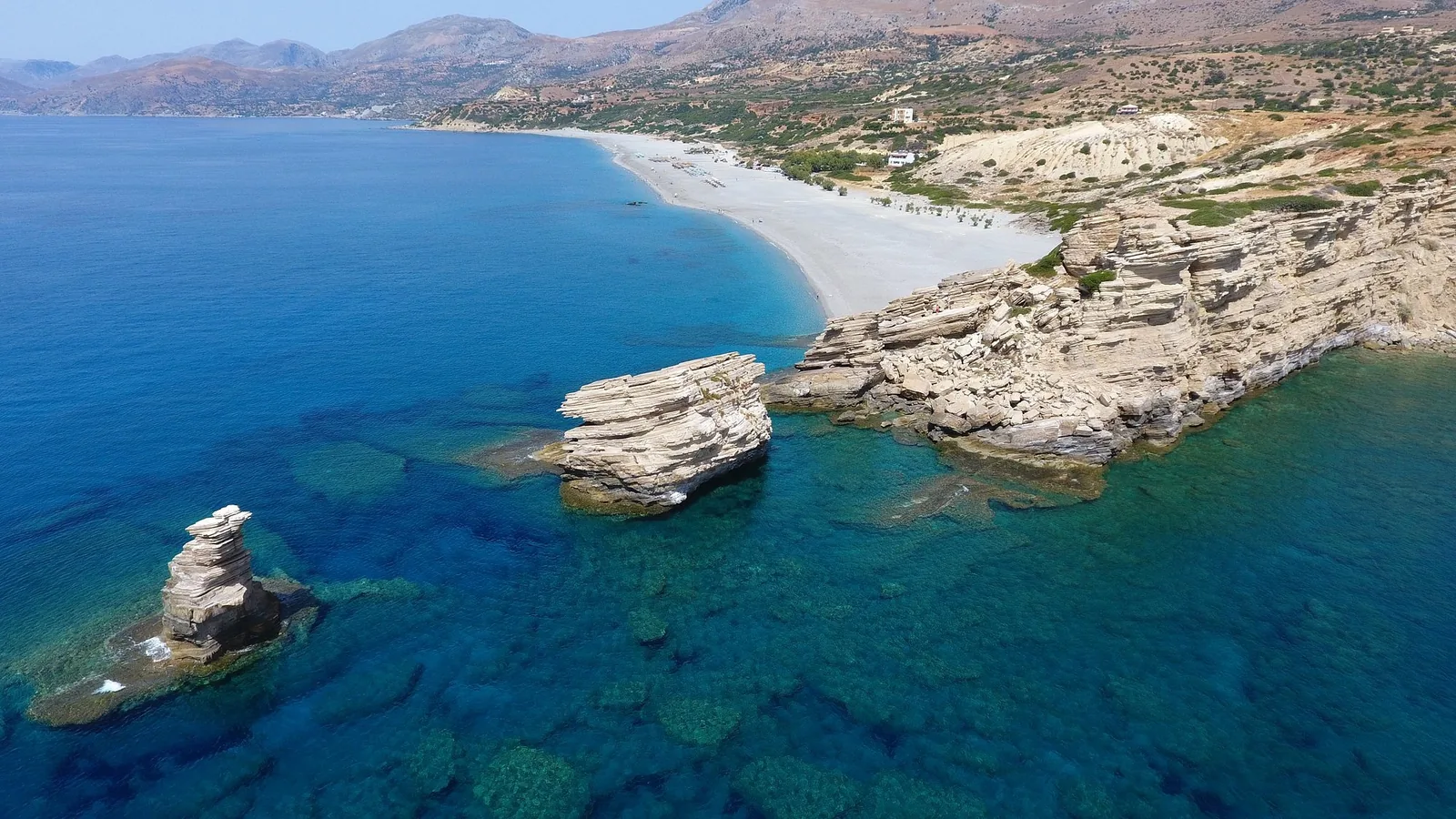
Named after the three distinctive rocks ("trio petra") that rise from the sea just offshore, Triopetra is one of the longest and most undeveloped sandy beaches on the south coast of Rethymno — and arguably in all of Crete. Divided into two sections by a small rocky headland, it offers kilometres of wide, golden sand with a genuinely wild character that feels increasingly rare on the island. The surrounding landscape of rugged hills and sparse vegetation adds to the sense of arriving somewhere wonderfully remote and unmanaged.
Infrastructure
Semi-organized – a small number of sunbeds and umbrellas are concentrated at the eastern end near the access road, alongside a simple, good-quality taverna. The western stretch ("Mikro Triopetra") and the central sections are completely wild, with no facilities.
Sand & Swim
Wide stretches of fine golden sand with clear, calm water that deepens gently. The beach is sheltered enough for comfortable swimming on most days, though it can develop a pleasing surf on windier days. The three eponymous rocks offshore provide an interesting focal point for swimmers.
How to get there
- Drive approximately 1 hour 15 minutes south via Spili and Akoumia toward Triopetra; the final section of road through Akoumia is a narrow but generally paved mountain road that requires confident driving. A car with good ground clearance is recommended.
- No public transport serves Triopetra; a hire car is essential.
Local secret: Cross the small rocky headland to the western section of the beach — known as Mikro Triopetra — which is significantly quieter than the eastern end and feels genuinely deserted even in mid-summer. The walk takes just 5–10 minutes over easy terrain and the contrast in atmosphere is remarkable.
7Agia Galini Beach
South coast (~60 km) · Compact resort, fishing village vibe
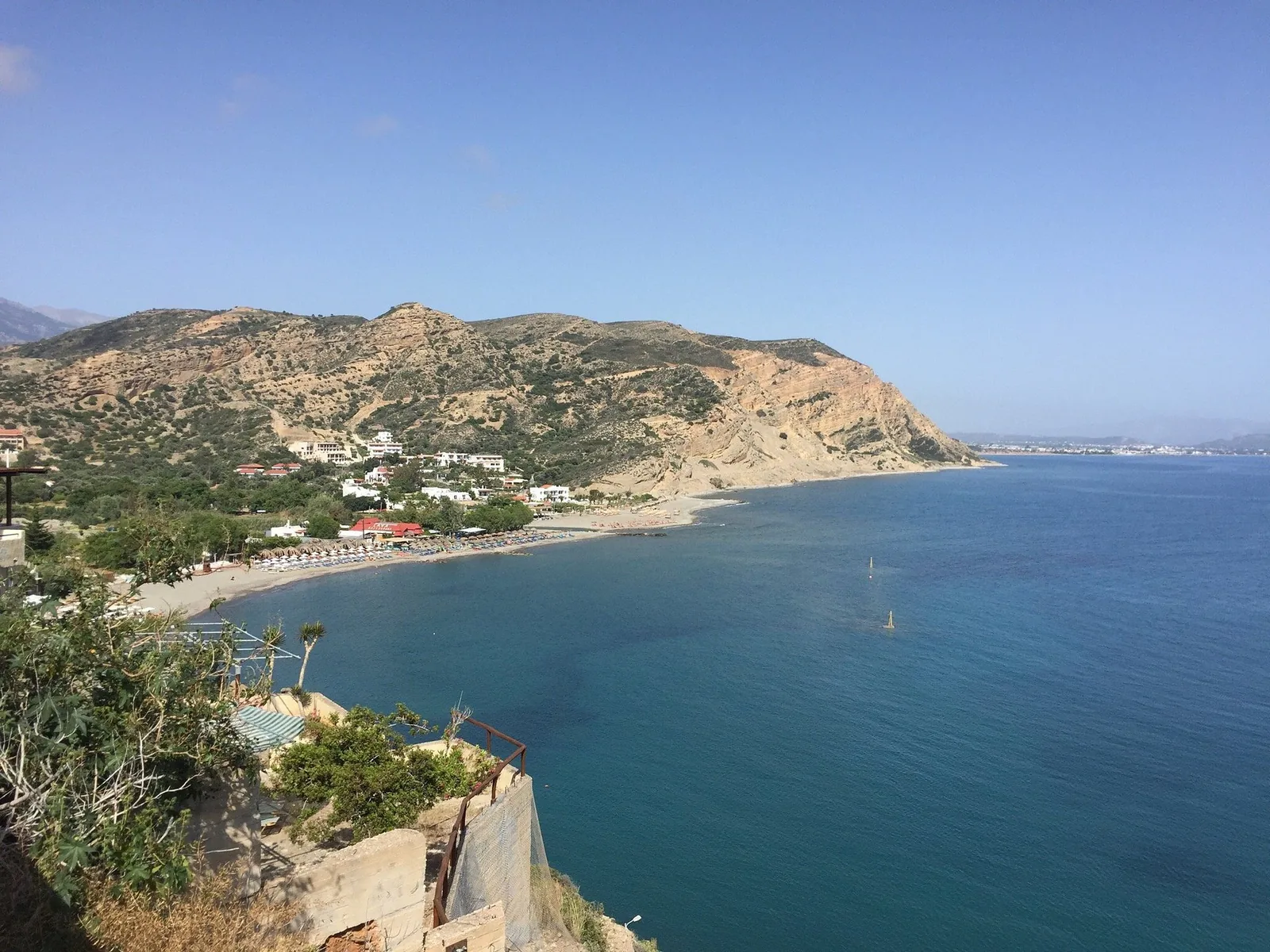
A compact, cheerful fishing-village-turned-resort set at the foot of terraced hills where a small river meets the Libyan Sea, Agia Galini has a warmth and character all its own. Its small but well-organized sandy beach sits within a protected harbour, and the lively promenade of fish tavernas, cafes, and bars that curves around the seafront gives the resort an appealing social energy without ever feeling overwhelming. It is a particularly good base for exploring the wider south coast by boat, with regular excursions to nearby beaches and caves.
Infrastructure
Fully organized on the main beach — sunbeds, umbrellas, showers, and a beach bar, with additional facilities in the immediate harbour area. The village offers an excellent selection of fish tavernas, bars, and shops. Boat excursion operators in the small harbour offer day trips to Preveli, Agiofarago, and other south-coast destinations.
Sand & Swim
A compact strip of sandy beach with fine pebbles, set within the protected harbour bay. The water is very calm, clear, and warm — ideal for easy swimming and snorkelling around the harbour walls.
How to get there
- Drive approximately 1 hour south via Spili — a scenic route through dramatic mountain terrain and charming traditional villages. The road is well-paved throughout.
- Seasonal KTEL bus services from Rethymno run to Agia Galini in summer; check current schedules at the bus station.
Local secret: Hire a small boat from the harbour for the afternoon and explore the sea caves and hidden coves that dot the coastline to the east and west of Agia Galini. Several of these coves are only accessible by water and offer spectacular swimming in undisturbed settings that the average visitor to the resort never sees.
8Ligres Beach
South coast (~55 km) · Wild seclusion, nudism, crystal water
A truly wild and hidden gem of the south Rethymno coast, Ligres is a pristine, pebbly cove of exceptional natural beauty that remains one of the least visited quality beaches in the region. Its remoteness — reached via a rough track that deters most visitors — has preserved a quality of seclusion and silence that is increasingly hard to find on the island. The water here is among the clearest and most intensely coloured on the entire south coast, with a deep turquoise that borders on extraordinary. It is a favourite destination for naturists and for those simply seeking a complete escape from organized tourism.
Infrastructure
Wild beach – there are no facilities of any kind at Ligres. You must bring everything you need for the day: water, food, shade, and first aid. The solitude and the quality of the environment are the experience.
Sand & Swim
Fine grey-white pebbles with water that is genuinely exceptional in clarity and colour — among the best swimming water on the south coast of Crete. The entry is clean and deepens at a comfortable pace. The beach is well-sheltered by surrounding headlands and is almost always calm.
How to get there
- Drive approximately 1 hour 15 minutes south toward Triopetra, then follow an unpaved track — passable with care in a standard hire car, but more comfortable in a vehicle with good ground clearance — toward Ligres. The final approach requires careful navigation; offline maps are recommended as signage is minimal.
- No public transport serves Ligres; a hire car and a spirit of adventure are both essential.
Local secret: Arrive at Ligres with snorkelling equipment — the rocky underwater formations along both sides of the cove support extraordinary marine biodiversity, and the visibility in calm conditions can exceed 20 metres. Early morning is the best time, before the midday heat builds and the light on the water is at its most dramatic.
Frequently Asked Questions
Rethymno Town Beach begins just steps from the Venetian old town and harbour, making it the most convenient option for visitors staying in the city centre without a vehicle.
Rethymno Town Beach, Bali, Damnoni, and Plakias all offer calm, shallow water and full facilities. Damnoni's main bay is particularly gentle in entry and well-suited to very young swimmers.
Absolutely. Preveli, Plakias, and Damnoni are among the finest beaches in Crete and are comfortably accessible within 45–50 minutes. The Kourtaliotiko Gorge drive south is itself a scenic attraction. The more remote options — Triopetra and Ligres — reward the extra effort with an exceptional sense of discovery and unspoiled natural beauty.
In July and August, Preveli can get very busy, particularly between 10:00 and 16:00 when day-trippers and boat excursions arrive. Visit early in the morning or in the late afternoon to experience it at its best. The boat taxi option from Plakias or Agia Galini allows you to time your arrival more flexibly.
Yes — Ligres, Triopetra (western section), and Paligremnos cove near Damnoni all offer genuine seclusion. The key is willingness to drive a winding road or walk a short coastal path. The reward is always proportionate to the effort.
June and September are ideal — the sea is warm, the crowds are manageable, and the weather is reliably excellent. The south coast beaches in particular are well-suited to July and August as they are sheltered from the Meltemi northerly winds that can affect north coast beaches during peak summer.
Rethymno like a local
Combine beaches with the Venetian harbour, Arkadi, and Margarites pottery village.
Rethymno like a local
Combine beaches with the Venetian harbour, Arkadi, and Margarites pottery village.
Let Rethymno come to you
Sign up to get authentic stories, travel tips, and new experiences
By entering my email, I agree to receive marketing notifications from travel & do.